REVIEW · SCHWERIN
Schwerin: Private Guided Walking Tour
Book on GetYourGuide →Operated by Travmonde OÜ · Bookable on GetYourGuide
Schwerin may be small, but the backstory is big. In a tight 90 minutes, you’ll walk through a town shaped by medieval faith, romantic architecture, and big German turning points, with Schwerin Palace as the star on Lake Schwerin.
Two things I especially like are the focus on the city’s most memorable landmarks and the chance to steer the pace with a real local guide in a private group setting.
One thing to consider: entrance fees aren’t included, so if you want to go inside major sights, expect extra costs and plan your timing accordingly.
In This Review
- Key highlights you’ll actually feel on the walk
- Schwerin’s seven-lake setting: why the city feels made for walking
- Meeting in front of Schwerin Castle: get your bearings fast
- Schwerin Palace by Lake Schwerin: the romantic centerpiece
- Medieval Schwerin Cathedral: pilgrimage legends with real context
- The old town walk: Schwerin’s tight timeline from 1018 to 1160
- From the Protestant revolution to the Thirty Years’ War: how religion reshaped daily life
- Napoleonic era and German unification: seeing the modern shape behind the old stones
- Your private group and the price: when $280 makes sense
- Guide quality in practice: asking, tailoring, and keeping it lively
- Who should book this Schwerin private walk
- Should you book Schwerin: Private Guided Walking Tour?
- FAQ
- How long is the Schwerin private guided walking tour?
- What’s the price for this tour?
- Is this a private tour or shared group?
- What languages are offered?
- Are entrance fees included?
- Where do we meet for the tour?
- Is free cancellation available?
Key highlights you’ll actually feel on the walk
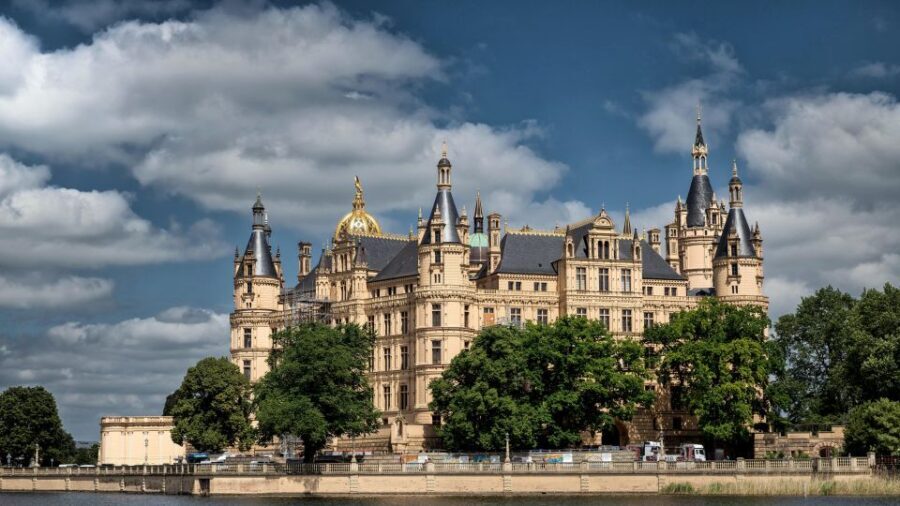
- The Neuschwanstein of the North look: Schwerin Palace rises dramatically on an island in Lake Schwerin.
- Early Schwerin timeline in plain language: roots in the 10th century, existing since at least 1018, and city recognition in 1160.
- Schwerin Cathedral as a medieval pilgrimage magnet, including its reputed link to Christ’s blood.
- Major European shocks, explained locally: the Protestant revolution, the Thirty Years’ War, and what came next.
- Napoleonic and Unification-era relevance: how Schwerin fits into the broader shape of Germany’s modern story.
- Private guiding that can bend with you: you can ask questions and adjust what you see in real time.
Schwerin’s seven-lake setting: why the city feels made for walking
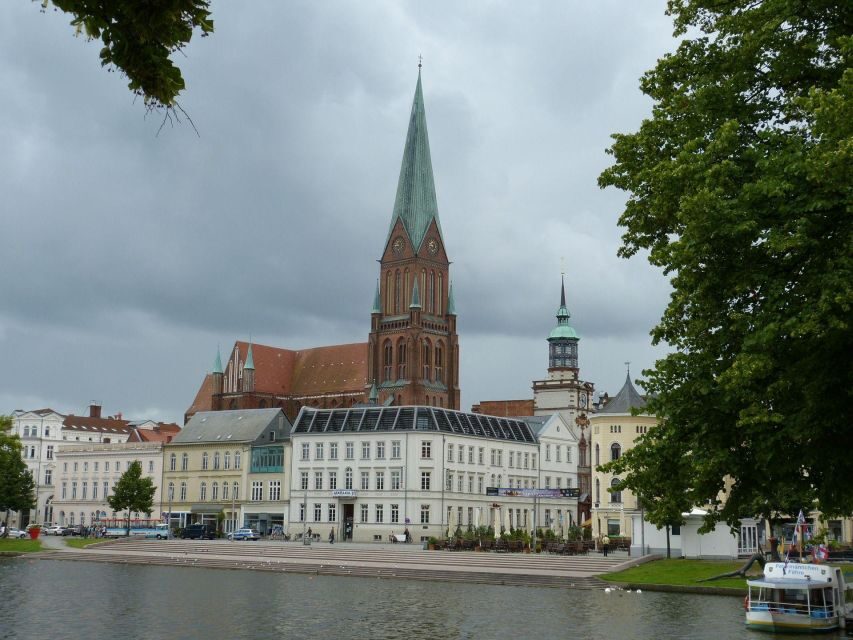
Schwerin sits in Northern Germany and is surrounded by seven lakes, which is part of why the whole place feels calm and storybook-leaning instead of rushed. It’s also the smallest land capital in Germany, so you get a sense of the city without needing a long day of transit.
The payoff of a walking tour here is that you’re not just checking buildings off a list. You’re moving through a compact old-town area where the scenery and the timeline talk to each other. Start with the romantic views, then let the guide place that romance beside the medieval and early modern turning points that shaped the city.
You can also read our reviews of more tours and experiences in Schwerin.


Meeting in front of Schwerin Castle: get your bearings fast
You’ll meet in front of Schwerin Castle at Lennéstraße 1, 19053 Schwerin. That’s a good anchor point because the palace area is where your walk’s mood shifts from everyday city street to landmark-focused sightseeing.
One practical note: the exact entrance area can be confusing at first. In one real-world situation, a group expected to be at a main doorway, but the intended meeting spot was for the interior courtyard entrance, which wasn’t open on a weekday. My advice is simple: arrive a few minutes early, look for route signs toward the Schloss area, and don’t be afraid to ask the guide or staff which side is the correct starting point.
Schwerin Palace by Lake Schwerin: the romantic centerpiece
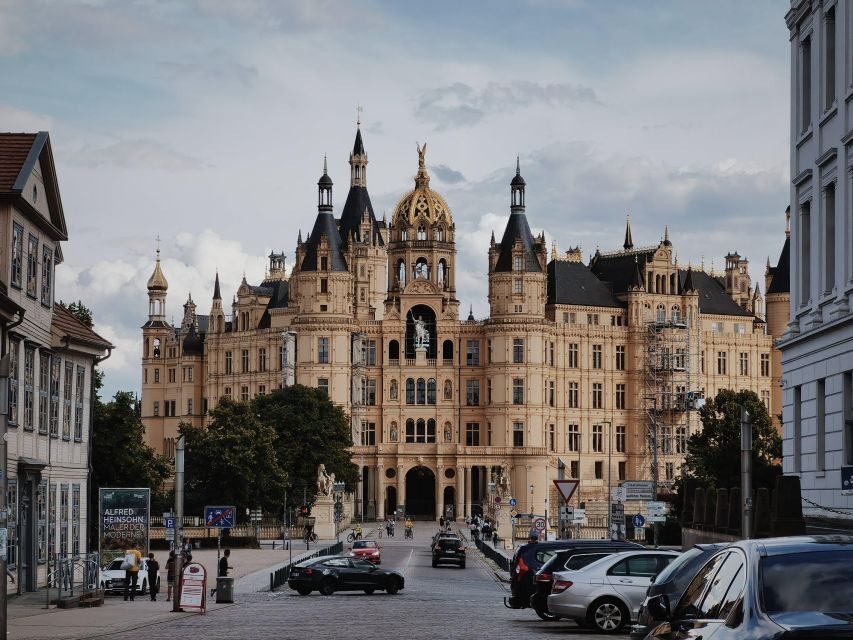
This tour is built around Schwerin Palace, often called the Neuschwanstein of the North. Even if you’ve seen a lot of palaces in Germany, it’s the island setting that makes this one feel different. From the lake setting, the palace becomes a visual “pause” in your walk, the kind of scene you understand even before you learn the details.
What I like about having the palace as the early star is that it sets your expectations. The guide can explain how romantic architecture sits on top of older layers—how a city can grow, reshape, and still keep its identity. You’ll get the sense that Schwerin is not just pretty; it’s a place where rulers and ideas left tracks.
Because entrance fees aren’t included, you should think in advance about what you want: a photo-and-view walk around the exterior, or time spent paying to go inside specific spaces. Either can work, but it changes how much time you’ll want to spend at each landmark.
Medieval Schwerin Cathedral: pilgrimage legends with real context
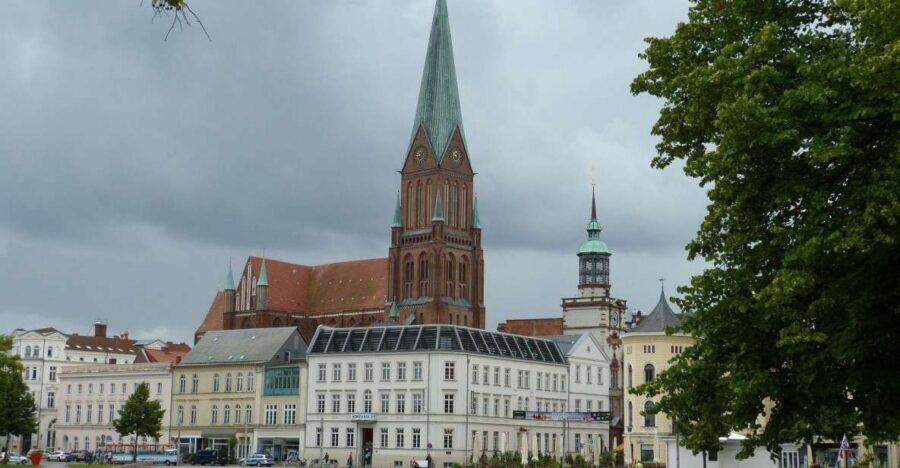
In the Middle Ages, the town’s center point was Schwerin Cathedral, and it mattered across Europe through its reputed pilgrimage significance. The tour highlights one of the most famous stories connected to the cathedral: a rumored drop of Christ’s blood.
Even if you treat pilgrimage legends as spiritual history rather than literal fact, they’re still useful. They explain why a church can pull people from far away, influence politics, and shape how a city organizes itself around belief. A good guide won’t just repeat the legend. You’ll get the sense of what medieval travelers and locals would have believed, feared, celebrated, and debated.
This stop also helps you connect the city’s spiritual identity to its later turbulence. When you know why people once gathered here, you’re better prepared to understand how religious and political changes—especially around the Protestant revolution—rearranged the meaning of power and place.
The old town walk: Schwerin’s tight timeline from 1018 to 1160
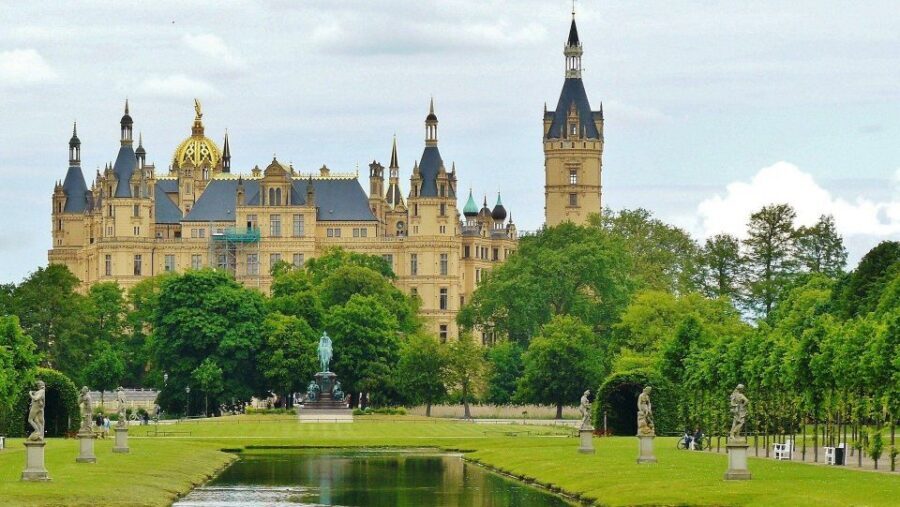
Schwerin’s roots stretch back to the 10th century. The city is documented as existing since at least 1018, and it was recognized as a city in 1160. That’s an unusually long arc for a land capital you can cover on foot in under two hours.
What you’ll enjoy is how the guide uses that timeline to make the city feel lived-in. Instead of dumping dates, the tour connects early origins to the way Schwerin built its identity around the cathedral and the central landmarks. You’ll also learn that the old town is largely intact, with only minor damage from World War II.
That detail matters for your visit. When a historic core survives with only limited disruption, you get stronger “reading” power from the street layout. You can look at what’s still there and understand the continuity, instead of imagining the city that might have existed before destruction.
From the Protestant revolution to the Thirty Years’ War: how religion reshaped daily life
Schwerin didn’t float above European events. This tour explains the impact of the Protestant revolution and the Thirty Years’ War, and you’ll hear how those shifts echoed locally. That’s the kind of context that turns a pretty town into a meaningful one.
In practical terms, this is where the guide’s storytelling really earns its keep. Religious and political upheavals are hard to picture without a place to hang them on. By anchoring the era to Schwerin, you start to connect big history to real urban consequences: changes in authority, changes in how communities viewed power, and changes in what people prioritized.
If you tend to like history that explains why things changed—not just what happened—this is one of the strongest parts of the walk. It gives your photos a second layer: not only what you see, but why it mattered.
Napoleonic era and German unification: seeing the modern shape behind the old stones
After the early modern chaos, the tour carries you into Schwerin’s role in the Napoleonic period and the Unification of Germany era. This section helps you understand the city as part of a bigger shift, not a museum piece.
I like that this doesn’t treat modern history as a separate topic. It feels like a continuation. Once you understand how authority and belief shifted in earlier centuries, you can track how the political map tightened and Germany’s national story formed.
This is also where the private format pays off. If you want more explanation of how unification affected smaller states and cities, the guide can tailor the balance. If you want shorter answers and more walking time, that can be done too.
Your private group and the price: when $280 makes sense
The tour costs $280 per group for up to 15 people, running about 90 minutes. For a private walking tour, that price is usually less about “cheaper versus public tours” and more about control: your pace, your questions, and your ability to focus on what you actually care about.
Here’s how I’d judge value before you book:
- If you’re traveling with 6+ people, the per-person cost usually drops to the level where you’re paying for a guide’s expertise rather than just convenience.
- If you’re a solo traveler or a couple, you’ll want to decide if you’ll use the private format to ask lots of questions and get personal pacing.
- Because entrance fees are not included, the true budget is guide cost plus any paid entries you choose to add.
In one experience, people also liked that the guide adapted the walk to match an evening plan. A guide named Jürgen reportedly adjusted the focus when the group had a night watch tour later, and even worked in extra stops like a visit to a wild meat shop and an older house. The key takeaway for you: in a private tour, the guide can reorganize emphasis so you don’t waste your limited sightseeing time.
Guide quality in practice: asking, tailoring, and keeping it lively
English and German are available, and the guide stays with your group only. That matters more than people expect. In a private setting, the guide can match your tempo—slower for photos, faster for overview, or more history when you ask.
Two guide names that came up in real feedback are Theresa and Jürgen. The common theme isn’t just that the explanations were good; it was that the approach felt easy to follow and genuinely responsive. If you prefer your history conversational instead of lecture-style, this kind of guiding is a strong fit.
If you want the best results, come with one or two priorities. For example: Schwerin Palace photos and setting, Cathedral pilgrimage story, or the Protestant revolution and Thirty Years’ War explanation. When you give that direction, the guide can shape the walk inside the 90-minute window.
Who should book this Schwerin private walk
This tour is a great fit if you want:
- A compact, landmark-focused walk that still covers big historical moments.
- A romantic centerpiece (Schwerin Palace) paired with medieval and early modern context (Cathedral, Protestant revolution, wars, Napoleonic era).
- A private format where you can ask questions and get answers that match your interests.
It’s less ideal if you want a long, museum-style day or if you’re hunting for a lot of paid interior time. The tour is 90 minutes, so it’s best thought of as a smart orientation plus highlight walk, not an all-day deep dive into every building.
Should you book Schwerin: Private Guided Walking Tour?
Yes, I’d book it if you want Schwerin’s top sights explained in a tight, efficient way and you value private pacing. The palace setting on Lake Schwerin is the kind of scene you remember, and the guide’s ability to connect that romance to medieval roots and later upheavals makes the walk feel more meaningful than a simple sightseeing loop.
I’d hesitate only if you’re traveling on a strict budget for entrances, because the tour doesn’t include them, or if you dislike meeting-point uncertainty. If you show up a few minutes early and confirm which entrance area is correct, that risk becomes minor.
If you like history that connects to streets and landmarks, this is a very solid way to spend 90 minutes in Northern Germany.
FAQ
How long is the Schwerin private guided walking tour?
The tour duration is 90 minutes.
What’s the price for this tour?
It’s priced at $280 per group, with the group size up to 15 people.
Is this a private tour or shared group?
It’s a private group tour, and your local professional guide will be with your group only.
What languages are offered?
The live tour guide offers English and German.
Are entrance fees included?
No. Entrance fees are not included.
Where do we meet for the tour?
The meeting point is in front of Schwerin Castle, Lennéstraße 1, 19053 Schwerin.
Is free cancellation available?
Yes. You can cancel up to 24 hours in advance for a full refund.