REVIEW · REGENSBURG
Regensburg – Classic guided tour
Book on Viator →Operated by BlackBuck Travels · Bookable on Viator
Regensburg teaches itself as you walk. This private introductory tour strings together Regensburg’s UNESCO Old Town with Roman and Gothic landmarks, so you get the city’s main eras in one easy circuit. I like that the stops are close enough to feel like a real neighborhood stroll, and that the guide shares the kind of details you normally miss while just passing through.
One thing to consider is the time limit: you’re out for about 1 hour 30 minutes to 2 hours, so most highlights are exterior views and photo moments, not long museum-style visits.
In This Review
- Key points at a glance
- A 2-hour Regensburg loop that actually makes sense
- Meeting at Altes Rathaus: your bearings fast
- UNESCO Old Town and Stadtamhof: the merchant-house cityscape
- St Peter’s Cathedral (from the outside) and the long bench/green table stories
- Old Stone Bridge: Roman gate energy and the 11-year rebuild
- Porta Praetoria: the Roman gate that still feels imposing
- Price and value: $347.28 for up to 15 people
- What the private format changes (and why it’s worth it)
- Who this tour suits best
- Should you book the Regensburg Classic guided tour?
- FAQ
- Where is the meeting point for the tour?
- How long does the Regensburg classic guided tour last?
- Is this a private tour?
- How many people can be in a group?
- What is the tour price?
- Do I get a ticket on my phone?
- Is admission included for all stops?
- Does the tour end at the same place it starts?
- How far in advance do people typically book this tour?
- What happens if I cancel?
- Are there multiple tour times available?
Key points at a glance
- UNESCO Old Town focus with the merchant-house cityscape of Regensburg
- Roman-to-Gothic storyline from Porta Praetoria to St Peter’s Cathedral
- Old Stone Bridge history tied to Frankish and French rulers
- Smart downtown meeting point at Altes Rathaus, easy to orient fast
- Private group format (up to 15), with multiple daily start times available
A 2-hour Regensburg loop that actually makes sense
Regensburg is one of those places where the streets feel older than your own travel plans. The value of this tour is that it keeps you moving through the city’s most recognizable layers—medieval merchant wealth, Gothic power, and Roman engineering—without sending you all over town. You don’t need to guess what you’re looking at. The guide explains how the pieces connect, so the city starts to feel like a timeline instead of a list of sights.
I also like the “first time here” logic. You’re not stuck choosing between dozens of options. You get a guided orientation that helps you spot what matters later—like which buildings are central to the city’s story and why those particular spots earned protection and fame.
The pacing is built for real walking. Expect roughly 1.5 to 2 hours, with several short stops. That works well if you want a clean introduction before you go off on your own for lunch, longer photo breaks, or a slower return later.
You can also read our reviews of more guided tours in Regensburg


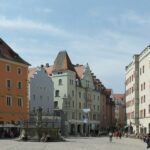
Meeting at Altes Rathaus: your bearings fast
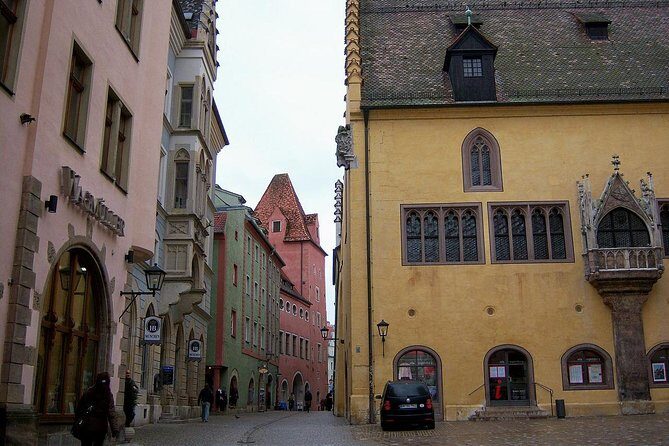
You start at Altes Rathaus Regensburg at Rathauspl. 1 (93047). That’s a smart choice because it puts you in the heart of the old-city core, where most of the major sights are within a walk. If you’re arriving for the day and you want to stop being “lost,” this kind of downtown starting point helps a lot.
The tour ends back at the meeting point. That matters more than it sounds. A guided walk that loops back means you’re not stranded at the other end of town, hunting for your next move or hauling bags across multiple areas. It’s also convenient if you have a reservation later, because you can build your schedule around returning to the center.
Another practical plus: you can pick from multiple daily tour times. That gives you flexibility if you’re coordinating with other plans—especially helpful in a city where you’ll likely want to spend more time wandering after the guided portion.
UNESCO Old Town and Stadtamhof: the merchant-house cityscape
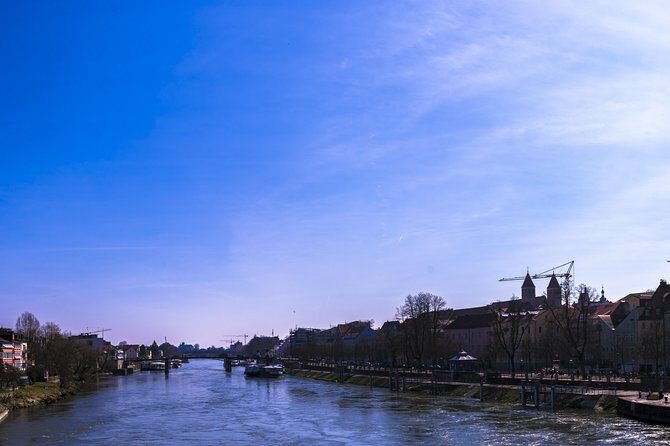
The first stop is the Old Town of Regensburg with Stadtamhof, part of the UNESCO World Heritage area. This is where the city’s medieval identity becomes obvious. The guide helps you see the “merchant houses” vibe—not as vague old buildings, but as a dense urban fabric. You’re looking at an area that’s described as the largest medieval region of the city, with around 1,500 buildings and a historic cityscape style that still reads clearly today.
You’ll also hear how this UNESCO area connects to the broader Green Belt idea. Even if you’re not thinking about urban planning, it’s useful context. It explains why Regensburg isn’t just old—it’s carefully preserved in a way that protects both architecture and city structure.
Admission is listed as free for this stop. That’s a nice way to start: you get the big-picture UNESCO impact without paying to get your feet on the stones. And because you’re early in the route, it sets you up for the rest of the tour—once you understand the medieval layout, Roman and Gothic features start to look less random.
If you only have a short window in Regensburg, this is one of the best places to spend it. You’re not trying to “tick” one monument. You’re getting a feel for how the whole city grew and held onto its character.
St Peter’s Cathedral (from the outside) and the long bench/green table stories
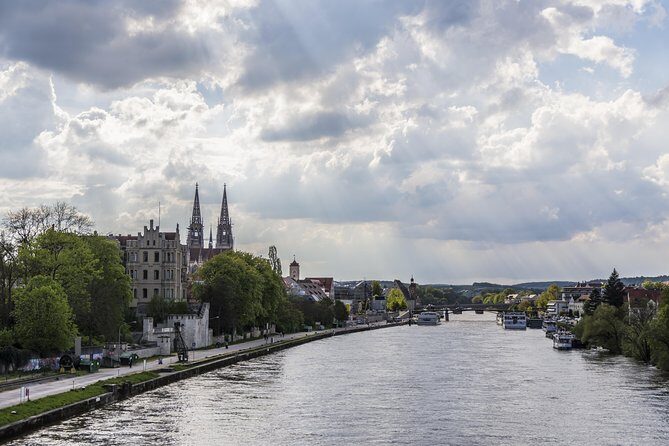
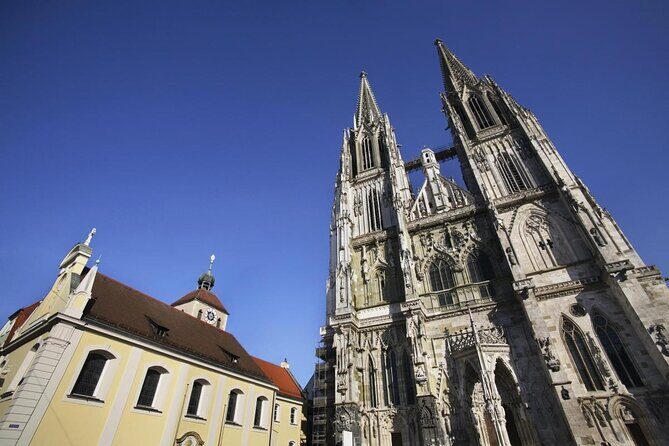
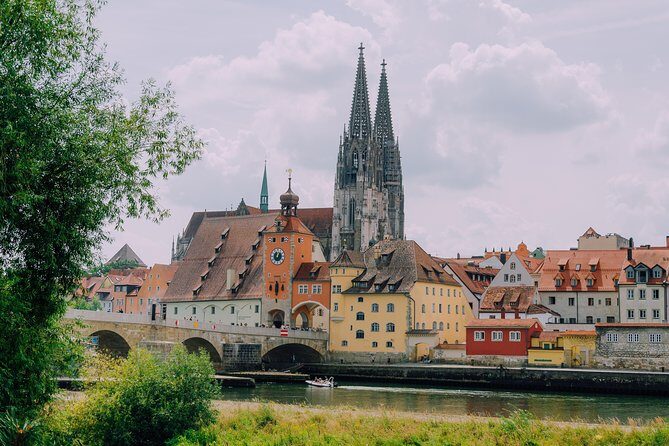
Next comes St Peter’s Cathedral. You view it from outside, which means you can keep moving and avoid losing time to lines or ticket hassles. The tour frame also helps here: the guide is pointing you toward what to notice in Gothic architecture and how French Gothic influence shows up.
The cathedral you’ll see is described as Gothic and noted for being a known landmark of the state. There’s also an interesting architectural clue: the architect supervising work around 1280 had training in France, which explains the French Gothic themes you might spot when you’re comparing styles.
Right near this area, you also get the town hall context. The town hall complex is described as having three sections and dating back to the 13th century, including the town hall tower, the Gothic Imperial Chamber building, and a baroque component. And then comes the social-culture part that makes this stop more than stone and schedule: two popular expressions are said to have originated here—putting something on the long bench (meaning to postpone) and sitting at the green table (meaning to make important decisions).
That’s the kind of local detail that sticks. It turns a cathedral-and-hall stop into a story about how decisions were made and how language reflects civic life. If you like tours that teach you how to read a city’s habits, this is a strong moment.
Admission is listed as not included for this stop. Since the tour is described as an outside visit, you’re generally not stuck needing entry tickets to get the core experience—but it’s still a reminder to plan for any optional interior visits separately.
Old Stone Bridge: Roman gate energy and the 11-year rebuild
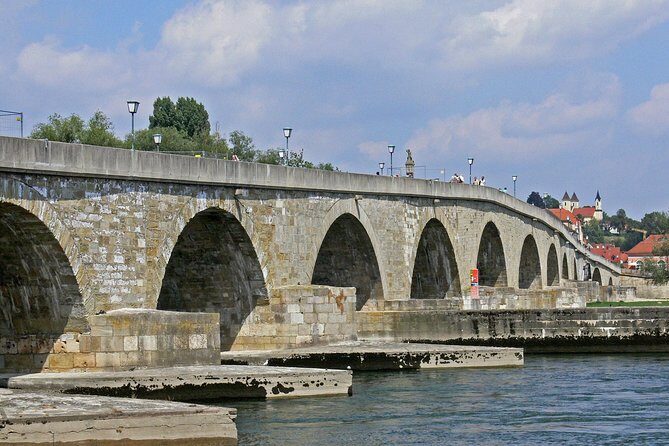
Then you move to the Old Stone Bridge. This stop has two layers: the bridge’s role in the city and the personal history of how it became stone in the first place. The information you’ll get is very specific, which is exactly what makes a guided stop better than random sightseeing.
You’ll learn that the “sound end” serves as an ancient city gate. That’s a neat way to understand bridges here: they’re not just crossings. They’re part of how the city protected itself and controlled movement over the Danube.
The guide also brings the timeline to life. A wooden bridge of about 100 meters long is described as being built by Charlemagne (Charles the Great), but it was vulnerable to floods and traffic. Eventually the wooden bridge was dismantled, and a new stone bridge took eleven years to form. The tour ties the bridge to a major cross-Danube moment too: Louis VII of France and his army used it to cross.
One drawback to know: this is still a walking tour. The bridge can mean more open-air exposure and more time looking across rather than into. If your goal is constant close-up sightseeing, balance expectations: the story here is in the transformation and the way the bridge connects Regensburg’s defenses and travel routes.
Still, the payoff is real. Once you understand the bridge as a long-running link in European movement, it becomes more than a postcard. It becomes a piece of how power traveled through the region.




Porta Praetoria: the Roman gate that still feels imposing
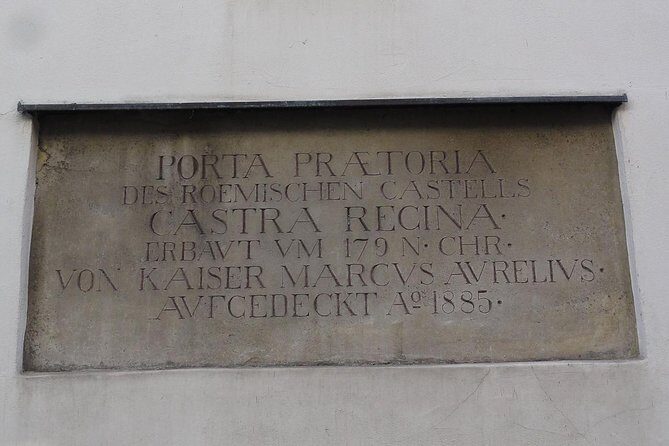
The final highlight on the route is Porta Praetoria, the Roman gate. This is the place where you feel Regensburg’s older, military-era roots in a very direct way. The tour frames it as a Roman gateway, also associated with Roman militants, and it connects the structure to inscriptions and historical references.
You’ll be shown how the “towering gates” relate to text attributed to Gholaia, using a comparison of the door’s decorated importance to a jewel taken for its value—basically saying the gate’s decoration signals status and pride. The tour also references a saying attributed to the Roman historian and senator Publius Cornelius Tacitus, describing the camp as the pride of the soldiers.
Even if you don’t memorize every reference, what you gain is a sense of what this gate communicated at the time: authority, order, and a clear entry point into a Roman world. Tours that end on a “Roman wow” stop usually work best when the guide makes the Roman layer connect to what you’ve already seen. Here, that connection is natural. You’ve walked from a UNESCO medieval cityscape to Gothic power and then to a bridge that served armies. The Roman gate gives your timeline a firm anchor.
Admission for this stop is listed as free, which keeps the budget simple. It’s a strong last stop because it feels different from the rest of the route while still being clearly part of the same city story.
Price and value: $347.28 for up to 15 people
The price is $347.28 per group, up to 15 people. On paper, that sounds like a group deal, and it is. But you should think about value in terms of what you get for that time: an organized, guided “intro loop” through major highlights in central Regensburg, roughly 1 hour 30 minutes to 2 hours.
If you’re traveling solo, the math may feel less exciting. But if you’re a small group—friends, family, or even a couple—this can be a cost-effective way to buy clarity fast. Instead of spending that first day Googling what you’re looking at, you’re paying for an explanation route that hits the most meaningful stops.
Also consider that several stops are listed as free (Old Town, Old Stone Bridge, Porta Praetoria). The cathedral stop is the one noted as not included. Even with that, the overall experience stays relatively straightforward: the tour is built around exterior viewing and city-center landmarks, so you’re not stacking lots of add-on entry fees.
Another quiet value point: you get a mobile ticket. That reduces friction when you’re moving around the city and trying to keep things simple.
This tour is also typically booked about 17 days in advance, on average. If you’re traveling in peak season or have limited dates, booking earlier helps you land a start time that matches your schedule.
What the private format changes (and why it’s worth it)
This is a private tour/activity, meaning only your group participates. That changes the feel immediately. You can keep questions focused on what you actually care about—architecture, city planning, the Roman layer, or the language stories tied to the town hall.
It also helps with pacing. The itinerary is structured with short stop times, but private groups tend to move more like a guided stroll than a rushed production line. That matters in Regensburg, because the city is built for walking slow enough to notice details in stonework, facades, and street layouts.
You’ll also benefit from having your guide control the “what to look at” part. In a UNESCO-listed old town, it’s easy to wander past the exact element that makes a building important. Here, the tour steers you toward the points that tell you what’s significant.
And from a comfort perspective, the stop sequence is designed so you aren’t stuck in one long viewing spot. Even if weather isn’t great, short exterior stops and frequent movement can keep things manageable. (It’s still outside walking, so plan accordingly.)
Who this tour suits best
This experience is a strong match if you’re:
- New to Regensburg and want an orientation you can build on later
- Interested in how different eras overlap in one city—Roman, medieval, and Gothic
- Traveling with a group that wants flexibility with multiple daily times and a private format
It’s also a good fit if your time is limited. With only about 1.5 to 2 hours, you still leave with a clearer mental map: where the medieval core sits, what the cathedral’s style signals, how the bridge became stone, and why Porta Praetoria is such a big deal.
If you’re the type who wants deep interior access, long museum time, or hours in a single building, you may find this tour more of an introduction than a full day plan. But as a primer, it’s very focused.
Should you book the Regensburg Classic guided tour?
I’d book it if you want to get your bearings fast and make Regensburg’s UNESCO streets and monuments feel connected instead of random. The tour’s strength is the story order: medieval merchant houses lead into Gothic authority, which leads naturally into the Danube bridge narrative and ends with the Roman gate impact.
If your group is small or you want a guided explanation more than you want free-wheeling exploration, this format gives you good value for the time. If you’re traveling solo and cost is your main concern, you may decide you prefer doing a self-guided walk. But if you’d rather pay for clarity, this is the kind of tour that helps you see more on the days that follow.
FAQ
Where is the meeting point for the tour?
You meet at Altes Rathaus Regensburg, Rathauspl. 1, 93047 Regensburg, Germany.
How long does the Regensburg classic guided tour last?
The tour runs about 1 hour 30 minutes to 2 hours.
Is this a private tour?
Yes. It’s private, and only your group participates.
How many people can be in a group?
The price is per group for up to 15 people.
What is the tour price?
The price is $347.28 per group.
Do I get a ticket on my phone?
Yes. The tour uses a mobile ticket.
Is admission included for all stops?
Old Town of Regensburg with Stadtamhof, Old Stone Bridge, and Porta Praetoria are listed as free. The cathedral stop is listed as not included.
Does the tour end at the same place it starts?
Yes. It ends back at the meeting point.
How far in advance do people typically book this tour?
On average, it’s booked about 17 days in advance.
What happens if I cancel?
The experience is non-refundable and cannot be changed for any reason.
Are there multiple tour times available?
Yes. There are multiple daily tour times available, and you choose what works best for your schedule.