REVIEW · MARBURG
Marburg: Private Guided Walking Tour
Book on GetYourGuide →Operated by Travmonde OÜ · Bookable on GetYourGuide
Marburg feels medieval and studious at once. I like the river Lahn views built right into the town’s shape, and I love how the walk lands at the 16th-century Gothic Town Hall with its hourly singing metal rooster. One heads-up: at $294 per group (up to 15), it’s best value if you’re traveling with others who can split the cost.
This is a smart, story-led orientation to a place that dates back to 1140 and wears its nickname Frontier Fortress on its sleeve. You’ll hear how the town ties together St. Elizabeth of Hungary, Marburg’s role in the Thirty Years’ War and Austro-Prussian War, and why famous names like the Brothers Grimm and Martin Luther matter here.
Because it’s a 2-hour walking tour, wear comfortable shoes and expect a steady pace. If you’re hoping for lots of sit-down breaks or indoor time, plan that into your day, since entrance fees are not included.
In This Review
- Key things to know before you go
- Why Marburg earns its Frontier Fortress nickname
- Starting at Landgrafen Palace: a strong start for a 2-hour walk
- Marktplatz and the Gothic Town Hall clock with its singing rooster
- Old-town lanes, half-timbered houses, and the Gothic church frame
- St. Elizabeth of Hungary: learning the town through a single legend
- The thinkers of Marburg: Brothers Grimm, Martin Luther, and Emil von Behring
- University of Marburg: an intellectual hub you can feel while walking
- Marburg’s role in the Thirty Years’ War and Austro-Prussian War
- Price and value for a private group up to 15
- Who this tour suits best
- Should you book the Marburg private guided walking tour?
- FAQ
- Where does the Marburg private guided walking tour start?
- How long is the tour?
- What is the price, and how large is the group?
- Is the tour private?
- What languages are available for the guide?
- Are entrance fees included?
- Can the tour be customized?
- Is there free cancellation?
Key things to know before you go
- Frontier Fortress meaning: The town name connects to the old Landgrafen Palace and the idea of a border stronghold.
- Marktplatz must-see: The Gothic Town Hall clock includes hourly bells paired with a singing metal rooster.
- St. Elizabeth’s legacy: You’ll spend time on how her story is woven into Marburg’s identity.
- Famous residents with a reason: Brothers Grimm, Martin Luther, and Nobel Prize winner Emil von Behring are tied to the town’s real places.
- Two wars, one town: Learn why Marburg mattered during the Thirty Years’ War and the Austro-Prussian War.
- Private, on-the-spot flexibility: Your local guide stays with your group only, with possible customization during the tour.
Why Marburg earns its Frontier Fortress nickname
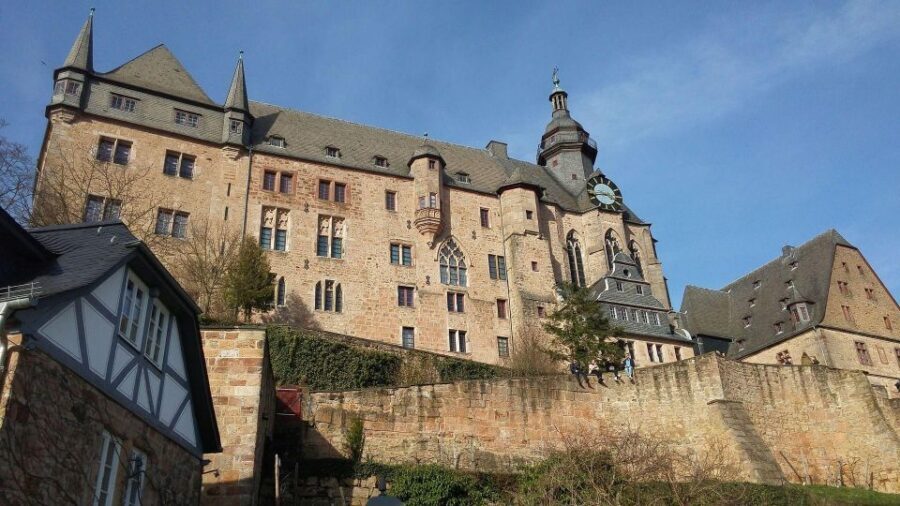
Marburg’s whole vibe is about boundaries. The town’s meaning is tied to the 11th-century idea of a Frontier Fortress, and that theme shows up in how Marburg grew around power and protection. Even before you get to any big landmarks, the setting helps you understand why this place mattered.
I also like that the tour frames Marburg as more than one era. Yes, you’ll walk among old streets and medieval-feeling corners. But you’ll also connect that early start (dating back to 1140) to later chapters, including Marburg’s political importance in Hessen and its intellectual influence as a university town.
That mix matters for you because it turns a quick walking loop into a real sense of place. You start to see how the town’s buildings, streets, and institutions connect to the people and events linked to Marburg.
You can also read our reviews of more tours and experiences in Marburg.

Starting at Landgrafen Palace: a strong start for a 2-hour walk
You meet at Landgrafen Palace (Landgrafenpalast), 35037 Marburg. Starting at a palace is a big deal here, because it sets the tone: this town was shaped by rulers, and it keeps that identity in the way landmarks face the town.
From that point, the tour is designed for getting your bearings fast. In two hours, you won’t get everything. But you can get the logic: palace and power on one side, the old-town core with its major squares on the other, and the castle above town on a hilltop that helps you read the geography.
One practical benefit: because the group is private, your local guide can adjust the walking pace to your comfort. You’re not stuck watching a crowd shuffle past photo spots while the guide moves on.
Marktplatz and the Gothic Town Hall clock with its singing rooster

If you like landmarks with character, Marktplatz is the anchor. This is where the walk centers on the 16th-century Gothic Town Hall and its distinctive clock set in a Renaissance tower. The timing feature is the star: every hour, bells pair up with a singing metal rooster.
That detail is more than a gimmick. It tells you something about how everyday life moved around public timekeeping in old European towns. You’ll get a sense for why squares like this were the heart of routine, announcements, and community.
A small tip: if your tour timing lines up with an hour change, you’ll likely catch the moment. Even if you don’t, the clock and its mechanics are still the kind of thing you remember later, because it’s so specific to Marburg.
Also note: entrance fees aren’t included. So think of this stop as a view-and-story stop unless you choose to add optional paid entry elsewhere on your own.
Old-town lanes, half-timbered houses, and the Gothic church frame
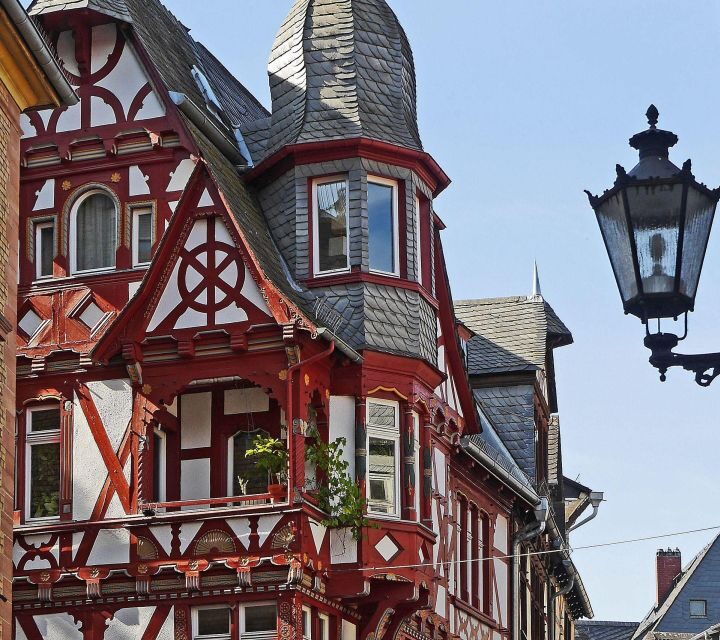
After Marktplatz, the tour shifts into the parts you usually want on a first visit: narrow lanes, older façades, and street-level texture. You’ll move through areas with half-timbered houses, and you’ll see how Marburg’s old center ties together a palace setting, the big square, and nearby monumental architecture.
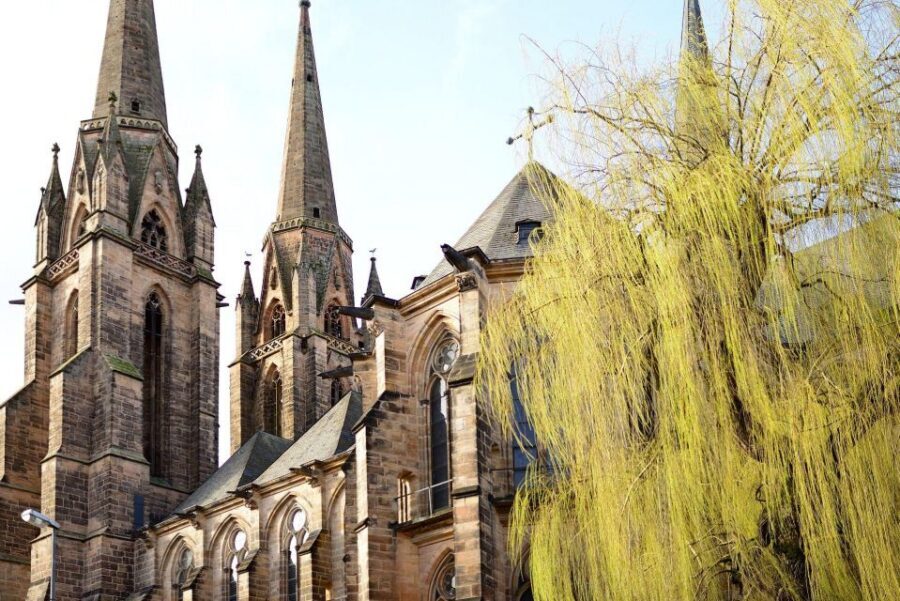
You’ll also pass between a palace and an impressive Gothic church. Even without going inside, the way buildings line up from different angles helps you understand why this city looks the way it does. In towns like this, exterior views often do the heavy lifting.
What I like here for you: it’s not just a parade of photos. A good walking guide uses these “in-between” streets to explain why places are where they are—how a medieval town grows outward, how the square functions, and why important buildings sit in dominating positions.
St. Elizabeth of Hungary: learning the town through a single legend

The tour includes the legacy of St. Elizabeth of Hungary, and I think that’s a smart approach. When you tether a town’s story to one well-known figure, you avoid the common problem of getting a pile of facts with no thread connecting them.
Marburg’s connection to St. Elizabeth is part of why the town feels more human than purely political or academic. You’ll get the sense that the town’s identity isn’t only about rulers and wars—it also has spiritual and social meaning that kept shaping how people talked about Marburg over time.
For you, that matters because it changes how you’ll look at the town. Instead of only admiring architecture, you’ll also start noticing how certain places likely carried symbolic weight. Even when you’re just walking, the story helps you “see” what you’re passing.
The thinkers of Marburg: Brothers Grimm, Martin Luther, and Emil von Behring
One of the most fun parts of this tour is the mix of famous names. You’ll walk where the Brothers Grimm and Martin Luther are connected to the town’s story, and you’ll also learn about Nobel Prize winner Emil von Behring.
That combination is practical. It shows you Marburg wasn’t locked into one kind of importance. It mattered for literature and ideas, for religious reform-era thinking, and later for scientific recognition.
And it gives you an easy way to remember the town. When you leave, it’s not just Gothic buildings and old streets. It’s a set of human anchors—people whose legacies help explain why Marburg gained a long-lasting reputation.
University of Marburg: an intellectual hub you can feel while walking
Marburg isn’t only historic. It’s also a university town, and the tour points to the University of Marburg as an intellectual hub. You’ll hear about that side of town as you walk, so the streets don’t feel stuck in the past.
For me, this is where Marburg becomes more than a quick stop. A university means daily life, new energy, and a constant stream of ideas. Even if you’re not spending time inside academic buildings, the guide’s framing helps you connect the present atmosphere to the long-running importance of learning here.
This part is especially good if you like “why this town works” questions, not just “what happened here” facts. You’ll leave with a clearer picture of how education helped keep Marburg relevant across centuries.
Marburg’s role in the Thirty Years’ War and Austro-Prussian War
The tour also covers Marburg’s role in two major conflict periods: the Thirty Years’ War and the Austro-Prussian War. You don’t need to be a military-history expert for this to make sense, because a good walking guide ties wars back to real locations and real stakes.
Why this matters for you: wars explain infrastructure, power shifts, and why certain buildings or institutions gained meaning. Even if you don’t learn every battle detail, you should come away with a clearer understanding of why Marburg had strategic importance at different points in time.
A balanced approach is key here. Wars can become overwhelming if you pack too many specifics into a short walk. In two hours, the goal is understanding: why Marburg mattered, and how those eras influenced the town’s later story.
Price and value for a private group up to 15
Let’s talk money, because $294 can sound steep until you translate it into what you actually get. This is a private guided walking tour for your group only, and the price is per group up to 15 people. That changes the math fast if you’re traveling with friends, family, a small club, or colleagues.
You’re paying for:
- A local professional guide staying with your group only
- English or German live guidance
- The chance for possible customization on the spot
- A focused 2-hour route built around key Marburg highlights
Also, entrance fees are not included, so your total day cost may rise if you add paid entry. But if your plan is mainly exterior viewing plus guided context, you can keep things simple.
If you’re solo or just two people, the price can feel less efficient. If you have three to five people, it often becomes much more reasonable. If you have a full group, it becomes a great deal for a personalized, high-quality orientation walk.
One more practical point: the tour offers free cancellation up to 24 hours in advance, and there’s a reserve now & pay later option. That’s useful when your plans are still shifting.
Who this tour suits best
This Marburg private walking tour is a strong match if you want:
- A first-time orientation to Marburg in a short window
- A guide who can explain connections between people, places, and events
- A mix of medieval feel plus university-town reality
- A route centered on Marktplatz, the Town Hall clock with its rooster, and major story stops
It’s also a good choice for groups who like learning together at a human pace. Because it’s private, your guide can slow down for questions or speed up when everyone is ready.
If you’re the type who hates walking, or you only want deep museum-style interiors, this may not replace longer paid attractions. But as a guided city introduction, it hits the sweet spot.
Should you book the Marburg private guided walking tour?
I’d book it if you’re heading to Marburg and want a guided story that connects the town’s name, its old square centerpiece, the river Lahn setting, and the big threads of religion, ideas, war, and academia. It’s the kind of tour that gives you context before you go off on your own.
I’d think twice if you’re traveling alone and price per person feels like too much. In that case, consider whether you’ll share the cost with others or whether you’d rather do a self-guided stroll and spend your budget elsewhere.
If you do book, plan your day around comfortable walking shoes and give yourself a little buffer afterward. A good 2-hour orientation walk makes it easier to come back later and notice things you would’ve missed the first time.
FAQ
Where does the Marburg private guided walking tour start?
The meeting point is Landgrafen Palace, 35037 Marburg, Germany.
How long is the tour?
The tour duration is 2 hours.
What is the price, and how large is the group?
It’s $294 per group, for groups up to 15 people.
Is the tour private?
Yes. It’s a private group tour, meaning the local professional guide will be with your group only.
What languages are available for the guide?
The live guide is available in English and German.
Are entrance fees included?
No. Entrance fees are not included.
Can the tour be customized?
There can be possible customizing on the spot with your local guide.
Is there free cancellation?
Yes, you can cancel up to 24 hours in advance for a full refund.