REVIEW · HANN MUNDEN
Hann. Münden, the city of three rivers: Lindenau city tour with humor and knowledge.
Book on GetYourGuide →Operated by Hann. Münden: Stadtführung Lindenau · Bookable on GetYourGuide
Three rivers, one smart guide, and real punchlines. On this Lindenau city tour, you walk through Hann. Münden with a TV journalist turned guide, mixing wit with clear context from street-level history.
You’ll get two standout payoffs right away: the storytelling lands like a good article (easy to follow, funny, and specific), and there’s a visit to a 17th-century vaulted cellar that adds a real sense of place.
The main thing to consider is that it’s only 75 minutes, so you won’t see every corner of the river town, and the brief vault stop is the one part that can be less comfortable for wheelchairs.
In This Review
- Key highlights you shouldn’t miss
- Hann. Münden in 75 minutes: town-hall orientation and real local stories
- Meet Michael Lindenau: journalist experience, humor, and a guide who explains
- The Münden toll story: why wealth came to town
- Hann. Münden’s “historical and hysterical facts”: folklore sorted from fakes
- The 17th-century vaulted cellar: the short stop that changes the whole mood
- Photo tips for your phone: practical shots while you walk
- Barrier-free reality check: where accessibility works and where it doesn’t
- Dogs welcome, small-group feel: comfortable pacing for questions
- Price and value: what $29 buys you in a 75-minute story
- What the route feels like: a walk you can follow without a map obsession
- Who should book this tour (and who might skip it)
- Should you book the Lindenau city tour? My straight call
- FAQ
- Where is the tour start and end point?
- How long is the Lindenau city tour?
- What language is the tour offered in?
- Is there an extra admission fee for the main stops?
- Does the tour include a visit to a 17th-century vaulted cellar?
- Is the tour wheelchair accessible?
- Are dogs allowed on the tour?
- Does the guide share tips for taking photos with a phone?
- What is the cancellation policy?
Key highlights you shouldn’t miss
- Town hall start-and-finish: easy to orient, right at the historic Rathaus area
- Michael Lindenau’s TV-style delivery: journalistic facts with humor you can actually use
- Toll money and town wealth: one of the big story threads explains why Münden prospered
- Mr. Eisenbarth explained: the guide sorts folklore, fakes, and facts
- 17th-century vaulted cellar: a short but memorable time-and-place moment
- Phone photo tips on the walk: practical advice built for handheld cameras
Hann. Münden in 75 minutes: town-hall orientation and real local stories
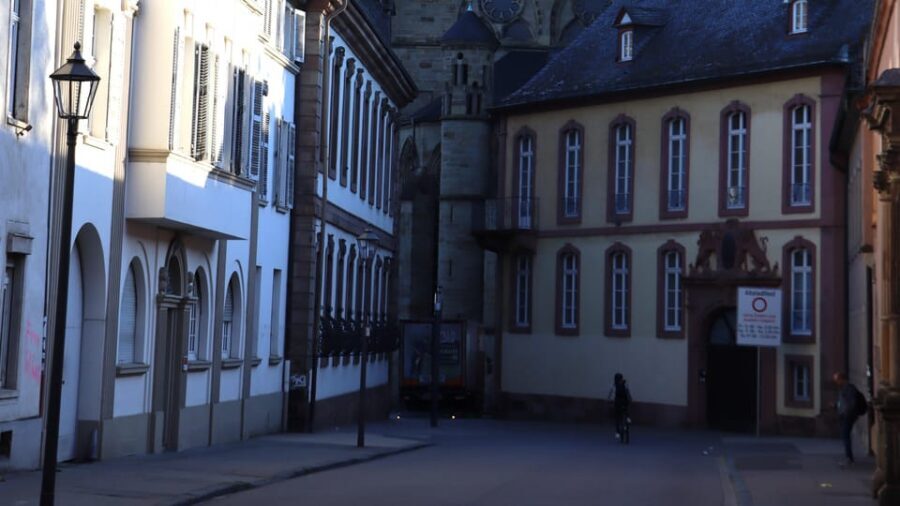
This is the kind of tour that helps you get your bearings fast. It starts and ends at the historic town hall, so you never feel like you’re disappearing into a maze of streets. Plus, Hann. Münden’s identity as the city of three rivers sits in the background of the stories you hear, even when the route is just normal walking streets.
You’ll meet at the front of the historic town hall. The meeting spot includes stairs, and the guide is holding a postcard—small detail, but it makes it easier to find the right person quickly.
Timing matters here. Seventy-five minutes is long enough for a satisfying mini-story arc, but short enough that you can fit it into a day that also includes lunch, a riverside stroll, and a bit of independent exploring.
Meet Michael Lindenau: journalist experience, humor, and a guide who explains
The guide behind this tour is Michael Lindenau. He isn’t just doing canned narration—he brings a journalistic way of thinking, built from years working as a foreign correspondent for television.
That background shows in how the tour sounds. The stories are understandable, and the humor doesn’t feel forced. Instead, he uses it like a journalist uses a good lead: it pulls you in, then the details follow without drowning you in them.
One of the reasons this tour lands well is that he’s comfortable switching gears between topics. You move from economics and civic life to medical folklore to the everyday reality of how people tell stories—often differently than facts do.
And if you like the feeling of a guide who knows their city personally, this tour has that too. Lindenau has settled in Hann. Münden now, and you can hear that local commitment in the way he chooses what to emphasize.
The Münden toll story: why wealth came to town
One of the central historical threads is the Münden toll. You learn how tolls brought wealth to the town—money that shaped life in and around Münden. It’s the kind of detail that turns a “pretty old town” into a place with cause-and-effect.
I like this approach because it explains the why behind the streets. When a town profits from passing trade, you start seeing how power and money leave footprints: in buildings, in civic priorities, and in what people could afford to build and maintain.
Also, it’s a story that gives you a practical lens for looking around after the tour. As you walk outside the route, you’re more likely to notice which areas feel prosperous, which ones feel like they were designed for traffic and commerce, and which parts look like they’re from eras that benefited from trade.
Hann. Münden’s “historical and hysterical facts”: folklore sorted from fakes
Lindenau doesn’t treat local history as a museum display. He frames it as a mix of facts, rumors, and exaggerated tales—then shows you how to separate them.
A highlight is the segment on Mr. Eisenbarth. You get an explanation of the physician and a guide to the difference between folklore, fakes, and facts. That might sound academic, but it comes across like common sense applied to a local character.
This matters for you because local legends can blur easily. Once you learn how the guide sorts storytelling layers, you can evaluate what you hear later—on your own walks, in other tours, or from old signage. The tour gives you a method, not just a character name.
And because the tone stays witty and understandable, you’re not left feeling like you just attended a lecture. You’re left with ideas you can carry.
The 17th-century vaulted cellar: the short stop that changes the whole mood
If you like history you can feel in your body, the 17th-century vaulted cellar is the emotional gear-shift. It’s only about a 10-minute visit, but that’s long enough to break the outdoor walking rhythm and let the stories land with atmosphere.
This is also the one part that affects accessibility. The tour is described as wheelchair accessible overall, but the vault visit is specifically the segment that’s not fully barrier-free. If you’re using a wheelchair or mobility aid, it’s smart to plan your comfort level for that short time inside.
What’s great here is that the cellar visit isn’t treated like a random add-on. It supports the tour’s broader theme: old towns weren’t just scenic. They were practical, engineered, and built for the realities of storage, protection, and daily life.
Also, because the visit is brief, you don’t feel like you’ve been dragged into a long indoor program. It’s a concentrated experience and then you’re back outside, ready to connect it to the streets you’ve been hearing about.
Photo tips for your phone: practical shots while you walk
A surprisingly useful feature is that the guide gives tips for taking great photos with your cell phone. This isn’t about fancy gear. It’s about seeing and framing while you’re moving through real streets.
You’ll likely find the advice helpful if you’re the type who ends up with blurry shots and crooked angles during walking tours. The tour structure—guided stops, consistent pace, and a guide watching what you’re trying to capture—creates the perfect moment to get quick corrections.
Here’s the bonus: once you understand how to frame on a phone, you get more from the places you see after the tour. You’ll be better at capturing details like facades, street rhythms, and the kind of “small proof” that a story is connected to a real location.
Barrier-free reality check: where accessibility works and where it doesn’t
This tour is described as wheelchair accessible. That said, the important exception is the 10-minute vaulted cellar visit. If you’re planning for mobility needs, that’s the one point to think about first.
You’ll also want to note that the meeting point is at the historic town hall, and the front meeting area includes stairs. Even when the overall tour is accessible, that first moment can matter.
The good news is that the tour is clearly designed with access in mind enough that it’s labeled wheelchair accessible, not “only for able-bodied walkers.” So if you need a structured plan rather than a free-for-all route, this works better than many city tours.
Dogs welcome, small-group feel: comfortable pacing for questions
This tour is dog-friendly, which is a big plus if you travel with a companion who needs to come along. It can be hard to find guided walks that don’t feel like they’re silently asking pets to stay home, so this detail is worth valuing.
Group size also changes the experience. One recent group was just six participants, and that kind of number tends to keep the atmosphere relaxed. You’re more likely to get answers to questions, and you won’t feel like you’re being rushed through every story beat.
If you like tours where you can ask something and actually get time to talk, this format is a good fit. If you prefer a crowded “hear it and move on” style, you may not get that high-energy anonymity here—by design.
Price and value: what $29 buys you in a 75-minute story
At $29 per person for 75 minutes, this tour is priced like a practical city add-on. The value comes from the fact that you’re not paying extra for entry fees or special tickets.
In other words, you get a guided experience with a real indoor stop (the vaulted cellar) and storytelling that connects multiple threads: trade wealth via the toll, local medical folklore via Mr. Eisenbarth, and the guide’s journalist logic for separating folklore, fakes, and facts.
So the “worth it” calculation isn’t just the time. It’s also the quality-control pieces:
- You get a named guide with real background
- You get practical photo advice
- You get one meaningful indoor stop
- You get no extra admissions cost
Also, the tour has a strong overall rating: 4.8 across 17 reviews. That’s not a guarantee of perfection, but it does suggest that most people feel the experience matches what they came for.
If you’re visiting Hann. Münden for a short stay, this is a nice way to compress a lot of local meaning into one morning or afternoon block.
What the route feels like: a walk you can follow without a map obsession
You don’t need to be a navigation expert to enjoy this tour. Starting and ending at the town hall helps you track where you are. Plus, the tour’s style is described as journalistic and understandable, which usually means you’re not lost in references to tiny streets you’d never find on your own.
You’ll also get built-in “stop and look” moments: the cellar visit changes your pace, and the photo tips encourage you to pay attention to angles and details rather than just pass by.
In short, it’s a walk that gives you a story while you’re still seeing the city itself. That’s how you end up with memories you can explain later.
Who should book this tour (and who might skip it)
Book this if you like:
- Story-driven city walks that don’t talk down to you
- Humor mixed with clear explanations
- A named guide with a journalist background
- An indoor historical stop that isn’t too long
You might skip if you want a long, all-day overview with lots of major attractions. This tour is 75 minutes, and it’s focused on specific themes and locations.
If you travel with a dog, have mobility needs to consider, or care about phone photo tips, it becomes an even easier “yes.” The tour is built around convenience and comfort for more than one kind of traveler.
Should you book the Lindenau city tour? My straight call
Yes, I’d book it if you’re looking for a smart, funny guide who helps Hann. Münden click into place. The combination of Michael Lindenau’s journalist storytelling, the 17th-century vaulted cellar stop, and the practical phone photography advice makes this feel like a use-your-time tour rather than a simple sightseeing loop.
Make the decision with this simple checklist:
- You want context, not just dates
- You’re happy with 75 minutes instead of a full-day deep tour
- You’re okay with a brief indoor segment where accessibility can be limited
If those boxes fit, you’ll likely leave with a better understanding of how Münden’s wealth, legends, and real facts connect—plus a few photos you’ll actually be proud of.
FAQ
Where is the tour start and end point?
The tour begins and ends at the historic town hall in Hann. Münden.
How long is the Lindenau city tour?
The duration is 75 minutes.
What language is the tour offered in?
The tour is guided in German.
Is there an extra admission fee for the main stops?
No. There are no additional costs for admission tickets or similar fees.
Does the tour include a visit to a 17th-century vaulted cellar?
Yes. One of the highlights is a visit to a 17th-century vaulted cellar.
Is the tour wheelchair accessible?
It is wheelchair accessible, with the exception of the short (about 10-minute) visit to the vault.
Are dogs allowed on the tour?
Yes, dogs are welcome.
Does the guide share tips for taking photos with a phone?
Yes. The guide provides tips for taking great photos with your cell phone.
What is the cancellation policy?
Free cancellation is available up to 24 hours in advance for a full refund.