REVIEW · GUSTROW
Güstrow: Guided tour of the historic city center
Book on GetYourGuide →Operated by Güstrow-Information · Bookable on GetYourGuide
Güstrow feels like a time machine with doors that actually open. This guided walk focuses on the old town that survived intact for 500 years, plus standout art and architecture in compact, walkable streets.
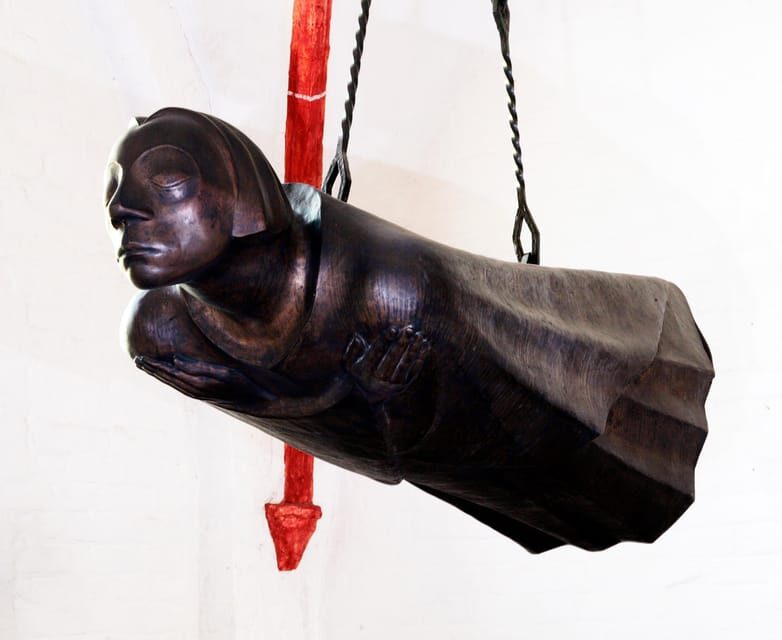
I especially love the stop at the brick Gothic cathedral and Ernst Barlach’s Floating figure. I also like how the guide connects buildings to big historical names—from Wallenstein to August the Strong—so the streets make sense, not just look pretty.
One thing to consider: if you’re mainly castle-focused, the tour can put extra emphasis on the cathedral area, so you may want more time on your own after the walk at the castle and around town.
In This Review
- Key highlights worth planning around
- Why Güstrow’s Old Town Feels Intact (And Not Like a Museum Set)
- Meeting At Güstrow-Information And Timing Your 90 Minutes
- Brick Gothic Cathedral Stop And The Floating Figure By Ernst Barlach
- Market Square: Town Hall, Parish Church, And Style Changes You Can Read
- Renaissance Castle Stories—and What Restoration Changes
- Price, Inclusions, And What You Actually Get For $10
- What You’ll Learn (And How It Makes the Walk Feel Easier)
- Who Should Book This 1.5-Hour Walk (And Who Might Want Extra Time)
- Should You Book This Güstrow Guided City-Center Walk?
- FAQ
- How long is the Güstrow historic city center guided tour?
- Where does the tour start?
- What is included in the price?
- Are entrance fees included?
- Is the tour wheelchair accessible?
- What language is the live guide?
Key highlights worth planning around
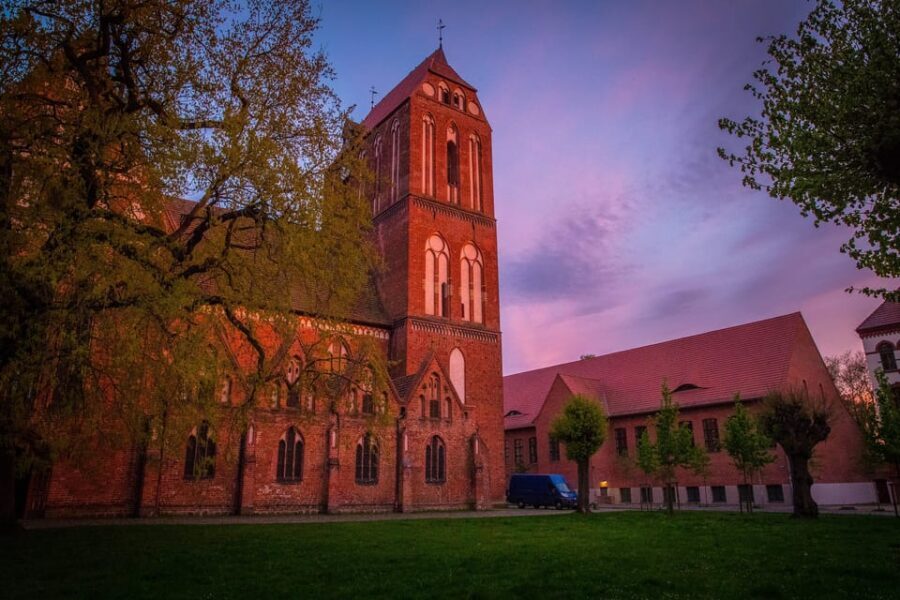
- Ernst Barlach’s Floating inside a brick Gothic cathedral setting
- Old town preserved for 500 years, so details stay readable
- Market square architecture in layers, from different stylistic periods
- Renaissance castle stories, including what you can see while it’s under restoration
- A free city museum you can slot in before or after the walk
Why Güstrow’s Old Town Feels Intact (And Not Like a Museum Set)
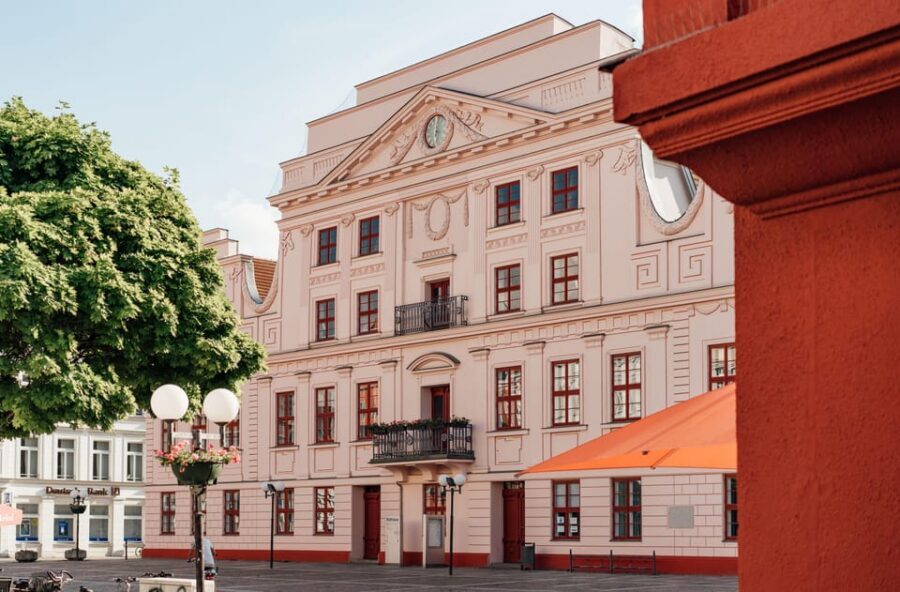
Güstrow was both a residential town and an administrative center, which is exactly why it reads like real life rather than postcard-only scenery. You’ll notice that in the streetscape: houses, churches, and squares that feel lived-in by centuries of planning and power.
The big selling point is the old town’s condition. It’s described as undestroyed for 500 years, and that matters. When a place survives like that, you don’t have to “imagine” what used to be there—you can actually compare styles, textures, and layouts as you walk.
And the history isn’t abstract. The town is tied to figures such as Wallenstein, August the Strong, Tsar Peter the First, Georg Friedrich Kerting, John Brinkmann, Ernst Barlach, and Uwe Johnson. A good guide helps you spot those links in stone and brick, not just in textbooks.
You can also read our reviews of more tours and experiences in Gustrow.
Meeting At Güstrow-Information And Timing Your 90 Minutes
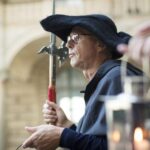
You’ll start at Güstrow tourism e.V. at Franz-Parr-Platz 10. This is a smart place to begin because you’re already in the historic core area where the walk naturally flows into squares and landmark buildings.
Plan for a 90-minute guided tour (listed as 1.5 hours). That’s long enough to feel guided and learn the story, but short enough to keep you from turning into a museum zombie. Wear comfortable shoes—Güstrow is about winding streets and transitions between key points.
Language is German, so if you’re relying on English, you may find you’ll need to slow down and use your eyes as your second narrator. On the plus side, people consistently describe the guides as lively and engaging, and the pacing leaves room for questions when they come up.
Brick Gothic Cathedral Stop And The Floating Figure By Ernst Barlach
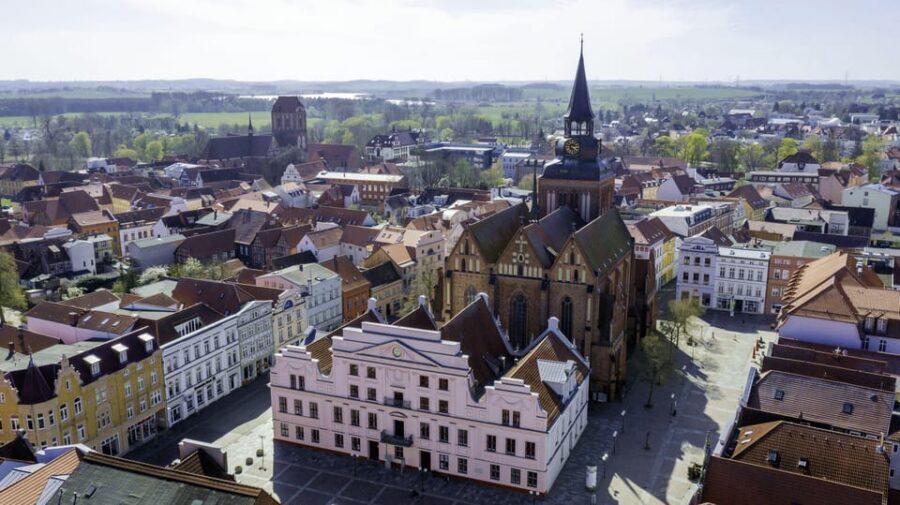
The cathedral is the architectural anchor of the tour. You’re looking at brick Gothic design, which can feel different from the more famous stone Gothic you might see elsewhere in Germany. Here, the brickwork gives the structure its own texture and rhythm—especially up close.
The headline moment is Ernst Barlach’s Floating. Even if you don’t know Barlach’s work, seeing it in the cathedral setting changes the way you read the sculpture. It’s not floating in a white room; it’s responding to the scale, light, and solemn atmosphere of the church space.
This is also where the tour can lean heavily. One review feedback pointed out that the guide spent a lot of time at the cathedral. If you’re the kind of visitor who wants equal time for every stop, keep that in mind. You’ll still get plenty of context, but you may want to save extra time later for the castle and market area so you leave with the full picture.
Practical tip: bring your phone for photos, but also take 20 seconds to just look without framing. The “what am I seeing here?” moment often lands after you stop trying to capture it.
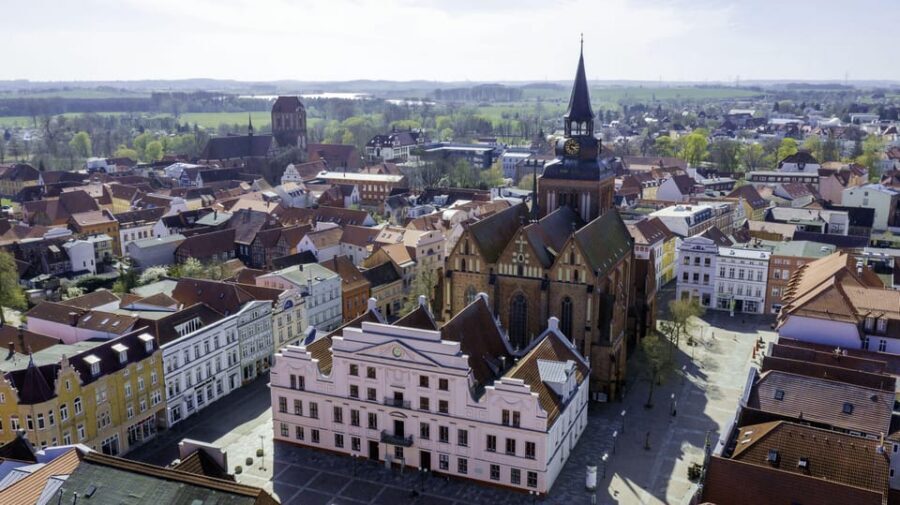
Market Square: Town Hall, Parish Church, And Style Changes You Can Read
After the cathedral, the walk turns toward the market square area. This is where the guide’s storytelling becomes especially useful because you can literally watch history stack up around you.
You’ll see the town hall and the parish church, plus surrounding town houses from different stylistic periods. That variety is the point. It shows how the town kept evolving—socially and politically—without flattening everything into one era.
This stop works well even for first-timers because it’s not just “look at that building.” The market square is a place that helps you understand how people moved, traded, and gathered. When your guide explains what the space meant, it stops feeling like a generic square and starts feeling like a daily-life hub from centuries ago.
Renaissance Castle Stories—and What Restoration Changes
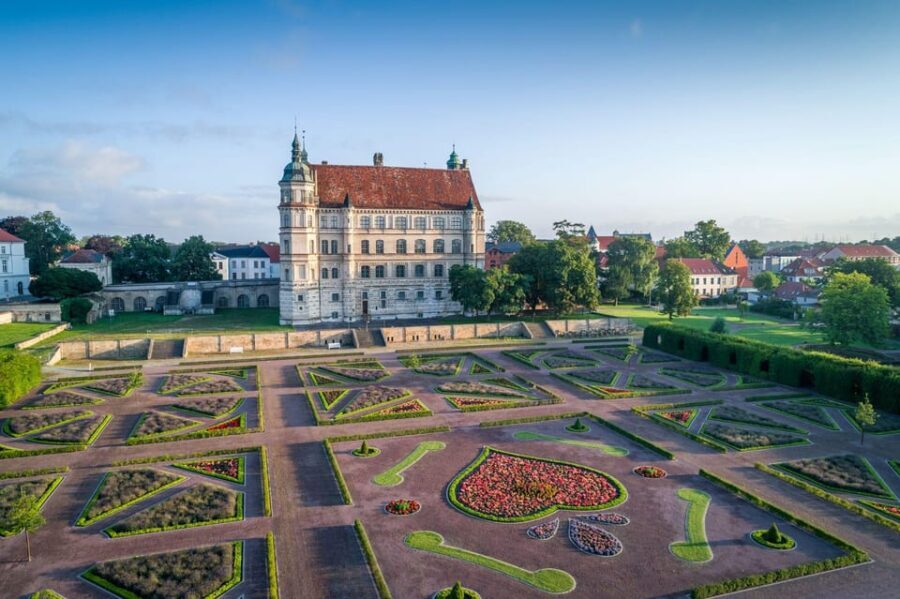
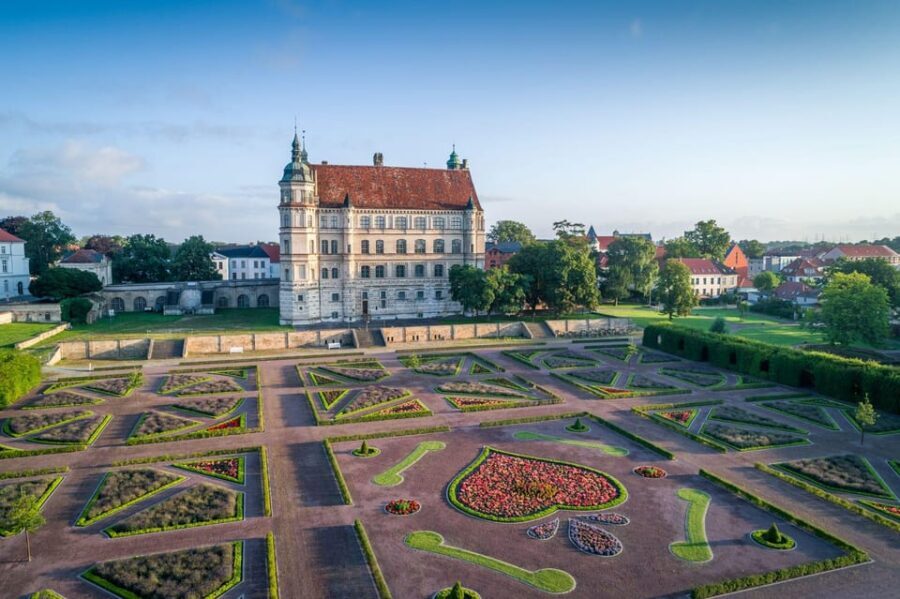
The Renaissance castle is described as the most important in Northern Europe, and even if you can’t take in every detail at a glance, it’s a major emotional and visual magnet. The catch: it’s under restoration.
That restoration affects your experience in a few ways. You might see parts that look wrapped, scaffolded, or temporarily interrupted, and your view could be partial depending on what’s currently worked on. But that’s also why the tour is valuable—your guide can explain what you’re seeing and why the castle’s current condition still matters.
Think of this stop as learning how to look during a work-in-progress. A restored or fully finished building can be impressive, but a living restoration project shows how heritage is cared for in real time. You also get a better sense of what will be worth focusing on once parts open up more fully.
The castle stories are part of the “why” behind Güstrow. Renaissance power isn’t just art and symmetry—it’s administration, wealth, and connections. With the names tied to the town, the castle becomes more than a landmark. It becomes a stage.
Price, Inclusions, And What You Actually Get For $10
At $10 per person for about 1.5 hours, this tour is priced like good local value. You’re not just paying for access—you’re paying for context, timing, and the ability to connect architecture to people.
What’s included:
- An experienced city guide
- About 90 minutes of guided walking
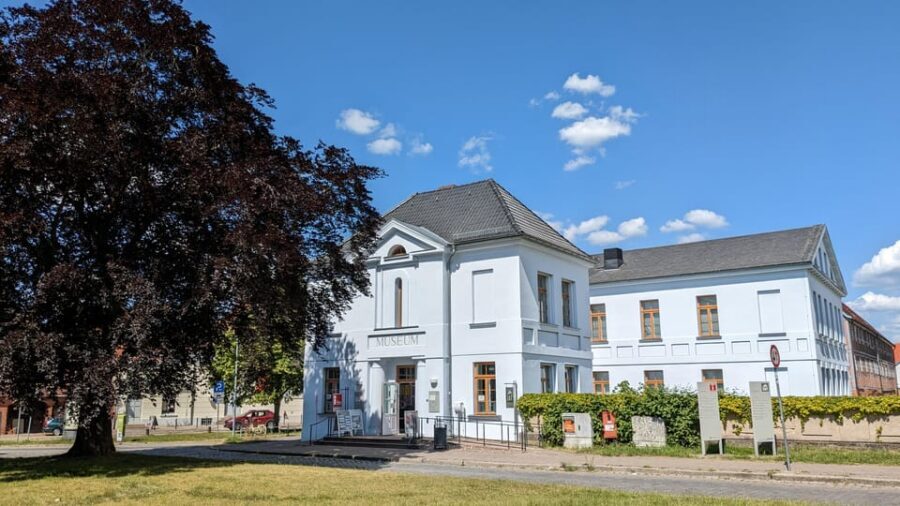
- A free city museum visit you can do before or after the tour
What’s not included: entrance fees.
The free museum add-on matters because it turns the walk from a quick overview into a fuller half-day. If you want more than “I saw it,” the museum helps you slow down and translate what you just learned outdoors into objects, exhibits, and local interpretation.
Also, the practical booking style is helpful for planning: reserve now and pay later, plus free cancellation up to 24 hours in advance. That lowers risk if your day schedule is still forming.
What You’ll Learn (And How It Makes the Walk Feel Easier)
The most useful part of this tour is not memorizing dates. It’s learning the map behind the stones.
You get guided movement through winding streets and historic squares, and the guide ties stylistic changes to historical shifts. That means you’re more likely to notice things like:
- why brick Gothic looks the way it does in this region
- how Renaissance power shows up in the layout and emphasis of a castle complex
- why the market square is more than a photo stop—it’s the town’s public heartbeat
That’s also why the tour works for different styles of travel. If you like architecture, it’s structured. If you like people and politics, it has named personalities that anchor the story. And if you’re more of a casual walker, the 90 minutes keeps it from turning into a long lecture.
One more practical note from the reviews you can benefit from: guides tend to answer questions patiently. If anything grabs you—Barlach, brick Gothic, the castle—ask. You’ll usually get a direct explanation, not a vague wave in the general direction.
Who Should Book This 1.5-Hour Walk (And Who Might Want Extra Time)
This tour fits best if you want:
- a starter orientation to Güstrow’s historic center
- highlights without building your own route
- German-language storytelling and the chance to ask questions
- an easy, wheelchair-accessible sightseeing option
It’s also a good choice if you’re combining it with museum time. The tour gives you the “what and why,” and the city museum helps you keep learning at your own pace.
Who might want extra time: if you’re specifically drawn to the Renaissance castle and want more time around it, plan to add your own visit after the guided portion. Since the tour can spend extra focus on the cathedral, you may want to “rebalance” your afternoon with a longer, self-guided look at the castle and the surrounding areas.
Should You Book This Güstrow Guided City-Center Walk?
Yes, I’d book it if you like heritage that’s still standing and you want a guided path that makes the architecture readable. For $10 and 90 minutes, you’re getting a structured introduction, a top art stop (Floating by Ernst Barlach), and a free museum option that extends the value.
Skip it or add more time if you’re very castle-driven and you know you’ll want a longer on-site visit than a short guided stop allows. But for most people—especially first-timers—this is an efficient way to see Güstrow’s heart without guessing your way through the center.
FAQ
How long is the Güstrow historic city center guided tour?
The tour duration is about 1.5 hours (listed as 90 minutes).
Where does the tour start?
You meet at Güstrow tourism e.V., Franz-Parr-Platz 10, 18273 Güstrow.
What is included in the price?
The price includes an experienced city guide, the 90-minute guided tour, and free access to the city museum before or after the tour.
Are entrance fees included?
No. Entrance fees are not included.
Is the tour wheelchair accessible?
Yes, it is wheelchair accessible.
What language is the live guide?
The tour is guided in German.