REVIEW · FREIBURG
Freiburg: Acting tour “Witches, Torture, Stake” with Historix-Tours
Book on GetYourGuide →Operated by Historix-Tours GbR / Hartmut Stiller und Nicola Aly · Bookable on GetYourGuide
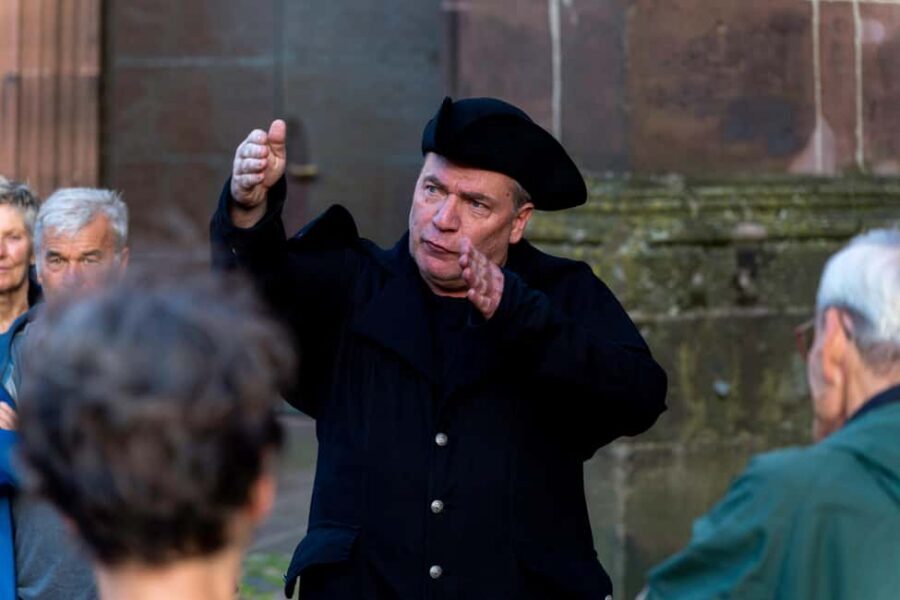
A lantern, a lie, and a sentence to death. This acting tour, Witches, Torture, Stake with Historix-Tours, pulls you through Freiburg im Breisgau’s old “witch tour” tradition (running since 1998) with lively professional actor narration and three real-ish life stories of women caught in the machinery of fear. The main thread follows Catharina Stadellmenin, the so-called Witch of Freiburg, and it’s built around places you can still stand in today, not just lecture-style storytelling.
That said, this is heavy material. You should expect a dark chapter of punishment and torture themes, plus some moments that ask you to imagine what the rooms and interrogations were like (not everyone loves that part).
In This Review
- Key highlights
- Freiburg’s witch-hunts tour: why it’s worth your 90 minutes
- The Catharina Stadellmenin story (and why the tour centers women’s lives)
- Meet your actor at St. Martin’s Church on Rathausplatz
- Gerichtslaube and Am Predigertor: where “justice” meets rumor
- Schiffstraße 14 and Münsterplatz: homes and the danger of being singled out
- Martin’s Gate and Fischerau 24: the city edge and the direction of punishment
- Holzmarkt finish: what “execution outside the gates” really means
- Acting-tour pacing, duration, and what the 90 minutes feels like
- What’s included, and what you won’t get (so expectations match reality)
- The casting and tone: when performers make history click
- Who should book, and who should skip
- Should you book Witches, Torture, Stake in Freiburg?
- FAQ
- FAQ
- Where does the tour start?
- How long is the Witches, Torture, Stake tour?
- What language is the tour in?
- Is the tour suitable for children?
- Does it run in bad weather?
- Are we allowed inside buildings on the tour?
- Is the tour wheelchair accessible?
- What does the tour cover?
- Can I cancel or pay later?
Key highlights

- A true story focus on Catharina Stadellmenin and other women tied to Freiburg’s witch-hunt era
- Actor-led narration that keeps the pace moving through the pedestrian lanes with atmosphere
- Real street-level stops tied to justice spaces, gates, and the city edge where executions happened
- 90 minutes that feel like a walk-and-story mix, not a long lecture
- Weather runs the show with the route in the pedestrian zone and outside views built in
Freiburg’s witch-hunts tour: why it’s worth your 90 minutes
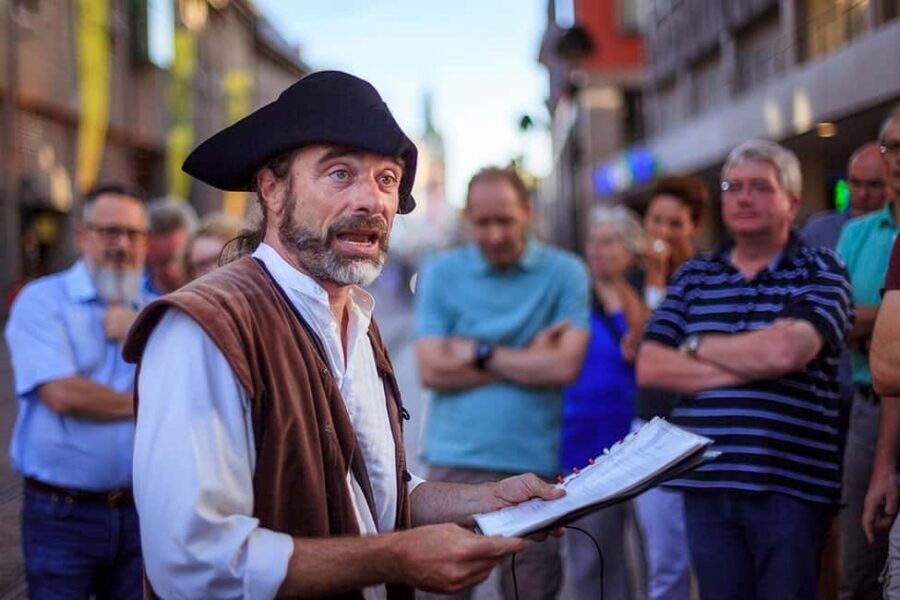
Some history is hard to picture because it feels too far back. This tour cheats that problem by using Freiburg’s own street plan. You walk, you stop, you listen, and the story lands in the exact kind of places where rumor, authority, and fear would have collided.
I like that the tour isn’t trying to shock you for fun. It frames witch hunting as a system—especially the way it targeted women—and it’s willing to talk about the mindsets behind the accusations. The pace is brisk enough that you stay engaged, but not so fast that you miss the basic cause-and-effect: accusation leads to interrogation, interrogation leads to punishment, and the city becomes part of the machine.
You also get a clear timeline correction. Witch hunts weren’t only medieval folklore. In Breisgau, they played out from the 16th century until 1751, which means this wasn’t ancient mythology. It’s early modern history that sat much closer to everyday life than you’d guess.
You can also read our reviews of more tours and experiences in Freiburg.

The Catharina Stadellmenin story (and why the tour centers women’s lives)
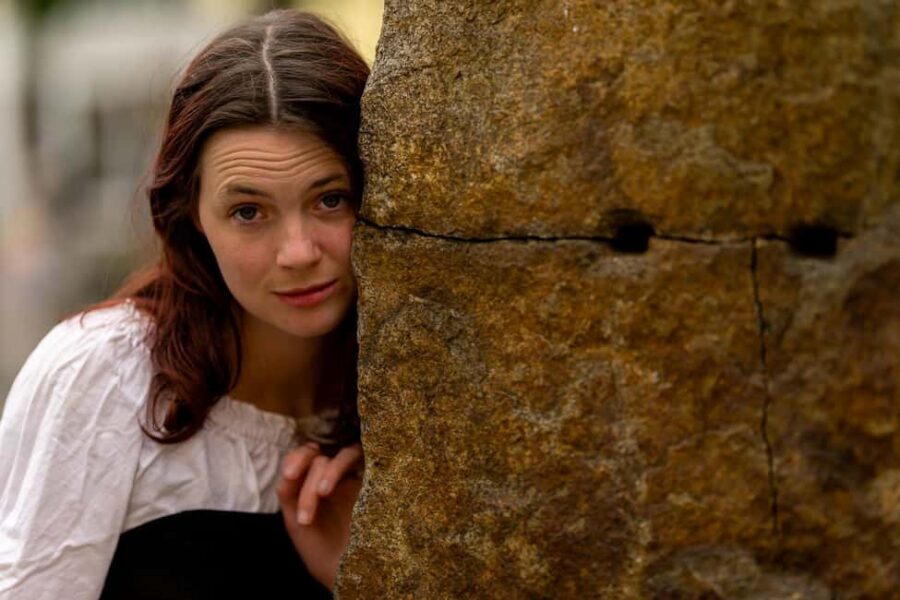
The emotional engine here is Catharina Stadellmenin’s case, presented as a lived experience with specific stages: she’s accused, thrown into a dark, damp hole, then tortured and interrogated. The big questions the narration circles around are brutally direct. Was she a witch? Had she slept with the devil? Who did she meet at the witches’ sabbath? And the most important one for how these trials worked: would she confess after repeated mistreatment?
This matters because the story isn’t just about “Did she do it or not?” It’s about the process that decided what truth would be. The tour points you to how punishment could follow almost mechanically once a person became the right target. That’s one reason the tour feels thought-provoking even when you already know the broad idea of witch hunts.
You’ll also hear that she wasn’t the only one. Even though the tour follows a core narrative, it keeps returning to the reality that multiple women were pulled into this system. The focus on three women gives it a more human scale than a generic overview.
Meet your actor at St. Martin’s Church on Rathausplatz
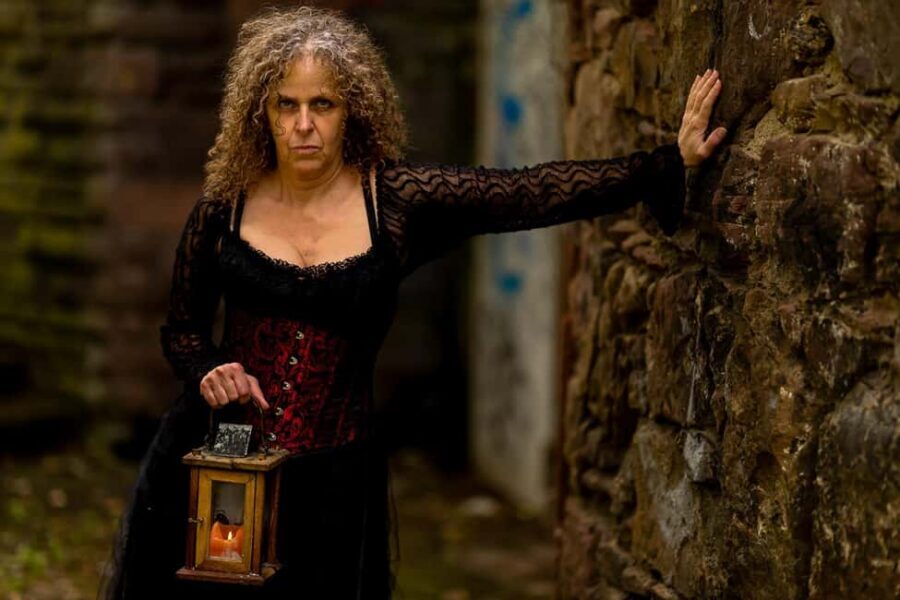
Your tour starts right by St. Martin’s Church entrance on Rathausplatz, across from the tourist information office. You’ll recognize the guide by costume and a lantern, which instantly sets the tone without needing extra explanation.
This kind of start is practical. Rathausplatz is a strong “anchor” point in Freiburg, so you get oriented fast. From the first stop you’re moving through the city in a way that feels like stepping into the old center, not just taking a series of random photos.
If you want a smooth experience, arrive a bit early and take in the square before the story kicks off. Once the performance begins, you’ll want your attention for names and directions—street names come into play, and the narration links them to the places you’re about to stand.
Gerichtslaube and Am Predigertor: where “justice” meets rumor
One of the smartest choices about this tour is how it begins with spaces that connect to authority. The walk includes Gerichtslaube, a stop that sets the theme of legal power and public judgment. Without turning it into a legal textbook, the narration ties the idea of accusation to a social structure: once someone is suspected, the whole city’s systems can start moving.
Next you reach Am Predigertor, another stop that helps frame Freiburg as a city with edges and entries—places where you can picture people being seen, questioned, and sorted into categories. This is where the story starts to feel less like “a crime happened” and more like “the city changed its behavior toward certain people.”
You’ll likely notice the narration doesn’t just say what happened. It builds the logic the authorities used and the fear that communities fed. That’s the part that stays with you after the walk ends.
Schiffstraße 14 and Münsterplatz: homes and the danger of being singled out
You’ll then move to Schiffstraße 14, which is one of the tour’s most important “change-of-scale” moments. From here, the story shifts from big institutional ideas to something more personal: your home is where life happens, and when the suspicion targets you, your everyday space becomes part of the evidence.
After that, the tour reaches Münsterplatz Freiburg, a landmark area that gives you a strong sense of what “public” looked like. Even if you don’t have a personal connection to the cathedral scene, the narration makes you look at the square through another lens: where neighbors could watch, where reputation could travel, where pressure could build.
This section is also a test of how you like your history. If you prefer calm facts only, the themes might feel intense. If you’re okay with dark context, this is where the tour becomes most memorable because it turns a big story into a sequence of identifiable places.


Martin’s Gate and Fischerau 24: the city edge and the direction of punishment
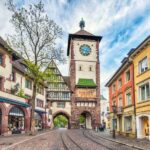
The walk continues through Martin’s Gate, a stop that feels different from the center squares. Gates are thresholds, and threshold spaces help explain why events like arrests and executions were part of a planned path. The narration uses that geography to connect the story’s final stages to the city’s layout.
Then you head to Fischerau 24, which brings you back toward the human side of what happens after accusation. It’s not just where the story takes place—it’s where you can imagine how people experienced it. Even if the tour doesn’t enter buildings, standing outside lets you notice sightlines and distances. That’s useful because witch-hunt logic relied on control: controlling movement, controlling information, controlling the story a community would accept.
One reviewer-style detail that’s worth taking seriously: a couple of people felt they needed more imagination for some of the scenes. That doesn’t mean the tour is unclear. It just means the performance leans into atmosphere rather than showing you everything like a museum exhibit.
Holzmarkt finish: what “execution outside the gates” really means
The tour ends at Holzmarkt, still inside Freiburg im Breisgau but closer to the idea of the execution ground that sat outside the city gates in the earlier era. The narration ties the ending to the moment where punishment becomes irreversible—where the process shifts from courtroom and interrogation to irreversible outcome.
Finishing at Holzmarkt works because it gives you a natural “wrap up” point: you’ve walked the chain of accusation and authority, and you’re left in a place where the modern city continues on. That contrast is part of the lesson. The fear and cruelty were real, but they were also embedded in systems that the city could run and normalize.
If you like to process things while walking, this ending is good. You’ll likely leave thinking about how quickly a community can decide that someone must be guilty—and how hard it is to stop once the machine is moving.
Acting-tour pacing, duration, and what the 90 minutes feels like
This tour runs 90 minutes, in German, and it’s designed to keep momentum. The narration is delivered by an actor, and it uses the route itself as the “set.” Since the tour goes through a pedestrian zone and stays outdoors, the story stays connected to real corners and real sightlines.
Price-wise, it’s listed at $17 per person. For what you get—actor-led performance, multiple stops tied to the story, and city history narrated along the way—it’s strong value. You’re paying less for a guided walk than you would for many strictly museum-style experiences, and you’re getting something more interactive than a standard walking tour.
The main thing I’d flag is content level. It’s for adults and teens, and it’s not suitable for children under 12. If your group includes younger kids, you’ll want to skip this one and look for a lighter Freiburg tour.
Also note: it happens no matter the weather, so bring a jacket you don’t mind getting a little travel-worn. You’ll be walking and listening, not hiding indoors.
What’s included, and what you won’t get (so expectations match reality)
This is a performance walk with history narration, not a building tour. You’ll get the guided actor experience, the narrated city history, city views from outside, and a route that uses the old pedestrian center atmosphere.
You should not expect interior tours. The tour leads you past relevant locations and through the story’s key spaces, but it doesn’t include tours of buildings’ inside rooms.
That can be either a plus or a minus. It’s a plus if you like moving through a city and letting your mind fill gaps. It’s a minus if you want physical access to “the dungeon,” complete with a museum-like setup.
The casting and tone: when performers make history click
Historix-Tours runs the show, and the provider is listed as Historix-Tours GbR with Hartmut Stiller and Nicola Aly. Casting matters for a tour like this, because the narration has to carry both emotion and structure.
One name that came up with praise is Julia M., singled out for top acting and friendliness. That’s a useful signal. If you tend to connect better when a guide performs rather than lectures, this tour’s format is designed for you.
Even if the cast on your date is different, the concept stays the same: you’re listening to a trained actor tell a dark story with pacing that matches the walking route.
Who should book, and who should skip
This tour is a great fit if you:
- like history with characters rather than dates-only facts
- enjoy walking tours that connect story to real street locations
- want an honest look at the fear-driven social machinery behind witch hunts
- are okay with trigger-warning themes and depictions that reflect the time period
I’d think twice if you:
- want a light, kid-friendly tour (it’s not for children under 12)
- hate scenes that require imagination to picture what interrogation and torture would have meant
- prefer tours that stay purely academic and avoid dark subject matter
This is also one of those experiences where group makeup matters. If everyone in your group wants the darkest version, you’ll get more out of it. If the group wants something gentle, you might find the tone too heavy.
Should you book Witches, Torture, Stake in Freiburg?
If you’re deciding fast, here’s my honest take: yes, book it if you like Freiburg’s old streets and you can handle difficult content. For $17 and 90 minutes, the value is good, and the actor-led storytelling gives you a reason to pay attention at every stop instead of zoning out like you might on a standard walk.
But if your “no” list includes torture themes, or if you need museum-style visuals and interior access, you may not enjoy it as much. In that case, you’ll likely feel like some scenes live mostly in narration and in your imagination.
FAQ
FAQ
Where does the tour start?
It starts on Rathausplatz, right in front of the main entrance to St. Martin’s Church, opposite the tourist information office.
How long is the Witches, Torture, Stake tour?
The tour lasts 90 minutes.
What language is the tour in?
The live tour guide speaks German.
Is the tour suitable for children?
It’s not suitable for children under 12. The tour is aimed at adults and teens.
Does it run in bad weather?
Yes. The tour happens no matter the weather.
Are we allowed inside buildings on the tour?
No. There are no tours of the interior—the route is outside, with views from outside.
Is the tour wheelchair accessible?
Yes, it is listed as wheelchair accessible.
What does the tour cover?
It focuses on Freiburg’s witch hunts, especially the story of Catharina Stadellmenin (the Witch of Freiburg), including her accusation, imprisonment, torture, interrogation, and the question of whether such punishment led to death.
Can I cancel or pay later?
Yes. You can cancel up to 24 hours in advance for a full refund, and you can reserve now & pay later.