REVIEW · KAISERSWERTH
Düsseldorf: Guided Night Watchman Tour through Kaiserswerth
Book on GetYourGuide →Operated by Visit Düsseldorf · Bookable on GetYourGuide
Night watchmen make cities feel alive. In Kaiserswerth by night, a professional guide leads you through evening alleys and historic corners, turning the Old Customs House, Mill Tower, and Klemens Bridge into real places you can see and picture. What I love most is the chance to watch the story unfold at walking pace, plus the gates normally locked that the night watchman opens with his key.
You’ll also get the kind of storytelling with humor and practical detail that makes 90 minutes feel short, not long. The one drawback to plan for: the route includes public roads and paths, plus paved and unpaved stretches, and the tour visits spots not open to the public—so bring a flashlight mindset and wear shoes you trust on darker ground.
In This Review
- Key things I’d mark on your map
- Meeting the night watchman at the Tonhalle monument
- How the tour works: alleys, a night watchman’s key, and closed doors
- Old Customs House: where trade stories make sense
- Mill Tower: a practical landmark with a job to do
- Klemens Bridge: crossing history without rushing past it
- Treidelstein and the deep channel: water power and stubborn reality
- Gates and restricted spots: why this access is the whole point
- Walking time, surfaces, and what to pack
- Language and pacing: enjoying the German-led storytelling
- Price and value: is $24 fair for 90 minutes?
- Who this Kaiserswerth night watchman tour suits best
- Should you book the Kaiserswerth night watchman tour?
- FAQ
- How long is the Düsseldorf Kaiserswerth night watchman tour?
- Where do I meet the guide in Kaiserswerth?
- What does the tour cost?
- What language is the guide?
- What should I bring with me?
- Do we visit places that are normally closed?
- Will we be walking only on paved paths?
- What’s the cancellation policy?
Key things I’d mark on your map
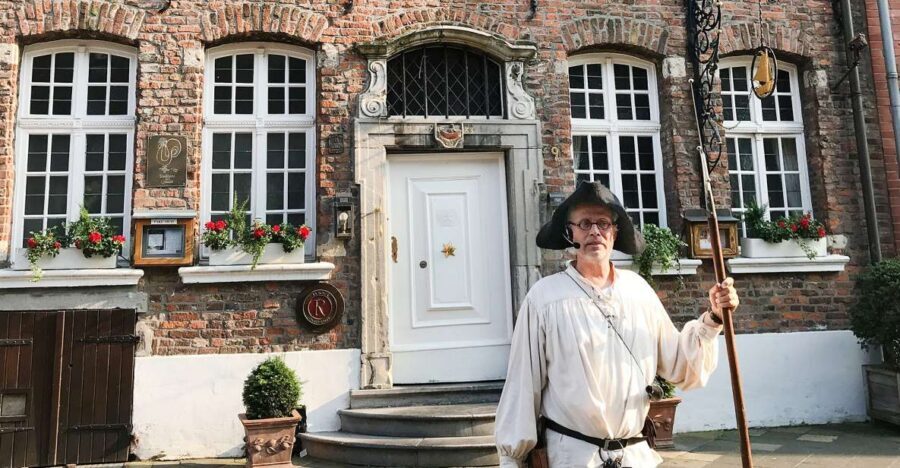
- Kaiserswerth after dark: alleys and historic buildings seen in a calmer, moodier light
- A key that opens gates: you get access points that are usually closed
- Landmarks on foot: Old Customs House, Mill Tower, and Klemens Bridge in one route
- Water and work stories: the Treidelstein and its deep channel come up for a reason
- German-only live guide: bring your basics or plan to enjoy the tone more than every word
Meeting the night watchman at the Tonhalle monument
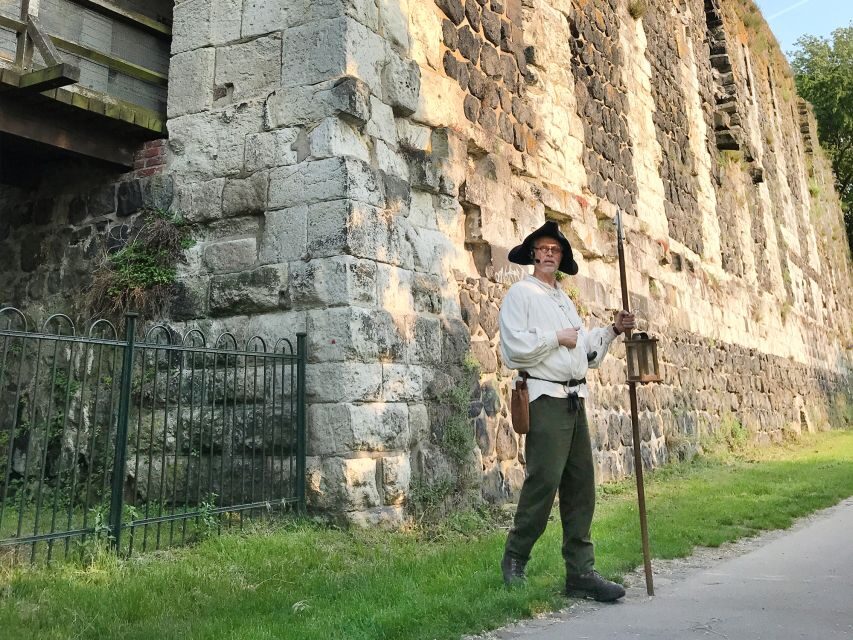
This tour starts in Kaiserswerth, at the monument in front of the Tonhalle (Restaurant). If you’re using public transport or walking in, I suggest arriving 10 minutes early so you can settle before it gets dark and everyone starts grouping up.
Kaiserswerth is a district where the night atmosphere does the heavy lifting. Even before the first big stop, you’ll feel the shift from daytime city flow to something slower and more story-driven.
How the tour works: alleys, a night watchman’s key, and closed doors
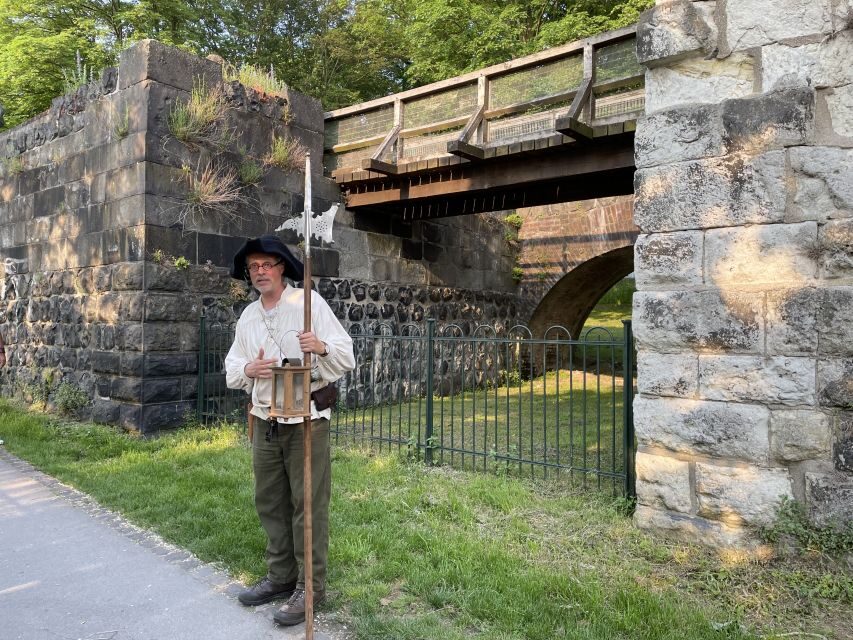
The main event here is simple: you walk, you listen, and you get the occasional behind-the-scenes moment. Your night watchman guides you through evening alleys and along historical buildings, explaining what you’re seeing and what happened there in earlier times.
The big hook is the key. The guide uses it to open many gates that otherwise stay locked, and that matters because it turns the tour from facts-on-a-stroll into a lived experience. You don’t just look at doors—you see how access and movement shaped daily life, security, and trade in Kaiserswerth.
A small practical note: because the route includes places not open to the public, expect the tour to feel a bit more “hands-on history walk” than “museum visit.” That can be great for atmosphere, but it also means timing depends on the watchman’s access points and the pace of your group.
Old Customs House: where trade stories make sense
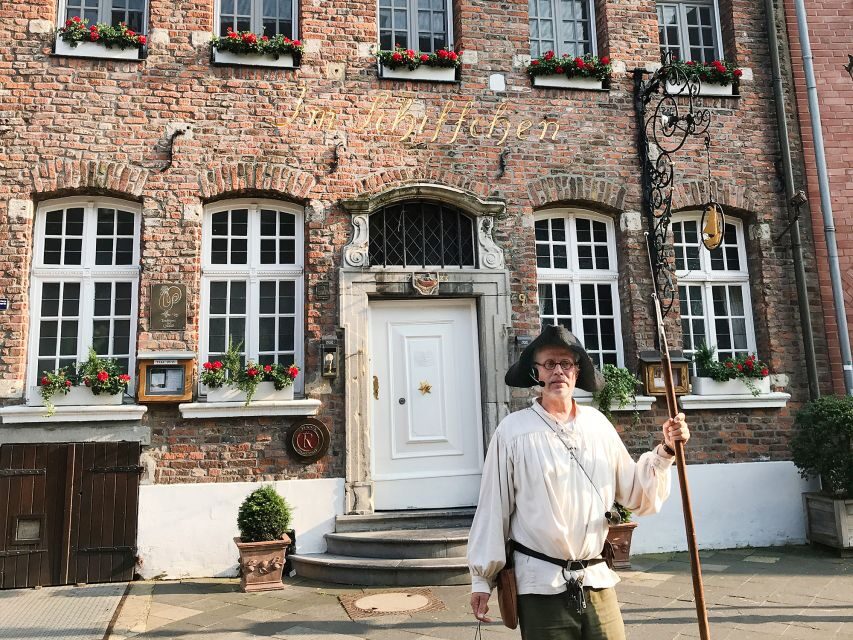
One of your first major landmark stops is the Old Customs House. In a normal daytime visit, it’s easy to glance and move on. At night, the same building reads differently because the guide connects it to how goods and travelers moved through the area.
Customs houses are basically checkpoints for economics: who could pass, what was taxed, and what needed paperwork or permission. Your guide’s storytelling style helps you connect the dots quickly, so the building stops being a name on a sign and becomes a function in the town’s past.
If you like history that explains systems—trade, movement, control—this stop will click. If you only want grand views, you might find it more about understanding the town’s role than photographing dramatic scenery.
Mill Tower: a practical landmark with a job to do
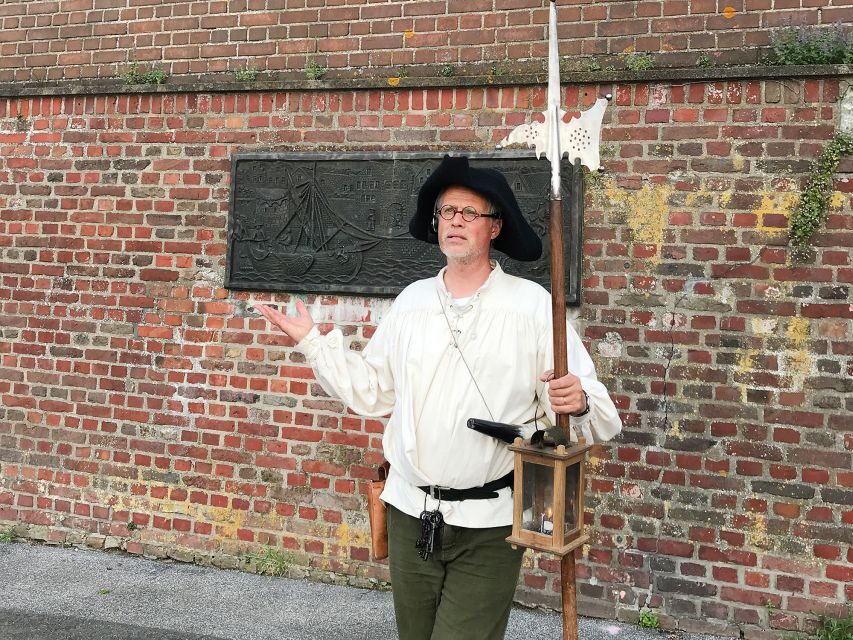
Next up is the Mill Tower. Towers always look impressive, but on this tour the point is what the tower supported. The guide uses the surroundings to explain everyday functions tied to the water and the area’s older economy.
A mill tower story works well at night because sound and shadow make buildings feel more purposeful. You can almost imagine the rhythm of labor and how water-powered activity shaped daily schedules, even if you don’t see the old machinery itself.
This is also a good stop for your attention span. The tour stays moving, but you get a real break from “just walking” into “looking with context.”
Klemens Bridge: crossing history without rushing past it
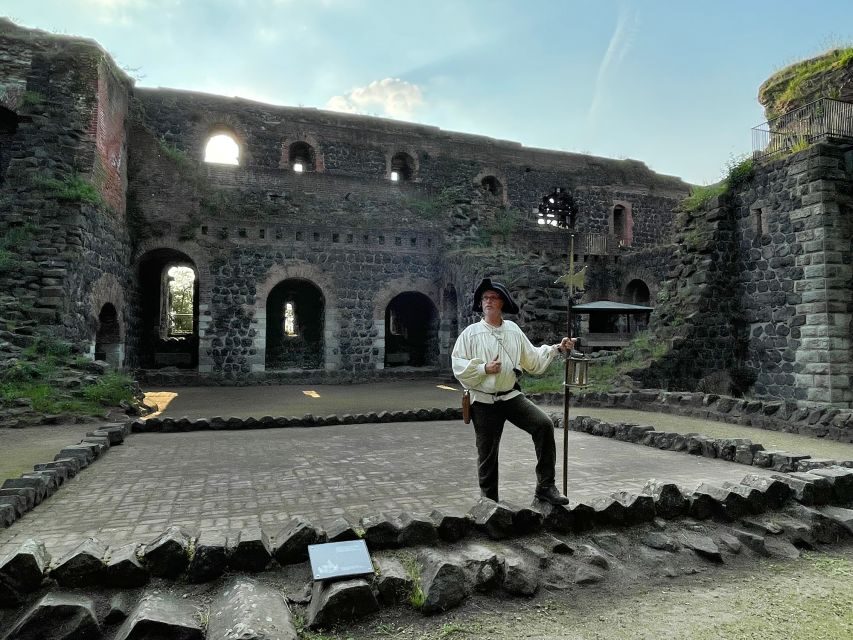
Then you’ll be at Klemens Bridge. Bridges are natural story connectors—people meet, move goods, and cross boundaries—and your guide uses that idea to frame why the location mattered.
The best part is how the tour doesn’t treat the bridge as scenery. It becomes part of the network: movement routes, access points, and the logic of where paths and passageways led next.
If you’re the type who likes to understand how towns connect instead of only what’s in the spotlight, Klemens Bridge is worth your full attention. You’ll walk away with a clearer sense of direction—literal and historical.
Treidelstein and the deep channel: water power and stubborn reality
One of the most memorable details on this walk is how the guide talks about the Treidelstein and its deep channel. Even if you’ve never heard those terms before, the tour approach is to explain them in plain terms so you can keep up.
The Treidelstein ties into how boats and barges were moved along waterways. Your guide explains why it ended up where it did and how the channel shaped what people could do, safely and reliably, in earlier eras.
This is the moment where the tour feels especially “Kaiserswerth.” You’re not just collecting landmark photos—you’re learning the local logic that made the waterway central to work, transport, and control.
Gates and restricted spots: why this access is the whole point
Several parts of the tour happen at places that are not open to the public. That changes the feeling of the walk because you’re standing where you usually wouldn’t, with a guide who can explain the significance of that restriction.
The gates are the standout. Being able to actually see them open (rather than only knowing they exist) creates a quick emotional payoff: you get a sense of how a town managed entry, movement, and safety.
There’s one consideration, though. One review notes that the group spent time waiting for doors that were expected to open, so patience is part of the deal. If you prefer strictly timed stops with no waiting at all, this style of tour might feel a little less “tight schedule” than you’d like.
Walking time, surfaces, and what to pack
The tour lasts 1.5 hours, so it’s a short commitment and easy to fit into an evening plan in Düsseldorf’s region. You’re not aiming for miles of exercise here; you’re aiming for sustained attention while staying mobile.
The route goes over public roads and paths, plus paved and unpaved segments. That’s why the practical items matter. Wear shoes that handle uneven ground and darkness comfortably.
You should bring a flashlight and a charged smartphone. The smartphone part is listed as charged, so don’t arrive with a dead battery and hope for the best. If your booking text also mentions internet access, it’s smart to have that ready too.
Language and pacing: enjoying the German-led storytelling
The tour guide speaks German. That doesn’t mean non-German speakers can’t have a good time, but it does affect how much you’ll catch line-by-line.
What helps is the structure: you’ll see landmarks (Old Customs House, Mill Tower, Klemens Bridge), then get explanation and stories right where they apply. Visual context does a lot of translation work for you, even if your vocabulary is still warming up.
The pace also supports comprehension. This isn’t a “run to the next corner” kind of tour. You’re walking slowly enough to take in what’s around you, and the stories keep you oriented.
Price and value: is $24 fair for 90 minutes?
At $24 per person for a 1.5-hour guided night walk, you’re paying for a specific experience style. The value isn’t only the landmarks—it’s the access. Places not open to the public, plus gates that normally stay locked, are the differentiators.
You also get the guide’s role: a professional night watchman-style storyteller who ties the spots together. At this price point, that’s usually the big cost driver, and it’s exactly what you want if you’re choosing a tour over wandering on your own.
If you’re the type who enjoys history when it’s explained with humor and character, this price looks even better. If you mainly want panoramic views or a long timeline, you might compare it to bigger day tours—but for an evening slot, it’s strong value.
Who this Kaiserswerth night watchman tour suits best
I’d suggest this tour if you like:
- Old-town walking with a narrative thread
- Storytelling with humor, not just dates
- Getting access to places you typically can’t see
It’s also a good fit for couples, solo travelers, and anyone who wants an evening activity that feels local rather than “checklist tourism.”
Skip it if you dislike walking on darker, possibly uneven ground, or if you need every stop to be fully open and timed with zero waiting. This is history with some real-world constraints, like doors and outdoor paths.
Should you book the Kaiserswerth night watchman tour?
I think you should book it if you want an easy evening in Kaiserswerth where the town’s older systems—trade, waterways, crossing points, and security—make sense through a living guide. The key-open gate moments and the sequence of landmarks give the tour a clear shape, and the 1.5-hour length makes it a low-risk try.
If you’re very sensitive to unpaved patches, darkness, or slow moments at entrances, plan carefully and bring the right gear. Do that, and you’ll likely leave with a stronger sense of Kaiserswerth than you’d get from an audio guide alone.
FAQ
How long is the Düsseldorf Kaiserswerth night watchman tour?
The tour lasts 1.5 hours.
Where do I meet the guide in Kaiserswerth?
Meet your guide at the monument in front of the Tonhalle (Restaurant) in Kaiserswerth.
What does the tour cost?
It’s priced at $24 per person.
What language is the guide?
The live tour guide speaks German.
What should I bring with me?
Bring a flashlight and a charged smartphone.
Do we visit places that are normally closed?
Yes. During the tour, you’ll visit places that are not open to the public.
Will we be walking only on paved paths?
No. The route takes you on public roads and paths as well as on paved and unpaved roads.
What’s the cancellation policy?
You can cancel up to 24 hours in advance for a full refund, and you may be able to reserve now and pay later depending on your booking option.