REVIEW · DUISBURG
Duisburg: Guided Walking Tour through the inner harbour
Book on GetYourGuide →Operated by Duisburg Kontor GmbH · Bookable on GetYourGuide
There’s history here, and you can actually see it. This 1.5-hour guided walking tour takes you through Duisburg’s inner harbour and explains how an industrial grain hub turned into a modern marina district. You’ll pass key landmarks with that mix of old-waterfront shapes and brand-new architecture, and you’ll learn what changed the city—starting in the mid-1990s.
Two things I really like: you get the straight story behind the harbour’s redesign, and you see the results as you walk. The tour is also a good-value pick at $16 per person, especially because it still works when the weather is miserable—rain doesn’t cancel it. One possible drawback: it’s only 1.5 hours, so you’ll get orientation and highlights, not a long museum-style deep look at every building.
In This Review
- Key Highlights You’ll Feel in the Walk
- Starting at the Mercator Fountain: Getting Your Bearings Fast
- Duisburg’s “Bread Basket” Era: The Problem That Created the Makeover
- From Freighters to Yachts: Why the Atmosphere Feels Different
- Sir Norman Foster’s Mid-1990s Plan: The Design Logic Behind the New Waterfront
- Five Boats and the Marina Scene: The Stops That Make It Click
- Museums After the Tour: Where to Continue the Duisburg Story
- Price and Value for 1.5 Hours: What $16 Buys You
- Rain-Proof, Walkable, and Wheelchair Accessible
- Who This Tour Suits Best (and Who Might Skip It)
- Final Call: Should You Book This Duisburg Inner Harbour Tour?
- FAQ
- Where is the meeting point for the Duisburg inner harbour walking tour?
- How long is the guided walking tour?
- What does the tour cost?
- What’s included in the price?
- What language is the live guide?
- Is the tour wheelchair accessible?
- Does the tour run if it’s raining?
- Can I cancel for a refund?
- Can I reserve now and pay later?
- Who is the experience provider?
Key Highlights You’ll Feel in the Walk
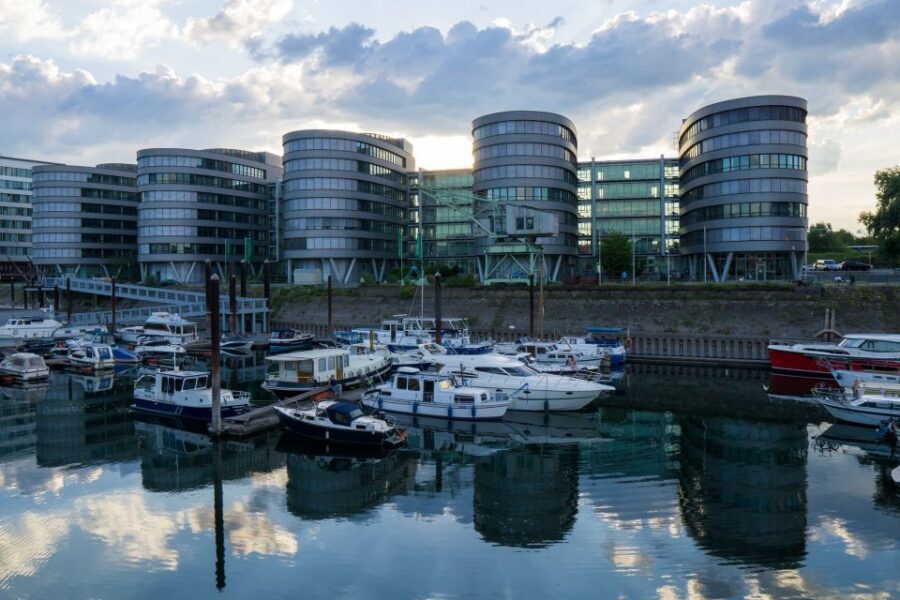
- Sir Norman Foster’s harbour plan explained in plain terms as you move along the waterfront
- Five Boats and other modern waterfront structures you can spot right away
- Marina views where the harbour’s mood shifts from shipping to yachting
- Grain-era context: why the grain-milling boom faded after the late 1960s
- A district that now mixes offices, warehouses, restaurants, and events
Starting at the Mercator Fountain: Getting Your Bearings Fast
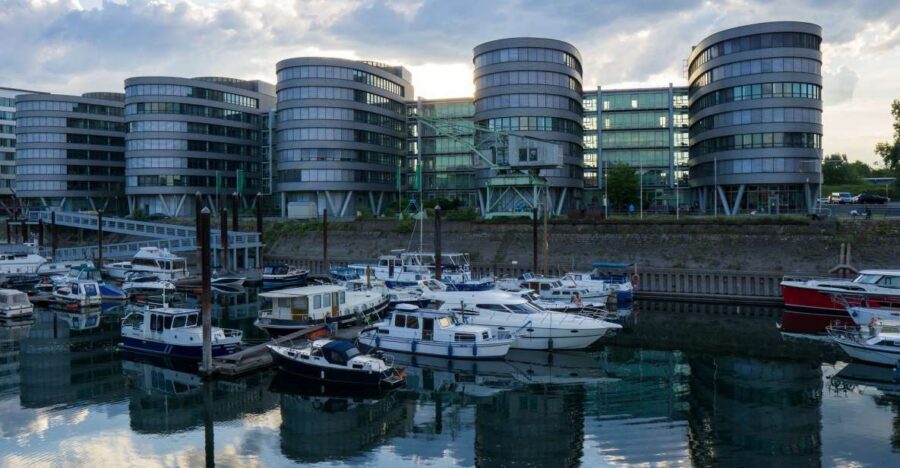
Your tour begins at a very specific, easy-to-find spot: in front of the Mercator fountain, right before Duisburg town hall. That matters more than you might think. A harbour walk can feel repetitive if you don’t know what you’re looking for. Starting at a central landmark helps you form a mental map before you move into the inner-harbour area.
Once you’re moving, the guide keeps the story tied to what you can see. You’re not just hearing dates and names; you’re walking past the physical evidence of the change. This is the kind of tour that makes the waterfront feel like one connected project, not random buildings scattered along the water.
And since the tour runs in German with a live guide, you can expect explanations to be direct and grounded in local context rather than generic descriptions.
You can also read our reviews of more tours and experiences in Duisburg.


Duisburg’s “Bread Basket” Era: The Problem That Created the Makeover
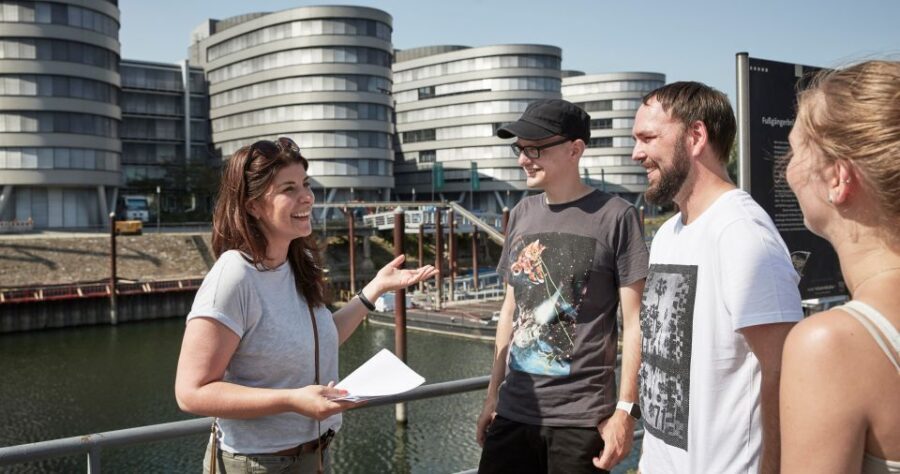
The inner harbour used to be Duisburg’s working engine—often described as the bread basket of the Ruhr area thanks to huge grain handling. That’s a powerful mental image: a harbour built for bulk cargo, not for strolling.
Then came the turn. The grain mills faded toward the end of the 1960s, and that reduced the economic logic for the inner harbour’s old industrial setup. In plain terms: what the place was built to do stopped paying off at the same scale. When that happens, cities face a choice—decline or redesign.
What I like about this part of the tour is that it doesn’t treat the harbour’s transformation as a random aesthetic upgrade. Instead, it frames structural change as something you can trace. The walk helps you understand why you now see leisure boats and restaurants where freighters and grain operations once dominated the scene.
From Freighters to Yachts: Why the Atmosphere Feels Different
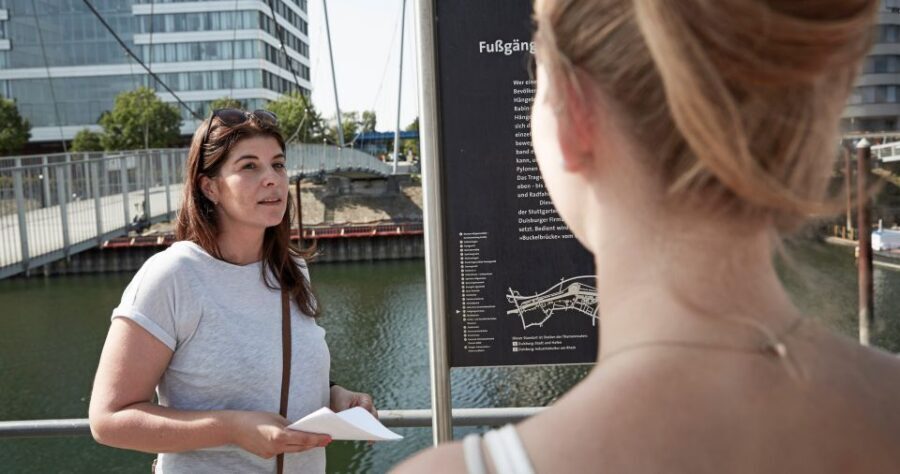
After the industrial shift, the inner harbour gained a new role. Where freight loading and unloading used to define the daily rhythm, yachts now lie at anchor and create that Mediterranean-style waterfront feeling.
You can think of it like this: the harbour’s shape was already there, but the “use” changed. When people change what they do in a space, the space slowly changes back around them—through the buildings that get renovated, the events that get supported, and the kind of crowd that shows up.
That’s exactly what you’ll notice while you walk. The tour keeps calling attention to how the waterfront functions now. It’s not just pretty views; it’s a different kind of daily life. Restaurants along the water and the mix of offices and leisure give the harbour a new identity.
One useful way to plan your expectations: if you’re hoping for a quiet, historical harbour that feels frozen in time, you might find it more modern than that. If you like transformations—how cities reinvent themselves—this experience fits.
Sir Norman Foster’s Mid-1990s Plan: The Design Logic Behind the New Waterfront
A key part of the tour is the redesign masterminded by Sir Norman Foster, a British star architect. The harbour took its modern form starting in the mid-1990s, and the guide explains the plan in a way that connects architecture to function.
Here’s what makes this valuable for you: you’ll stop seeing the district as a random collection of landmarks. Instead, you’ll recognize the pattern. The plan reshaped the inner harbour into a district that can handle multiple lifestyles at once—working, eating, visiting museums, and spending time along the marina.
You also get a sense of why a harbour makeover has to balance things that don’t naturally go together:
- Water access is limited and precious, so building placement matters.
- Shipping-era infrastructure can’t always be kept as-is, so adaptation is needed.
- A new identity only sticks if daily life fits the new design.
That’s the tour’s strength: it turns what could be a simple stroll into a “how and why” walk through urban planning.
Five Boats and the Marina Scene: The Stops That Make It Click
The walking route passes several standout spots with modern architecture, including the Five Boats. Even if you’re not an architecture buff, the title alone is a clue that something here is meant to be memorable. As you move along, you’ll see how these newer forms sit next to older industrial bones—giving the harbour its specific mix.
You’ll also spend time looking at the marina. This is where the tour’s story becomes visual. The marina helps you understand the harbour shift from cargo flow to leisure access. When boats replace freighters, the entire atmosphere changes: sightlines open up, the waterfront becomes more “front-facing,” and the water feels like a companion instead of a workplace.
Along the way, you’ll notice:
- Museums and restaurants near the waterfront edge
- Office complexes that read as part of a thriving district
- Old warehouse-style areas that keep a hint of the industrial past
One consideration: the tour emphasizes overview and explanation more than close-up time at any single building. If you’re the type who wants to photograph one landmark for a long time, plan to arrive with a bit of flexibility. After the walk, you can always return on your own.
You can also read our reviews of more guided tours in Duisburg
Museums After the Tour: Where to Continue the Duisburg Story
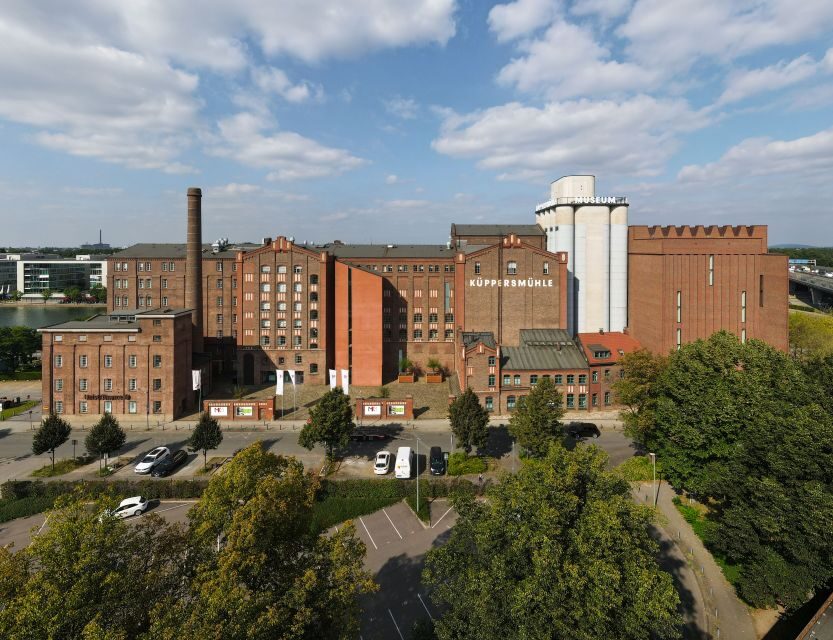
The walk sets you up for two museum options that are worth planning around your schedule:
- Küppersmühle Museum of Modern Art
- The Cultural and Urban History Museum
Even though the tour itself is short, it’s doing something smart. It gives you context for what you’re about to see—especially if you’re the kind of traveler who hates walking into a museum cold.
A practical way to pair this: do the walking tour first to get orientation, then visit one museum while your “harbour transformation” story is still fresh. If you go the other way, you might still enjoy the museums, but you’ll have to do more linking yourself.
Also, because the district has plenty of restaurants right by the water, you can keep the day relaxed. You don’t need an aggressive schedule to make this outing feel complete.
Price and Value for 1.5 Hours: What $16 Buys You
At $16 per person for a 1.5-hour guided walk, the value comes from three places.
First, you’re paying for interpretation, not just motion. The guide ties the harbour’s industrial past (grain handling) to the redesign results (modern marina district) and names the planning influence behind it (Sir Norman Foster). That’s the kind of context that costs money in many cities because it’s usually layered into expensive private guiding.
Second, it’s a compact time commitment. One and a half hours is enough to learn the main story and see the key architecture without burning half a day.
Third, it works in bad weather. The tour runs even when it’s raining. That’s not a small detail in North Germany. If you’ve ever spent a day “planning for views” only to get clouded-out, you’ll appreciate that this one stays useful.
If you want a tour that’s fun, informative, and not overly long, this fits the bill.
Rain-Proof, Walkable, and Wheelchair Accessible
This is a walking tour, so you should plan for outdoor time. The good news: it still runs in rain. That means you won’t lose the experience if the sky turns gray.
It’s also wheelchair accessible, which is a major factor for many visitors who would otherwise have to choose between a cultural experience and mobility needs. If you’re traveling with a wheelchair or mobility device, this is one of those rare “you can actually do it” situations.
One small practical tip: since it’s outdoors and you might get wet, bring a rain layer. It helps your comfort so you can focus on listening to the guide instead of thinking about your shoes.
Who This Tour Suits Best (and Who Might Skip It)
This Duisburg inner harbour walk is a great match if you like:
- Urban planning and how cities reinvent industrial areas
- Waterfront architecture and modern design with old-world context
- Short guided tours that still give you a clear story
It’s also a smart choice for you if you’re flexible with weather, because the tour runs when it rains.
You might want to consider another activity instead if you’re looking for a deep museum day. The tour gives overview and insight. For a longer, artifact-based experience, you’ll likely want to follow it with one of the museum visits nearby.
Final Call: Should You Book This Duisburg Inner Harbour Tour?
I’d book it if you want an efficient way to understand Duisburg’s transformation—from a grain powerhouse to a modern harbour district with marina life, offices, restaurants, and museums. The mix of Sir Norman Foster context, recognizable architecture like Five Boats, and the shift from freighters to yachts makes the walk feel purposeful, not random.
Skip it only if you hate walking, already know the architecture story, or prefer purely historical sites with no modern redevelopment angle. For most visitors who want value, clarity, and a bit of humor even when the weather isn’t cooperating, this is a strong pick.
FAQ
Where is the meeting point for the Duisburg inner harbour walking tour?
Meet your guide in front of the Mercator fountain, in front of Duisburg town hall.
How long is the guided walking tour?
The tour lasts 1.5 hours.
What does the tour cost?
The price is $16 per person.
What’s included in the price?
The included item is a 1.5-hour guided tour.
What language is the live guide?
The live tour guide speaks German.
Is the tour wheelchair accessible?
Yes, the tour is wheelchair accessible.
Does the tour run if it’s raining?
Yes, the tour also takes place when it is raining.
Can I cancel for a refund?
Yes, you can cancel up to 24 hours in advance for a full refund.
Can I reserve now and pay later?
Yes, you can reserve now & pay later.
Who is the experience provider?
The provider is Duisburg Kontor GmbH.