REVIEW · DESSAU ROSSLAU
Dessau: Guided Walking Tour through History
Book on GetYourGuide →Operated by Stadtmarketinggesellschaft Dessau-Roßlau · Bookable on GetYourGuide
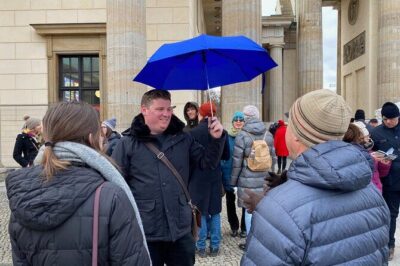
Dessau can feel small until you hear its stories. This 1.5-hour guided walking tour turns the city center into a living timeline, connecting eight hundred years of change to names like Walter Gropius and Wassily Kandinsky. I like that the guide keeps it human, with anecdotes and shifting perspectives that make the past feel close rather than dusty. One thing to consider: it’s in German, and it runs rain or shine, so bring your weather gear and patience if the group is lively.
If you care about how ideas move through real streets, you’ll enjoy how the tour explains why the Bauhaus came to Dessau and how the city ties into the Basic Law. I also like the focus on small, on-the-spot observations in the city center, the kind you’d miss if you were just wandering. The only drawback I’d flag is that this is a walking tour with no museum time built in, so if you want deep, hands-on exhibits, you’ll likely want to pair it with something else afterward.
In This Review
- Key Highlights You’ll Actually Notice on the Walk
- Why Dessau’s Center Feels Like a Time Machine
- Bauhaus Comes to Dessau: It’s More Than an Art Label
- The Basic Law Connection: Civic History on Foot
- Prince Leopold III. Friedrich Franz and Dessau’s “Why Them” Story
- Hidden Treasures in the City Center: What the Guide Points Out
- How the Walking Format Shapes the Experience (and Your Day Plan)
- Price and Value: Why $13 Makes Sense for 1.5 Hours
- Who Should Take This Tour (and Who Might Want More)
- Should You Book This Guided Walking Tour?
- FAQ
- How long is the Dessau guided walking tour?
- What price should I expect to pay?
- Where do I meet the guide?
- Is the tour only in German?
- Does the tour run in bad weather?
- Is it wheelchair accessible?
- Is there free cancellation?
- Can I reserve without paying right away?
Key Highlights You’ll Actually Notice on the Walk
- Bauhaus arrival explained in a way that connects people, not just movements
- Basic Law connections that show Dessau’s civic side, not only its designers
- Big names, grounded locally with context for why they matter to this place
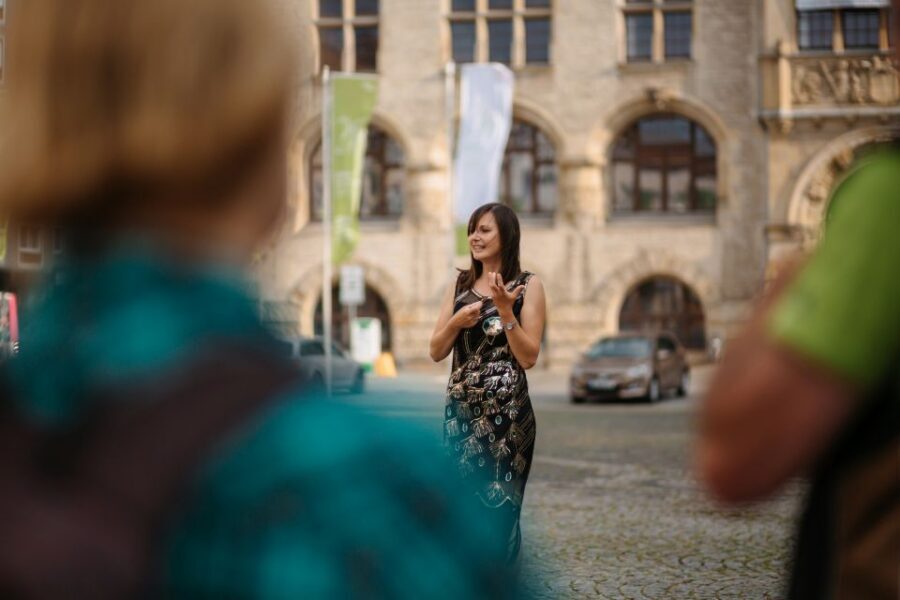
- Story-first guiding style with anecdotes that make stops stick in your head
- City-center “hidden treasures” pointed out at walking speed
- Wheelchair accessible route with time for the group to stay together
Why Dessau’s Center Feels Like a Time Machine

Dessau doesn’t advertise its eras with neon signs. Instead, it offers clues: changing architecture, civic ideas you can sense in the layout, and the way different generations left their mark. On this tour, the guide doesn’t treat history like a list. They treat it like cause and effect—who influenced what, and why the city kept turning.
What I like most is the tour’s approach. You’re not just “seeing places,” you’re being taught how to read the city. Eight hundred years of change can sound abstract, but the guide keeps it anchored: you hear how specific people and ideas got pulled into Dessau’s orbit over time. It’s the difference between memorizing dates and understanding why a city develops the way it does.
The pacing also helps. At a walking-tour speed, you don’t get overwhelmed, and you still get enough stops that the story feels complete. That matters because Dessau’s connections—cultural, political, and artistic—aren’t all in one neat package. You have to move through them, even if it’s only for 1.5 hours.
Bauhaus Comes to Dessau: It’s More Than an Art Label
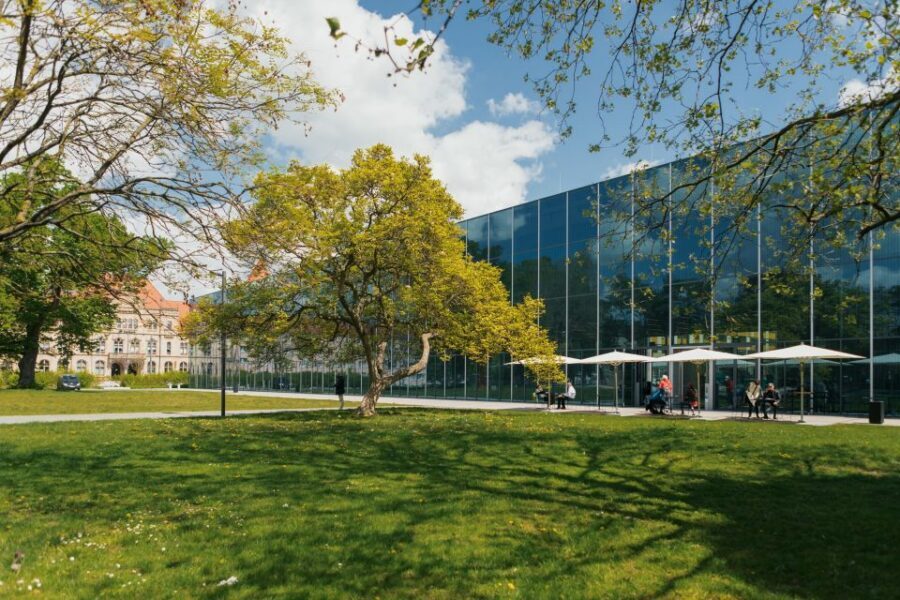
The Bauhaus part of this tour is built for clarity. The guide explains how and why the Bauhaus ended up in Dessau, and what that arrival meant for the city’s identity. Instead of throwing around terms, you’ll learn the practical meaning of the movement: it wasn’t just style. It was a belief about designing the future and shaping everyday life.
And they do it with names you’ll recognize. The walk brings you into the orbit of Walter Gropius, Wassily Kandinsky, and other key figures. You hear how these individuals connect to Dessau’s broader story, and you also get the sense that ideas traveled in both directions—Dessau influenced them, and they influenced how people later understood the city.
If you’ve heard of the Bauhaus but only know it from posters or museum headlines, this kind of walk gives the missing link. You start to see the logic of how a city becomes a home for a movement. You’re not just collecting facts. You’re mapping relationships in your head: institutions, people, and the built environment.
One practical note: because this is a guided walk, you’ll get the story without lingering at any single spot. That’s great for orientation. If you want to study details closely (and you probably will), plan to follow up later with self-guided time.
The Basic Law Connection: Civic History on Foot
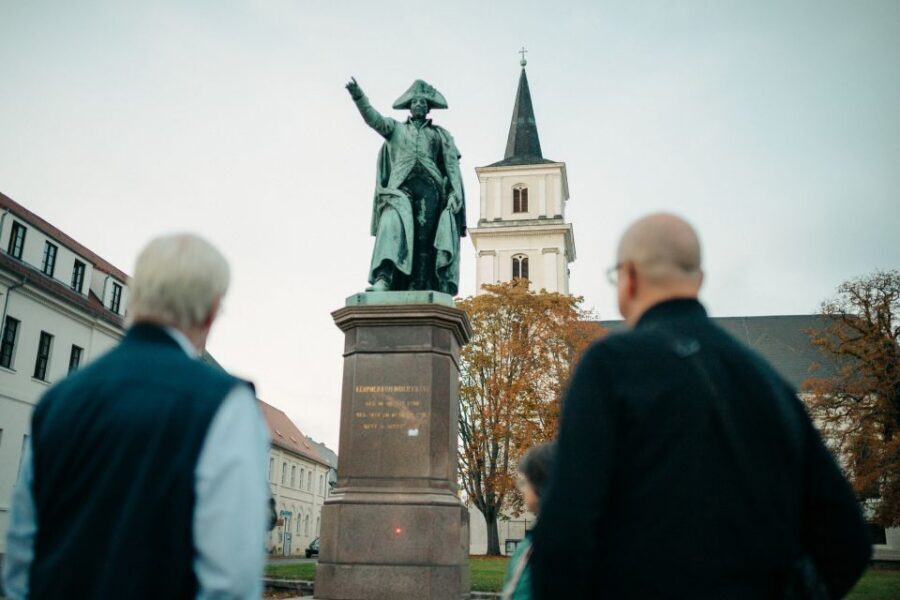
The tour also covers something many design-and-art stops ignore: the civic side of Dessau. You’ll learn how the city is connected to the Basic Law, Germany’s postwar constitutional framework. That part of the walk matters because it shows you the city’s evolution isn’t only aesthetic.
Instead of keeping history in one lane, the guide blends political meaning with human stories. It helps you understand why a place like Dessau isn’t only remembered for artists and architects. It’s also remembered for how communities organize themselves, how ideas of rights and responsibilities take root, and how modern identity gets shaped over time.
This is the segment where the tour can surprise you. If you came expecting mostly architecture talking points, the constitutional connection gives you a wider lens. You start to see the city center as more than a backdrop; it becomes evidence of changing values across generations.
The good news is that the guide doesn’t assume you already know the topic. They frame it in walking-friendly terms, tied to what you can observe and what they want you to understand.
Prince Leopold III. Friedrich Franz and Dessau’s “Why Them” Story
Dessau’s history in this tour isn’t a faceless timeline. It’s a network of people. The guide ties the city to key figures such as Prince Leopold III. Friedrich Franz, Friedrich Wilhelm Erdmannsdorff, Moses Mendelssohn, Kurt Weill, and Hugo Junkers, then connects them forward to major creators including Max and Wilhelm Müller and beyond.
The effect is simple: you learn how Dessau became Dessau for reasons that make sense. You also learn why some names are famous abroad and others are more local—yet the city played a real role in shaping them. The tour frames this as a set of contrasts: different epochs, different ambitions, and different kinds of influence.
What I found especially useful is the way the guide unites these people into a coherent picture. Without that, it’s easy to read about prominent figures and still feel disconnected from the places that shaped them. Here, Dessau becomes the common thread.
If you’re traveling with family or friends who are less into theory and more into storytelling, this is where you’ll feel the payoff. Personal names make history memorable. The tour leans into that.
Hidden Treasures in the City Center: What the Guide Points Out
The tour promises hidden treasures in the city center, and that’s not marketing fluff. This experience works because the guide directs your attention to the small things that matter in a city. At walking speed, you can’t inspect everything—but you can learn how to look.
Expect pauses where the guide explains what you’re seeing and why it connects to the larger story. Sometimes that means understanding an urban space as a product of its time. Sometimes it means hearing about a person’s influence and then linking it to the way Dessau developed.
The walking format also keeps the discoveries practical. You’ll get ideas for what to revisit later. If you like to photograph while traveling, this tour gives you good “targets,” not just scenery.
Also, you’ll get lots of anecdotes and stories. Not the long-winded kind—more like short, sharp moments that help you remember the era. If you’ve ever had a guide talk through a city like it’s a textbook, this is a different style. It’s story-first, and it helps the facts land.
How the Walking Format Shapes the Experience (and Your Day Plan)
At 1.5 hours, this tour is built for momentum. It’s long enough to connect multiple eras, but short enough that it won’t crush your day. That makes it a smart choice for arrival days, when you want orientation fast, or for evenings, when you still want a purposeful activity but don’t want to lose an entire afternoon.
You should also plan for the conditions. The tour takes place rain or shine, so bring a jacket you can move in and shoes that handle wet sidewalks. The good part: the guide’s job is to keep things flowing regardless of weather.
Language matters too. The tour is German. If you speak a little German, you’ll catch more of the nuance and the anecdotes. If you don’t, you might still enjoy it for the story structure and the visual cues, but you’ll have a thinner thread of meaning. For a pure language-immersion trip, you’d probably choose a guided walk in your own language.
Finally, because it’s a walking tour, you’ll get context rather than deep dives. Think of it as a compass. After that, you can decide what you want to study further on your own.
Price and Value: Why $13 Makes Sense for 1.5 Hours
The price is $13 per person, and for what you get, it’s a fair match. You’re paying for a trained guide through an eight-century arc, plus guided interpretation of how Dessau’s connections work: Bauhaus arrival, the Basic Law link, and the way a set of famous (and not-so-famous) names become a coherent local story.
Here’s the value logic I use: if you spend this much time alone in the city center, you can see buildings and streets. But you’ll miss the “why.” A guide supplies the why fast. That’s what makes this tour worth it even if you’ve read a little about Dessau already.
Also, 1.5 hours is an efficient window. You’re not stuck with a full day commitment, so you’re less likely to feel like you “overspent” if you’re tired or the weather turns.
If you’re on a budget, this is one of those experiences where paying for interpretation beats paying for a ticketed attraction, especially if you’re also planning to explore on your own afterward.
Who Should Take This Tour (and Who Might Want More)
This tour suits you if you want:
- A city-center overview that explains Dessau’s major cultural and civic threads
- A guide who tells stories, including many anecdotes
- A fast way to understand why Bauhaus belongs in Dessau—not just as a poster, but as a living local narrative
You might consider something else if:
- You need the tour in English (the guide is German)
- You want museum-style time with detailed exhibits and longer stops
- You’re not interested in architecture, design, or the way political history connects to place
If you’re a first-time visitor, I think this tour is a strong orientation move. If you’ve visited before, it can still refresh your understanding by putting famous names into a single connected framework.
And if you’re a Dessau person or someone with personal roots in the city, you’re likely to appreciate the guide’s local storytelling approach—history framed around who belongs to the story and why.
Should You Book This Guided Walking Tour?
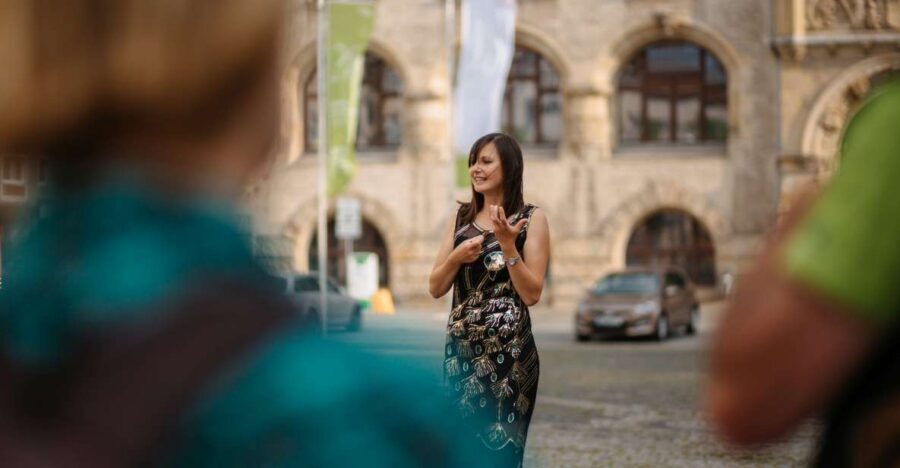
Book it if you want a smart, time-efficient way to understand Dessau. For $13 and 1.5 hours, you get guided interpretation across major themes, plus a story-driven guide who helps you read the city center instead of just passing through it. The biggest reasons to choose it are the Bauhaus connection and the way the walk connects cultural names with civic context, including the Basic Law.
Skip it only if German is a dealbreaker for you, or if you’re looking for long museum time rather than an interpretive city walk. If either of those apply, you can still enjoy Dessau—but you’ll probably want a different format.
FAQ
How long is the Dessau guided walking tour?
The tour lasts 1.5 hours.
What price should I expect to pay?
The price is listed as $13 per person.
Where do I meet the guide?
You should show your voucher at the ticket counter before the tour begins.
Is the tour only in German?
Yes, the live tour guide language is German.
Does the tour run in bad weather?
Yes. The tour takes place rain or shine.
Is it wheelchair accessible?
The tour is wheelchair accessible.
Is there free cancellation?
Yes. You can cancel up to 24 hours in advance for a full refund.
Can I reserve without paying right away?
Yes. You can reserve now and pay later.