REVIEW · COLOGNE
Cologne’s Medieval Churches Private Tour
Book on Viator →Operated by Rosotravel - Munich · Bookable on Viator
Medieval churches, in easy reach. This private Cologne tour strings together major landmarks and lesser-known Romanesque stops, with inside views when possible and stories you can actually follow. It’s in English, and it’s built for a relaxed pace over about two hours.
What I like most is the focused route. You’ll hit Cologne Cathedral and Great St. Martin Church, then continue on to standout basilikas and churches that most people skip when they only plan for the big sights.
One thing to plan for: access can be hit-or-miss. Church visits may be limited during scheduled events and daily Sunday/holiday services, and Great St. Martin is closed on Mondays—so you might view some places from the outside.
In This Review
- Key things to know before you go
- A Private 2-Hour Walk Through Cologne’s Romanesque, Gothic, and Baroque
- Meeting at Alter Markt: Start Easy, Then Go Church-Hopping
- Great St. Martin Church: Romanesque Calm with WWII in the Backstory
- Cologne Cathedral: Gothic Wow, Plus a Less-Expected Connection
- St. Mariä Himmelfahrt and St. Ursula: Baroque Meets the Bone Shrine
- Basilica of St. Gereon: A Dome That Takes Over the Room
- Price and Value: When $197.66 Makes Sense (and When It Doesn’t)
- Private Guide Styles: Why Names Matter for How the Tour Feels
- Who Should Book This Tour (and Who Might Reconsider)
- Should You Book This Cologne Medieval Churches Private Tour?
- FAQ
- How long is the Cologne Medieval Churches Private Tour?
- What does the tour cost per person?
- Where does the tour start?
- Is this tour private?
- Is the tour offered in English?
- Which churches are included on the itinerary?
- Is admission included for the churches?
- When can you not enter Great St. Martin Church?
- What are the cancellation rules for a full refund?
Key things to know before you go
- A tight private route: Cathedral plus multiple medieval churches, with time to step inside when doors are open.
- Free admission, when entrances are allowed: the stops are listed with free entry tickets, though service schedules can change access.
- A guide who connects buildings to Cologne: you’ll get religious and city context, not just dates.
- Multiple styles in one walk: Romanesque, Gothic, and Baroque elements show up back-to-back.
- Real-world pacing: the schedule is short, with brief stops and no sense of a long haul trek.
A Private 2-Hour Walk Through Cologne’s Romanesque, Gothic, and Baroque
This is the kind of tour that makes Cologne feel manageable. Instead of running from one far-away attraction to the next, you stay in the heart of the historic church cluster and let a guide do the heavy lifting—turning stone, arches, and altars into a story you can follow without a homework packet.
The big win is the private format. Your group sets the rhythm. If you want more time looking at details inside one church, you can usually ask. If someone in your group needs slower pacing or extra patience, this tour’s structure leaves room for it.
And yes, you’ll still see the headline sites. Cologne Cathedral is the star, but the route is more interesting than a one-building stop because it also includes older Romanesque churches that help explain how Cologne’s religious life evolved.
You can also read our reviews of more private tours in Cologne


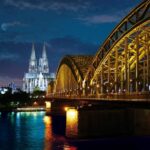
Meeting at Alter Markt: Start Easy, Then Go Church-Hopping
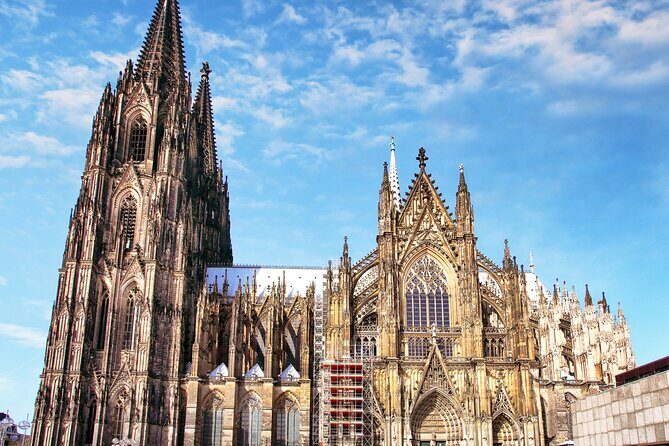
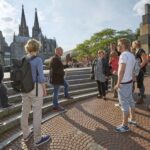
You meet your guide at Cafe Extrablatt Köln Alter Markt, Alter Markt 28–32 (near public transportation). The tour begins with a short meetup window so you can get oriented without feeling rushed.
You’re then set up for a simple pattern: walk a short distance, step inside (when permitted), and get the key background before moving on. Each main stop is allotted around 25 minutes, which is enough time to look around calmly, not enough time to “museum drift” until everyone’s hungry and grumpy.
If you like having a plan that doesn’t feel rigid, this pacing is a plus. One review note also pointed out that the day felt easy on the legs—good news if you don’t want a long, punishing walking tour.
Afterward, you’ll be in a good position to enjoy a casual Cologne moment. People often pair this with an easy drink—one guide experience even included a tip to grab a Kolsch afterward—and you’re not trapped far from transportation.
Great St. Martin Church: Romanesque Calm with WWII in the Backstory
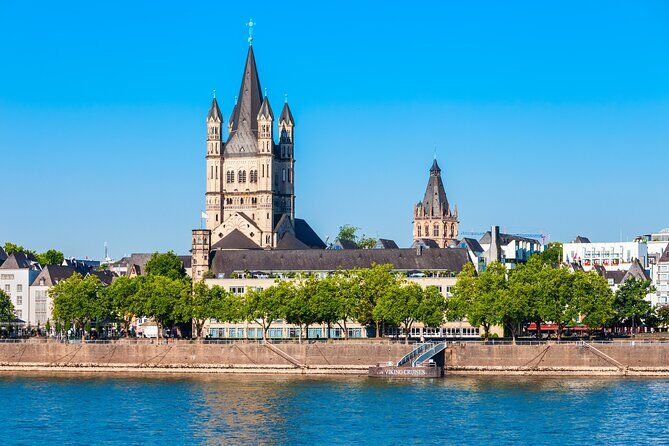
Your first major stop is Great St. Martin Church—one of the city’s 12 Romanesque churches. This is where the tour starts to feel like more than sightseeing. You’re stepping into a building with layers: an original Roman chapel, a Benedictine monastery period, and later damage and reconstruction after WWII.
That arc matters because it shows why Cologne’s churches feel different from fresh, modern worship spaces. You’re not just looking at “old architecture.” You’re looking at survival and change across centuries—how religious life, community priorities, and major historical events all left marks.
Inside, the mood is quieter than you might expect. The scale and the stonework help the space feel peaceful, and the background from your guide makes it easier to understand what you’re seeing rather than treating it like a blur of columns and windows.
The one drawback to keep in mind is access. Great St. Martin is closed on Mondays, and during events or Sunday/holiday services, entry can be restricted. If you’re visiting on a Monday, you may need to build your expectations around outside viewing.
Cologne Cathedral: Gothic Wow, Plus a Less-Expected Connection
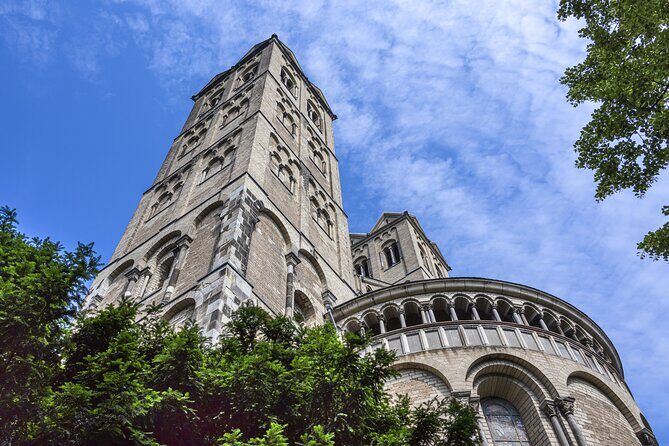
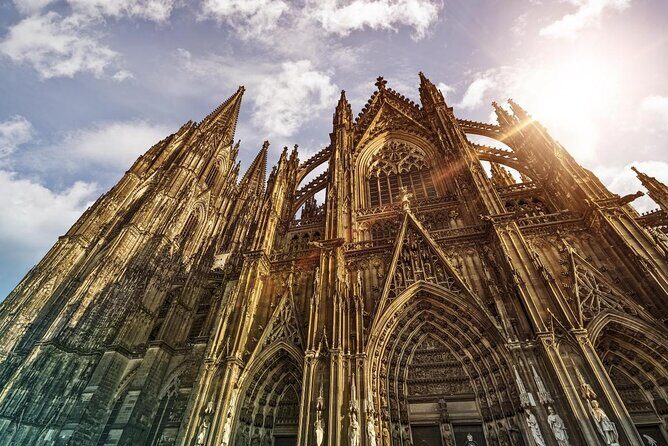
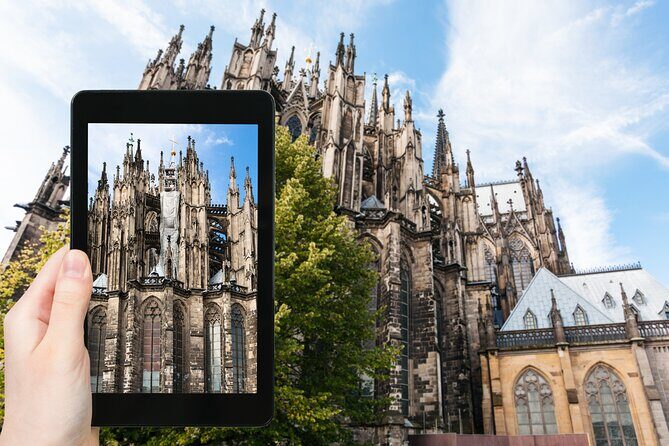
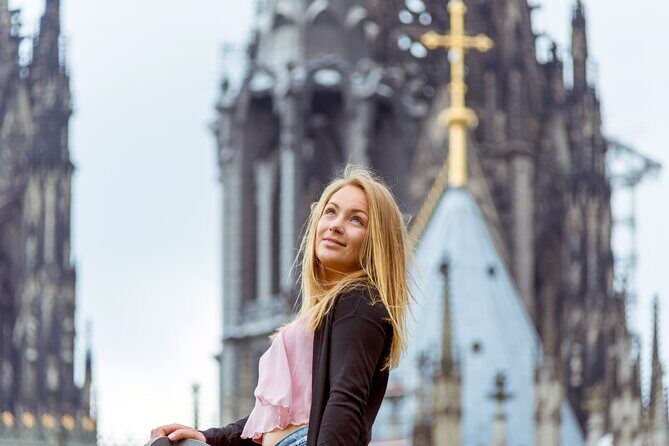
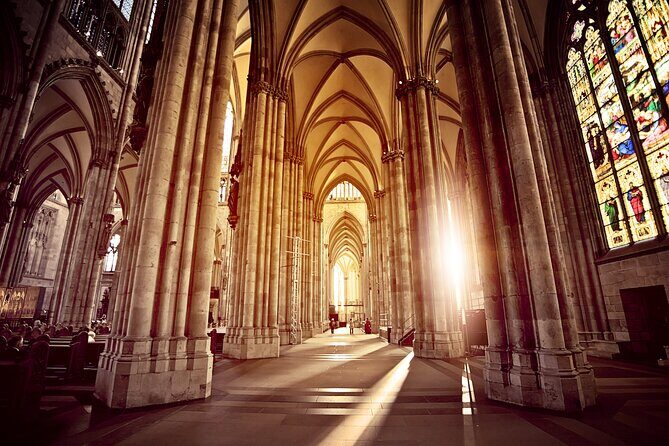
A few steps away is Cologne Cathedral, the city’s most famous monument. This is the stop most people expect, and it delivers—its Gothic architecture is the kind of sight that makes you naturally pause, look up, and wonder how anyone ever built something like this without modern cranes.
But the cathedral portion is more than visual drama. Your guide will explain why it matters not only to Cologne’s Christians, but also to Jews. That connection adds a meaningful layer to your visit because it pushes you beyond the usual “this is important to one group” narrative.
Why that’s valuable: if you’re traveling to religious sites, it’s easy to get stuck in one perspective. A guide who connects the broader historical role of the cathedral makes your time feel more grounded and less like you’re checking off a landmark.
Also, this is a good moment for photos and slow looking—cathedrals reward attention to proportions and detail. Plan to spend most of your time looking from different angles rather than trying to capture everything in one shot.
St. Mariä Himmelfahrt and St. Ursula: Baroque Meets the Bone Shrine
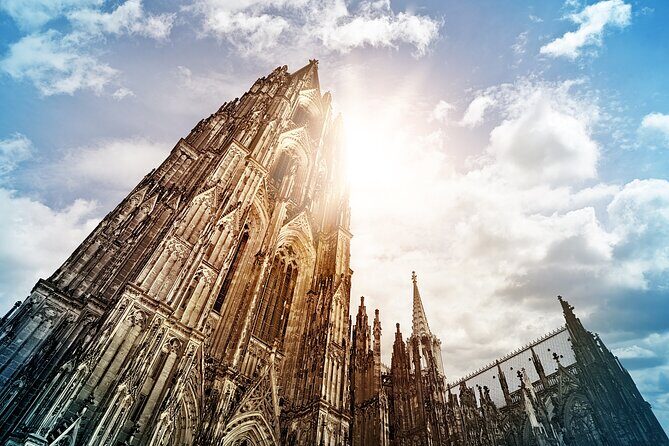
Next up is St. Mariä Himmelfahrt, described with Baroque-style character. The contrast is intentional: Cologne’s church story isn’t just one architectural chapter. You’re moving from Romanesque to Gothic to Baroque ideas of worship space, and the guide’s job is to help you notice why the styles changed.
From here, the tour also points you toward the Basilica of St Ursula, which houses a shrine made of real bones. That’s a startling detail, but it’s exactly the kind of thing that makes the tour memorable in a practical way: it gives you a hook for understanding why these places drew people over and over—belief, relics, and community devotion were part of how history moved.
If you’re sensitive to strong imagery, keep this in mind. The tour is still likely to be respectful and explanatory, but it’s worth knowing the bones shrine detail is part of the experience you’re paying for.
On days when churches have limited access due to services or events, you might not get the full inside experience here. When entry is restricted, you can still learn the architecture from the exterior—but you lose some of the impact that comes from seeing the shrine setting in person.



Basilica of St. Gereon: A Dome That Takes Over the Room
The final stop is Basilica of St Gereon, a medieval church known for one of the largest and most beautiful domes in Europe. Even before you get fully oriented, domes do something to your brain: they make you look upward and pay attention to how the structure channels space.
This is where the tour’s “variety” pays off. You’re not just repeating the cathedral experience. Instead, you’re getting a different kind of architectural drama: a dome that dominates the interior and changes the way the light and acoustics feel.
Your guide should help you connect the dome to the broader medieval church-building tradition in Cologne. When you understand what you’re looking for—scale, design choices, and what the structure signals—you end up with more than memories. You leave with a clearer mental map of Cologne’s religious architecture.
Price and Value: When $197.66 Makes Sense (and When It Doesn’t)
At $197.66 per person for about two hours, this tour sits in the “not cheap, but not insane” category for a private guided experience. The private setup matters here: it’s not just entry into churches. You’re paying for a guide who can explain religious heritage and the specific story behind multiple monuments in one outing.
So when does it feel like value?
- If you want a guided route that avoids decision fatigue and keeps stops organized.
- If you care about understanding why each church looks the way it does and what mattered historically.
- If your group includes someone who benefits from a pace that you can control with a guide (less waiting, fewer crowd obstacles).
That said, there is a real consideration: some people feel it’s over-priced, especially on days when a church isn’t open or access is limited and the itinerary has to shift toward outside viewing. If your travel dates land on a Monday or overlap with church services/events, you might not get the same inside time you expected.
My practical take: if you’re paying this price, pick your day carefully. Put a little effort into avoiding Monday (especially because Great St. Martin is closed then), and be okay with the fact that religious sites don’t operate like theme parks.
Private Guide Styles: Why Names Matter for How the Tour Feels
A private tour rises or falls on the guide. In this case, the guide experiences vary in speaking style, and you can plan around that.
You may meet guides including Bernd, Bernhard, or Charly—names that come up in real experiences. What matters is not just knowledge, but how clearly the guide delivers it. One experience praised a guide as very knowledgeable and easy to follow, with a fun, relaxed tone. Another experience flagged that a guide was friendly but soft-spoken with a thick German accent, which made comprehension harder for someone who is hard of hearing.
So here’s your useful move: if you need extra clarity, ask for confirmation that your guide can be clearly understood in English. And if you’re traveling with someone who relies on crisp audio, consider sitting where you can hear well and plan for extra patience.
Who Should Book This Tour (and Who Might Reconsider)
This tour fits best if you:
- Want multiple Cologne churches in one organized outing, without trying to stitch together your own route.
- Prefer a private pace and a guide who answers questions about religious and city heritage.
- Appreciate variety: Romanesque and Gothic highlights plus Baroque and a dome-focused finale.
You might reconsider if you:
- Are visiting on a Monday, since Great St. Martin Church is closed.
- Need guaranteed interior access every stop (church services and events can limit entry).
- Are very sensitive to audio clarity and expect a louder, super-clear speaking style in English. The chance is small, but it’s a known risk based on at least one experience.
Should You Book This Cologne Medieval Churches Private Tour?
If you’re the type who likes learning while you walk—and you want more than a cathedral selfie—this private tour is a strong choice. The route gives you a satisfying sweep of Cologne Cathedral, Great St. Martin, and additional churches that explain how the city’s religious story evolved.
I’d especially recommend it if your group includes anyone who enjoys being guided through details: why the cathedral connects to more than one faith community, how Romanesque churches changed over time, and why the St Ursula bone shrine is part of Cologne’s religious fabric.
Just be smart about your day. Avoid Monday if you can, and remember that churches can limit entry during services. If you go in with that mindset, you should feel like you got your money’s worth.
FAQ
How long is the Cologne Medieval Churches Private Tour?
The tour runs for about 2 hours.
What does the tour cost per person?
The price is $197.66 per person.
Where does the tour start?
You meet your guide at Cafe Extrablatt Köln Alter Markt, Alter Markt 28–32, 50667 Köln, Germany.
Is this tour private?
Yes. Only your group participates.
Is the tour offered in English?
Yes, it’s offered in English.
Which churches are included on the itinerary?
The tour includes Great St. Martin Church, Cologne Cathedral, St. Mariä Himmelfahrt, the Basilica of St Ursula, and the Basilica of St Gereon.
Is admission included for the churches?
The listed admissions are free for the stops, though entry may be limited during scheduled events as well as daily, Sunday, and holiday services.
When can you not enter Great St. Martin Church?
Great St. Martin Church is closed on Mondays.
What are the cancellation rules for a full refund?
You can cancel up to 24 hours in advance for a full refund. Less than 24 hours before the start time is not refunded.