REVIEW · ALTE NATIONALGALERIE
Berlin: Entry to Alte Nationalgalerie
Book on GetYourGuide →Operated by GetYourGuide Tours & Tickets GmbH · Bookable on GetYourGuide
Berlin has a museum you’ll actually want to linger in. Alte Nationalgalerie sits on UNESCO’s Museum Island and walks you through an art story from Romanticism to Impressionism and early Modernity. I love how the collection feels like it has momentum, so you keep moving without feeling rushed.
Two big wins: the chance to see crowd-pleasers like Friedrich’s The Monk by the Sea and the museum’s strong display flow that makes it easy to follow the transitions between periods. One thing to plan for is closures on the day you go—some visitors report that a floor or specific section (like Impressionist rooms) was closed during their visit.
In This Review
- Key moments that make this entry ticket worth it
- Getting into Alte Nationalgalerie on Museum Island (and what your ticket does)
- The 19th-century journey across Classicism, Romanticism, and beyond
- Romanticism and German art highlights: Monk by the Sea and the Group of Princesses
- Berlin works and sculpture stops: Eisenwalzwerk, Sleeping Beauty, and Shadow’s tomb
- Impressionists and early Modernity, plus the Sezession layer
- Using the audio guide so you actually get more out of the art
- Timing, bags, and the smooth-walk strategy
- Who this Alte Nationalgalerie entry is best for
- Should you book this Alte Nationalgalerie entry ticket?
- FAQ
- What is the Alte Nationalgalerie entry ticket?
- How much does it cost?
- How long is the ticket valid?
- Where do I meet for this activity?
- Is the ticket refundable?
- What should I do after I arrive for my timeslot?
- Does this include an audio guide?
- Can I skip the ticket line?
- Are backpacks allowed inside?
- Is the museum wheelchair accessible?
- What art highlights can I expect to see?
Key moments that make this entry ticket worth it

- Museum Island, UNESCO: one stop that ties into Berlin’s major art landmark
- Major 19th-century names and themes: Classicism, Romanticism, Biedermeier, Impressionism, early Modernity
- Top highlight works: Friedrich’s The Monk by the Sea, Menzel’s Eisenwalzwerk, and the Group of Princesses
- Sculpture and marble history: including Sleeping Beauty and Shadow’s marble tomb for Count Alexander von der Mark (1790)
- Art that invites repeat looking: self-portraits shown like end credits, plus exhibition poster displays
Getting into Alte Nationalgalerie on Museum Island (and what your ticket does)
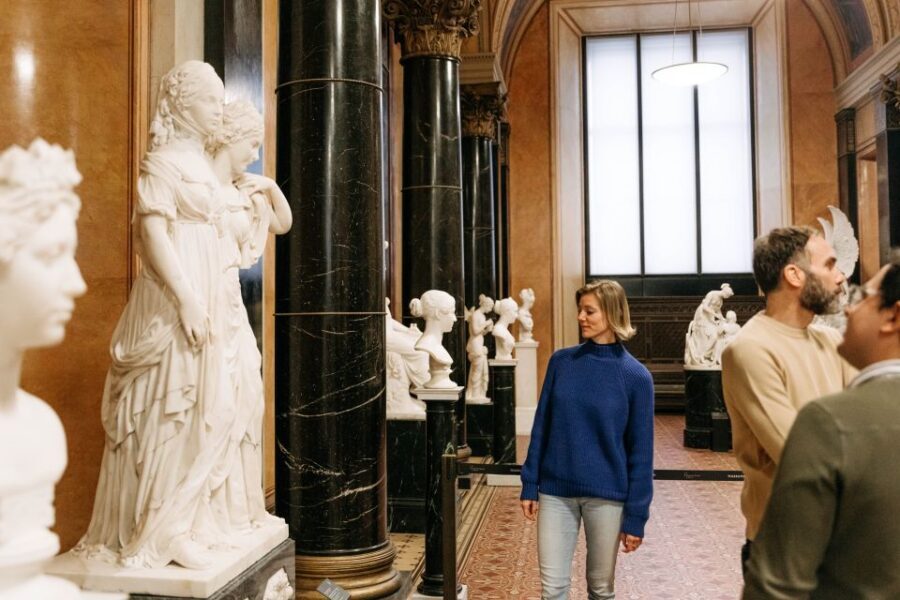
This is a straightforward ticket experience with one smart add-on: your entry to Alte Nationalgalerie plus an audio guide. The price is $14 per person, and it’s valid for 1 day—you’ll pick a timeslot when you book, then build your visit around it.
Your meeting point is the Visitor’s Entrance of the Alte Nationalgalerie, Bodestraße 10178 Berlin. After you’re in, you’re essentially free to explore the museum on your own, using the audio guide to steer your attention toward the works that matter most.
A couple practical notes will save you hassle: you need to enter within 15 minutes of your booked timeslot, backpacks aren’t allowed, and the museum is wheelchair accessible. If you like to carry everything “just in case,” switch to a smaller bag or plan to leave larger items elsewhere before you arrive.
The 19th-century journey across Classicism, Romanticism, and beyond
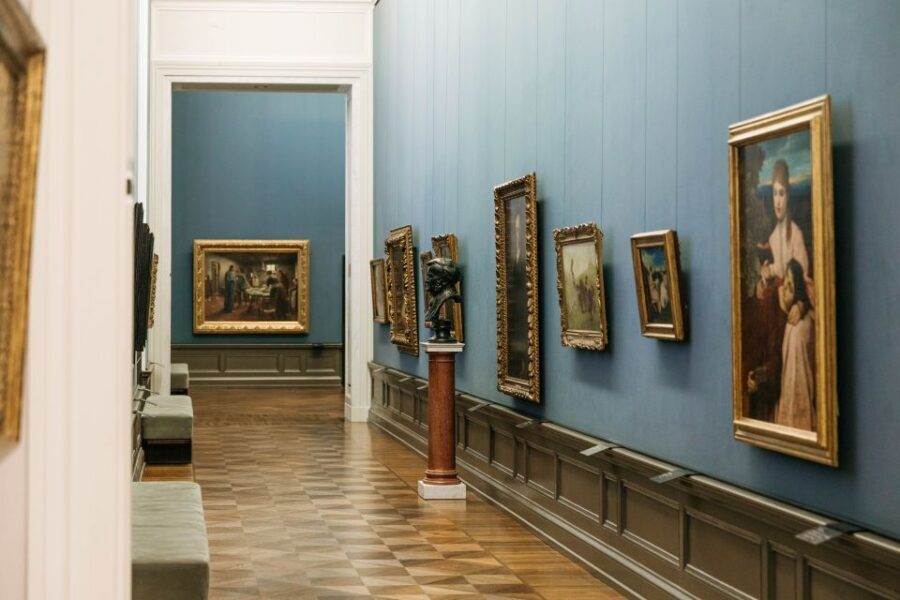
Alte Nationalgalerie isn’t just a room full of famous paintings. The museum’s whole purpose connects art to the intellectual energy of its time—the idea for a sanctuary for art and science traces back to Friedrich Wilhelm IV. The collection itself grew from a donation by banker Joachim Heinrich Wilhelm Wagener, who left works to the Prussian state, including pieces connected to the Düsseldorf school and Belgian history painting.
It opened in 1876 as the National Gallery on Museum Island. Later, after the fall of the Berlin Wall, it took on the role of what you’re visiting today: the Alte Nationalgalerie focused on the 19th century.
What you’ll feel while walking through is a changing visual language. The museum’s periods—Classicism, Romanticism, Biedermeier, Impressionism, and early Modernity—don’t sit side-by-side like separate textbooks. They act more like chapters in the same book: changing tastes, changing subjects, changing ways of seeing.
Romanticism and German art highlights: Monk by the Sea and the Group of Princesses
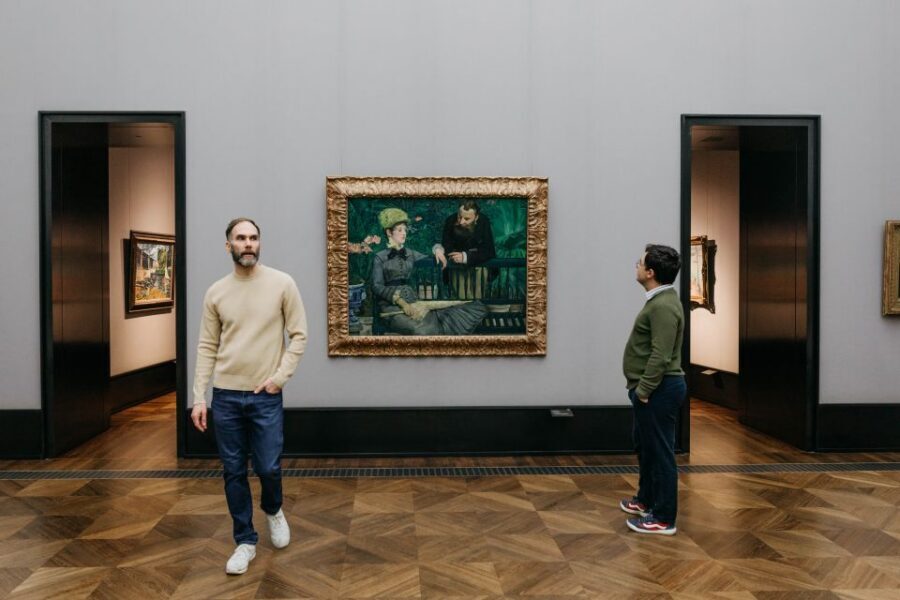
If you want that goosebump feeling that comes from 19th-century art, Romanticism is your starting line here. One headline work is Caspar David Friedrich’s The Monk by the Sea. Even without needing a lecture, it lands because Friedrich’s mood does the heavy lifting—quiet, solitary, and full of atmosphere.
You’ll also run into other Romantic-era favorites that fit the same emotional world. Look for the Gothic Cathedral at the Water and the Group of Princesses. These works matter because they show how 19th-century German artists treated spectacle and feeling differently than earlier art did. The subjects may look formal, but the emotional current underneath is where the power lives.
And yes, you’ll see that this is connected to the cultural moment around Goethe. The museum places you right inside a time when ideas about literature, art, and national identity were tightly linked. It’s one of the reasons this place is so rewarding even for people who think they’re only in Berlin for a day.
Berlin works and sculpture stops: Eisenwalzwerk, Sleeping Beauty, and Shadow’s tomb
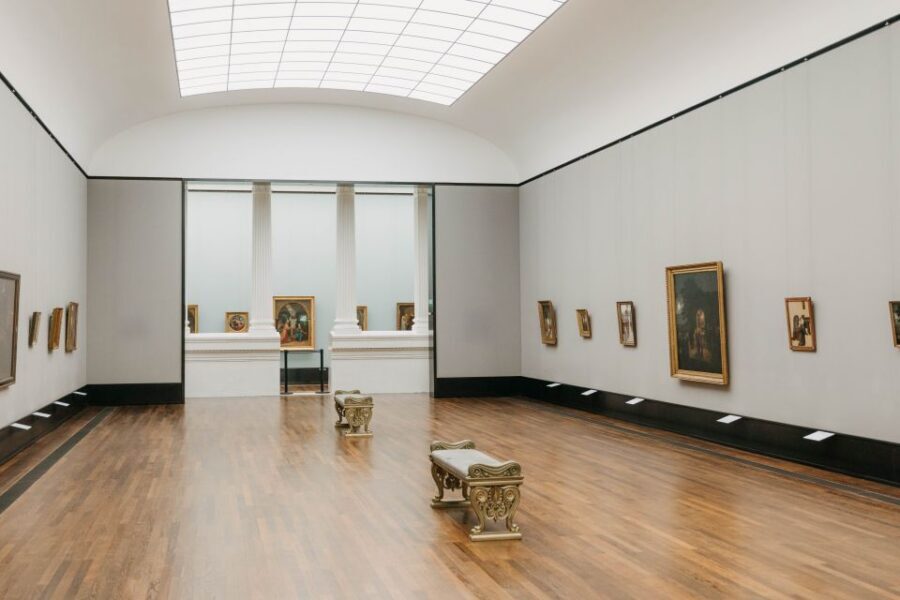
Not every highlight here is paint on canvas. One reason this museum feels like more than a checklist is the way it includes sculpture and historic objects alongside paintings.
Menzel’s Eisenwalzwerk is a great example of how industrial modern life was treated as worthy of serious art. This isn’t decorative background work—it shows the era’s fascination with work, machinery, and modern energy, framed through a very 19th-century lens.
Then make time for the sculptures. A standout is Sleeping Beauty, described in the museum experience as breathtaking. It’s the kind of piece that can shift your pace. Where you’d normally move from painting to painting, sculpture pulls you to slow down and read form, surface, and posture.
Don’t miss the quieter but striking historical anchor: Shadow’s marble tomb for Count Alexander von der Mark (1790). It adds a human scale to the museum’s timeline. Suddenly you’re not only looking at artists responding to their world—you’re looking at how patrons and memorial culture shaped what ended up in public spaces.
Impressionists and early Modernity, plus the Sezession layer
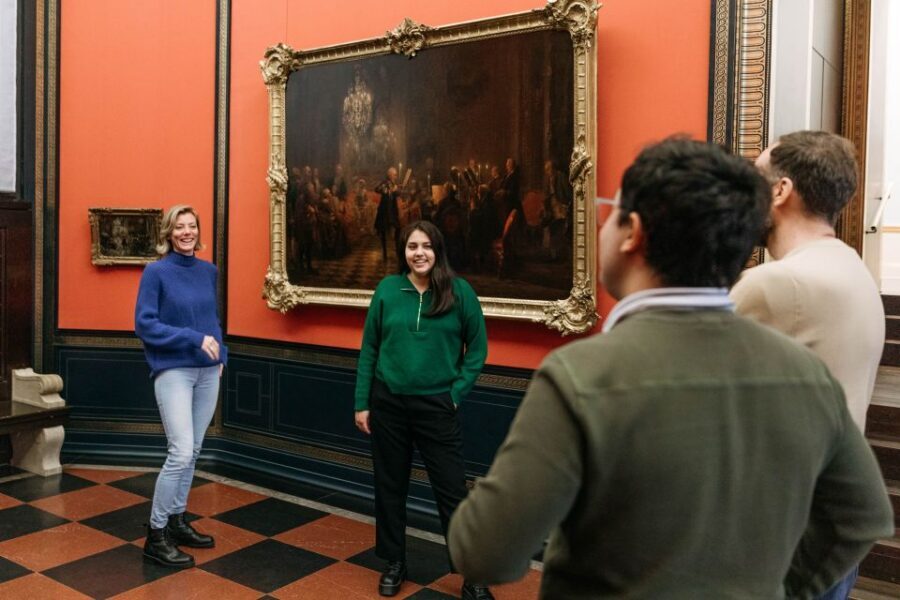
Now for the big crowd-pleaser section: French Impressionists. The museum experience highlights Manet, Monet, and Renoir, and if Impressionism is why you booked, you’ll want to dedicate real time here instead of sprinting.
One important consideration: some visitors have reported that certain floors or sections were closed during their visit, including Impressionist rooms. That means your plan should have flexibility. If you walk in with a laser focus on the Impressionists, give yourself a backup route—spend time on Romantic works and the sculpture as well, so the day still pays off even if one area is unavailable.
There’s also an extra layer of later 19th-to-early-20th interest that fans of Sezession art tend to love. Reviews mention seeing works connected to Max Liebermann, Franz von Stuck, and Gustav Klimt, including drawings, sculptures, and paintings from the Sezession period (1880–1920). If you like the bridge between academic tradition and the more experimental edge that comes next, this portion can feel like an extra bonus inside a “classic” museum ticket.
Using the audio guide so you actually get more out of the art
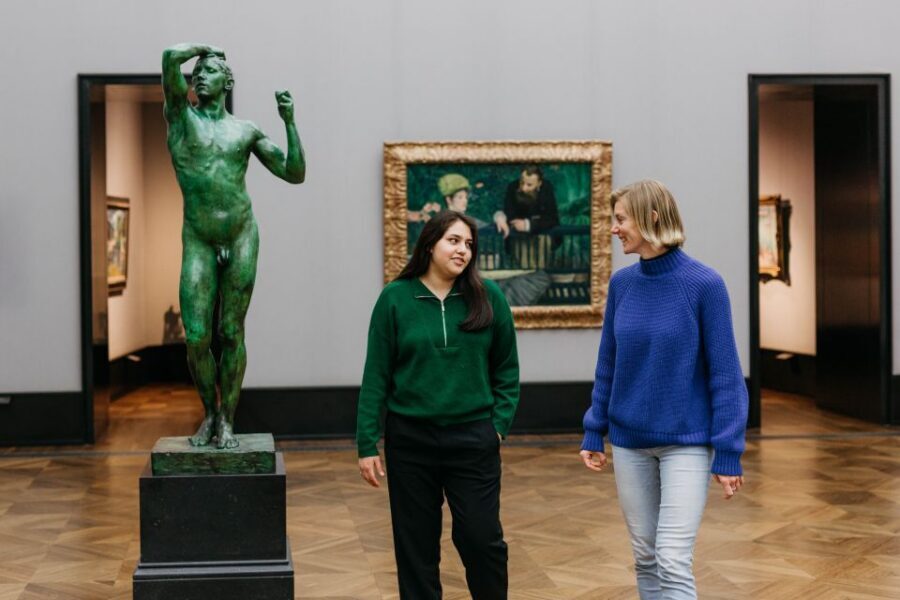
The audio guide is included with your ticket, and it’s the easiest way to make the visit smarter without turning it into a school assignment. I like using an audio guide in short bursts: pick a few anchor works, listen closely, then move on while you still have fresh context.
Here’s a practical way to do it:
- Spend your first audio listens on the major anchors you came for.
- Then switch to shorter listening while you move between periods.
- Save any longer listening for moments that you feel yourself drifting past.
One review standout detail is how some displays are arranged to create a satisfying ending. There’s a series of self-portraits near the end that people compare to end credits—works that give you a closing perspective on the artists. Another detail worth watching for is the museum’s exhibition poster displays, which can make the art feel more connected to real time and public attention, not just an untouchable collection behind glass.
Timing, bags, and the smooth-walk strategy
Your visit is valid for one day, but you’re not going whenever you want. Enter within 15 minutes of your timeslot, and then let the museum pacing do its job.
Because backpacks aren’t allowed, travel lighter than you think. Keep only what you need for a museum day—wallet, phone, a light layer if Berlin weather is playing games. If you’re coming from another Museum Island stop, plan your storage so you don’t end up scrambling at the entrance.
And since closures seem to happen on some dates, don’t treat your visit like a single route. If an area is closed when you arrive, pivot immediately. The museum’s strength is that it still delivers value even when you can’t see everything—because the collection is built around period shifts, not just one mega room.
Who this Alte Nationalgalerie entry is best for
This ticket is ideal if you like art in a “story mode.” You’ll fit right in if you enjoy seeing how styles evolve—how Romantic feeling turns into Impressionist perception, and how the late-19th/early-20th energy starts to show up too.
It’s also a solid choice for Museum Island day-planners. You get major 19th-century works without needing to commit to multiple separate museum admissions.
If you’re traveling with kids, the museum includes exhibition talks and guided tours for children and adults—so you may be able to plug into that kind of programming while your entry ticket covers your main self-guided time. (Just note: your ticket here is for gallery entry plus the audio guide.)
Should you book this Alte Nationalgalerie entry ticket?
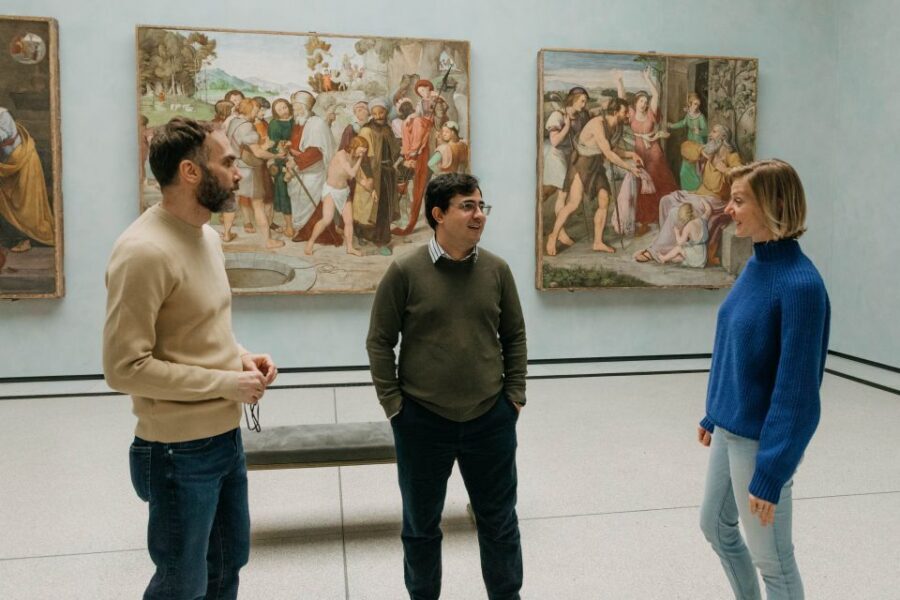
Book it if you want high value for a single museum stop: $14 gets you entry, an audio guide, and the chance to see key works across 19th-century movements like Classicism, Romanticism, Biedermeier, Impressionism, and early Modernity. It’s a strong pick for first-time visitors to Museum Island who still want enough time inside to actually notice details.
Think twice only if your day is very tight and you’re specifically dependent on one particular floor or section. Since some visitors report closures (including Impressionist-related areas), it’s smart to keep a flexible mindset and give yourself time to enjoy what’s open.
FAQ
What is the Alte Nationalgalerie entry ticket?
It’s an admission ticket to the Alte Nationalgalerie museum, paired with an audio guide.
How much does it cost?
The price is $14 per person.
How long is the ticket valid?
The ticket is valid for 1 day.
Where do I meet for this activity?
You start at the Visitor’s Entrance of the Alte Nationalgalerie, Bodestraße 10178 Berlin.
Is the ticket refundable?
The activity is non-refundable.
What should I do after I arrive for my timeslot?
Enter the museums within 15 minutes of your booked timeslot.
Does this include an audio guide?
Yes. The ticket includes an audio guide.
Can I skip the ticket line?
Yes, the experience includes skipping the ticket line.
Are backpacks allowed inside?
No. Backpacks are not allowed.
Is the museum wheelchair accessible?
Yes. The entire building is wheelchair accessible.
What art highlights can I expect to see?
You can expect works and themes from Classicism, Romanticism, Biedermeier, Impressionism, and early Modernity, including Friedrich’s The Monk by the Sea, Menzel’s Eisenwalzwerk, the Group of Princesses, Sleeping Beauty, and Shadow’s marble tomb for Count Alexander von der Mark (1790).