REVIEW · BERLIN DUNGEON
Berlin Dungeon: Entrance Ticket
Book on GetYourGuide →Operated by Berlin Dungeon · Bookable on GetYourGuide
Berlin’s darkest stories come with a wink. Berlin Dungeon turns about 600 years of the city into a fast, theatrical route with professional actors, 360° sets, and special effects that keep you moving. I love how the show mixes laughs with real Berlin crimes and punishments, and I also like that the pacing is tight for a one-hour ticket. The main catch: it can get genuinely jumpy and dark, so it may not suit nervous visitors or anyone sensitive to lighting effects.
In the lineup you’ll meet names like the headless knight Erich Valke, the legend that helped inspire Frankenstein, and Berlin’s notorious serial killer Carl Großmann, plus the newer show tied to Marie N. You get a lot of story per minute, but the experience is best enjoyed if you’re comfortable with fake blood, sudden scares, and being pulled into the action.
In This Review
- Key highlights at a glance
- Berlin Dungeon in one hour: what the ticket actually buys you
- The 600-year route: from the headless knight to modern serial crime
- 360° sets and rides: how the production keeps you from zoning out
- Marie N. and the serial-killer thread: what the latest show adds
- Plague Doctor, High Court, and secret tunnels: the legal-and-fear set pieces
- Exitus freefall tower: the one moment that’s all physics
- Price and timing: choosing the best English show slots
- Who this experience suits best (and who should skip it)
- Practical do’s and don’ts: keep the show smooth
- Should you book Berlin Dungeon?
- FAQ
- How long is the Berlin Dungeon entrance ticket experience?
- Where do I meet for Berlin Dungeon, and does it vary?
- How much does the Berlin Dungeon entrance ticket cost?
- Are there English shows, and what time do they run?
- What is the minimum age to enter?
- Do children under 14 need an adult?
- Is the attraction wheelchair accessible?
- Can I bring a camera or record video?
- What health and sensory situations make it unsuitable?
Key highlights at a glance
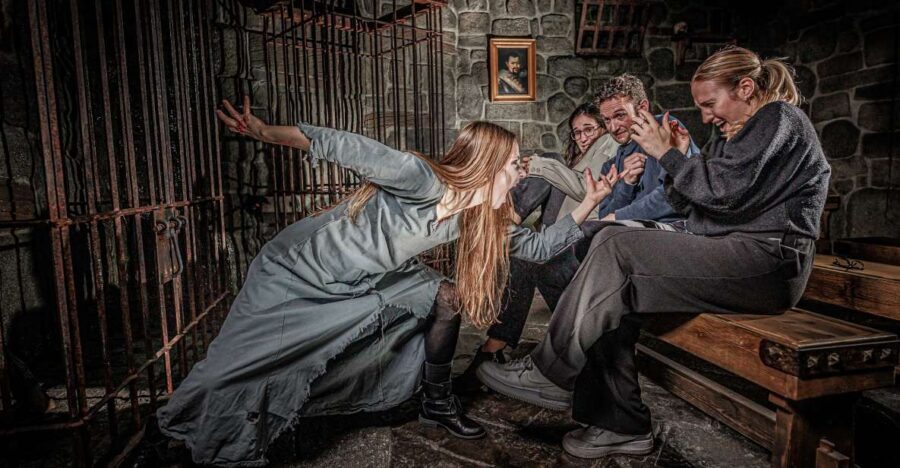
- 600 years of Berlin’s dark past told in scenes, not lectures
- 360° sets and special effects that make the city feel alive
- Exitus freefall tower for a real heart-thump moment
- Marie N. case show featuring Berlin’s serial-killer story thread
- Pro actors who interact with the audience throughout the route
- No cameras or video recording so the show stays fully immersive
Berlin Dungeon in one hour: what the ticket actually buys you
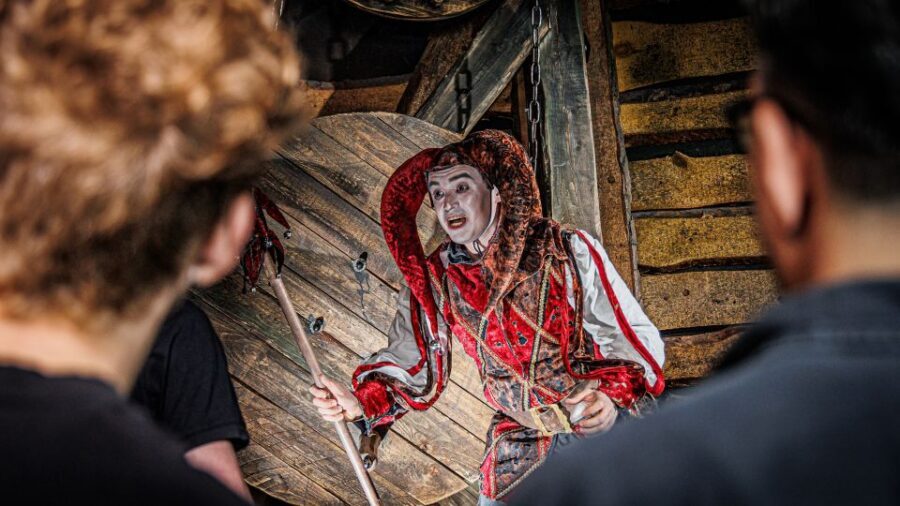
Berlin Dungeon is designed to be a full experience in about one hour, which is exactly why it works for a tight Berlin schedule. Instead of a museum walk, you get a staged, story-driven tour where you move from scene to scene while actors perform around you.
The ticket is basically admission, and you’ll follow a set sequence of rooms and shows. The big promise is “laughs and frights,” and it sticks to that. You’ll spend most of your time watching, reacting, and getting caught in the timing of rides and special effects, not stopping to read panels.
At around $28 per person, I think it’s fairly priced for what you get: professional acting, rides, and production-level staging. It’s not the cheapest thing you’ll do in Berlin, but it’s also not an all-day commitment, which makes it easier to justify when you want entertainment that’s also Berlin-specific.
The 600-year route: from the headless knight to modern serial crime
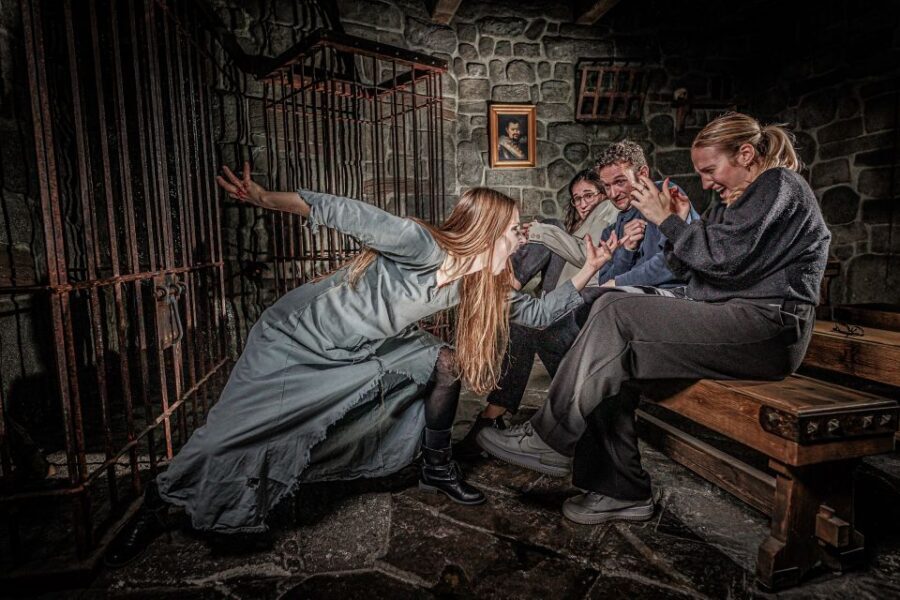
One of the best parts of Berlin Dungeon is how it jumps across centuries without getting lost. You’ll start in earlier, darker chapters and work your way toward stories that feel closer to modern true crime.
You’ll hear about medieval-era material, including the headless knight Erich Valke from the 14th century. You’ll also run into the storyline tied to the great fire of Berlin, which helps set up why fear, punishment, and rumor mattered so much back then.
As the show advances, it shifts into the city’s worst traitors and witches, then moves into the serial-killer thread. A key scene is the Labyrinth of the Hohenzollern, where you’ll meet Carl Großmann. The show keeps the focus on the drama of the era—fear of disease, the legal system, and the way stories spread—so you’re not only watching violence-for-shock value.
If you enjoy historical storytelling that’s scary but still structured, this is a strong fit. It’s also a good way to learn names and themes you’ll later recognize if you read about Berlin crime and urban legends on your own.
360° sets and rides: how the production keeps you from zoning out
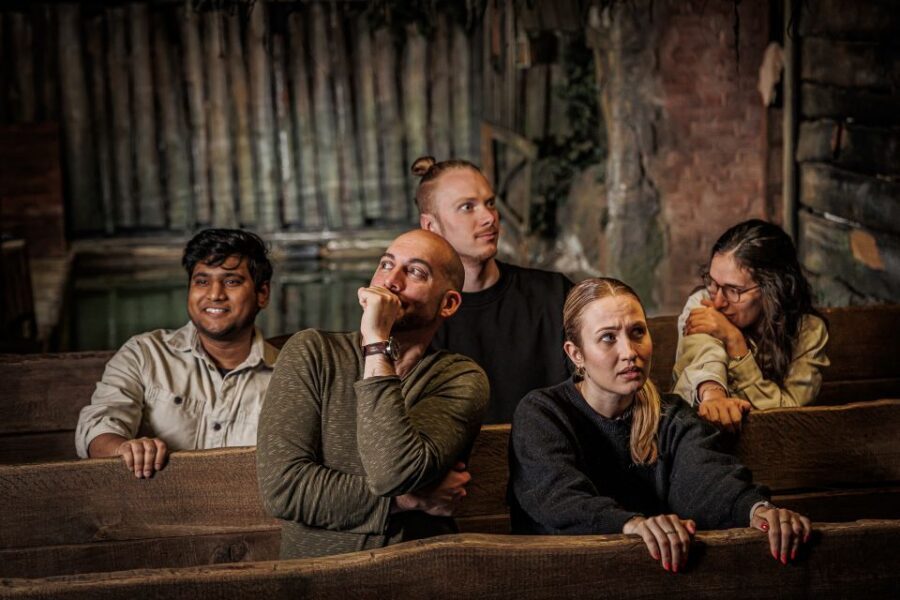
The 360° sets are central to why the hour feels fast. Instead of one flat stage, the show wraps you in the scene so the action feels bigger than just what’s in front of you. The storytelling is theatrical, and the special effects help sell the mood.
You’re not just passively watching. Actors use timing and interaction to pull you into scenes like shadow play moments, courtroom energy, and plague-related demonstrations. The show also leans on soundscapes and lighting to create those sudden “wait, what’s happening?” seconds that make the scares land.
The rides and transitions matter because they prevent the usual dungeon-problem: long stretches where you just sit and listen. Here, you keep moving through set pieces. That’s why even adults who go in thinking it’s for teenagers usually end up having a good time—the show stays playful and pacey.
One practical consideration: because it’s dark and effect-heavy, it may not be suitable for people with epilepsy or for anyone who’s visually impaired. Even if you’re brave, the production uses lighting and staging that you’ll feel more than you’ll read.
Marie N. and the serial-killer thread: what the latest show adds
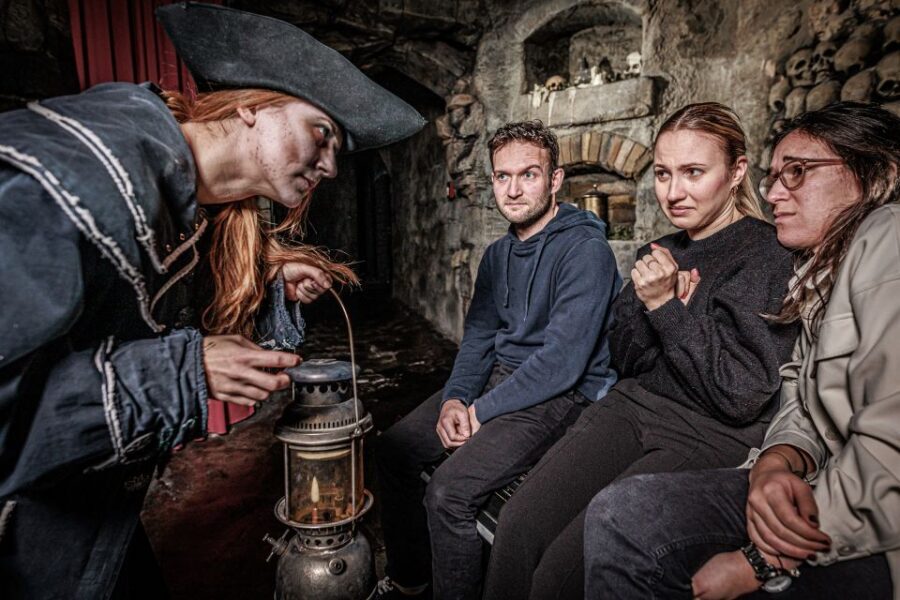
The newest storyline is built around Marie N., connected to the murder victim of Berlin’s most notorious serial killer. In this segment, the performance uses shadow play and hologram technology to blur the line between present and past.
Why this works: it doesn’t treat true crime as a dry lecture. It frames the story through performance, voice, and stage effects so you understand the emotional impact without needing background knowledge. If you’re the type who likes one clear story thread during an attraction, this gives you that.
It also helps that the serial-killer material sits inside a larger “dark Berlin” map. You’ll already have earlier stops about knights, fires, witches, and law. So by the time Carl Großmann appears again in this newer segment, the themes of fear and punishment feel connected, not random.
If you’re coming mainly for thrills, this is still worth it. It isn’t all screaming and jumps; it’s structured as a narrative segment with rising tension, then release.
Plague Doctor, High Court, and secret tunnels: the legal-and-fear set pieces
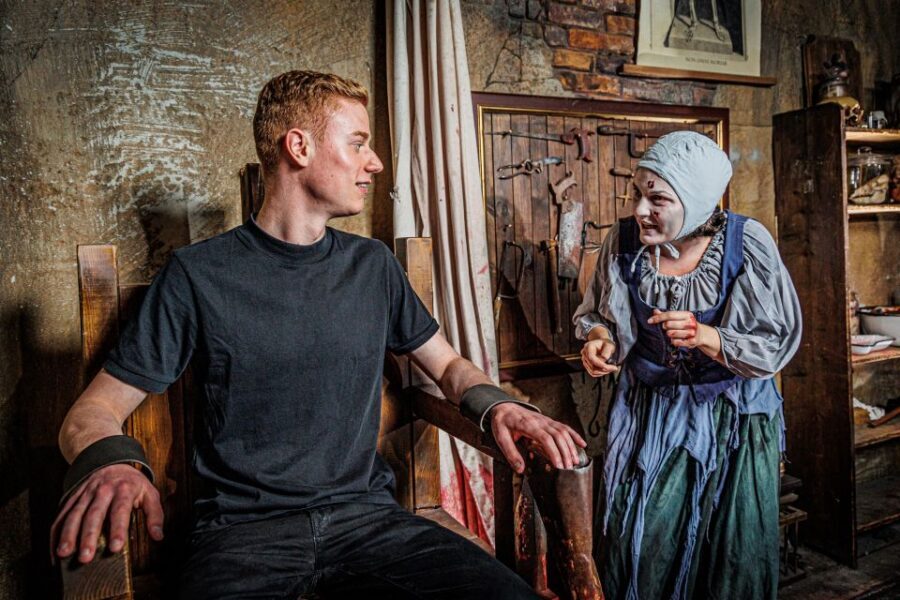
Some dungeon attractions throw everything into one scary mash. Berlin Dungeon feels more organized because it has distinct “worlds” within the experience.
You’ll meet the Plague Doctor, and the show includes a demonstration of plague effects. It’s meant to be unsettling but also theatrical—more stage horror than clinical explanation.
Next comes the courtroom energy. You’ll defend yourself in front of the High Court, then escape through secret tunnels. There’s also a witches’ dungeon thread, so the show uses repeated motifs: accusation, punishment, confinement, and escape. That keeps the theme cohesive as you bounce between time periods.
This part is where the interactive element can really shine. The actors are tuned to your group’s reactions, and the show uses timing to get you to respond. If you like being part of the moment—answering, reacting, even being startled on cue—this is one of the more memorable sections.
Just remember: the show uses darkness and staged surprises. If you tend to get overwhelmed in loud, low-lit environments, take that seriously.
Exitus freefall tower: the one moment that’s all physics
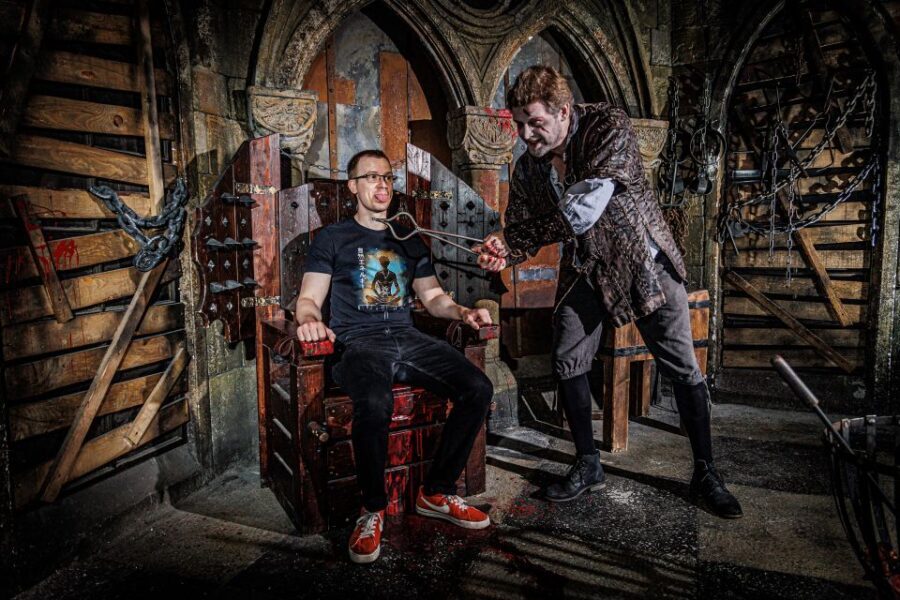
By the end, you’ll face the Exitus freefall tower, described as Berlin’s highest indoor freefall. This is the section that most people remember because it’s not just acting and screens. It’s a physical drop moment layered into the story’s final chapter.
Why it’s a good ending: the show has been building dread and anticipation through scenes. The tower turns that tension into a payoff you feel in your body, which makes the hour stick in your memory.
If you’re squeamish about heights or sudden motion, consider whether you truly want the tower moment. The attraction does flag that dark lighting and special effects can be hard for people with nervous conditions. That doesn’t mean it’s unsafe, but it does mean you should judge your personal comfort level before you commit to the drop.
Price and timing: choosing the best English show slots
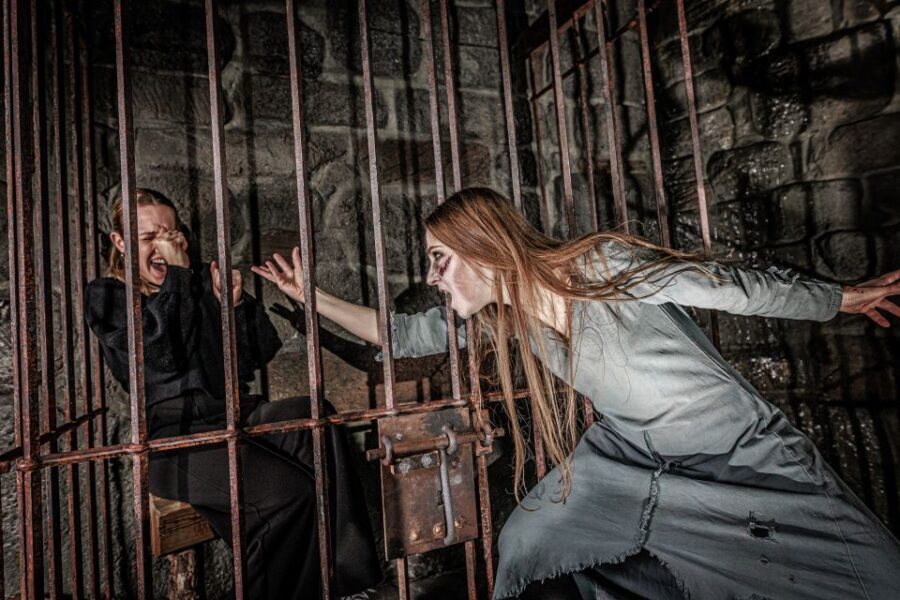
You’re looking at $28 per person for a one-hour ticket. For me, the value comes from the production load: pro actors, 360° staging, multiple set worlds, and at least one ride-style climax. If you compare it to many pay-only attractions that only give you a single room, this gives you a full show structure.
English shows run daily at 11:40 AM, 1:40 PM, and 3:40 PM. If you’re planning around those times, you’ll avoid the common mistake of squeezing it into a day slot that doesn’t match the show schedule.
A small planning note: the meeting point can vary by the booked option, so don’t rely on guesswork. Use the confirmation details for your exact start.
And if you’re watching your budget, it can be worth checking for discount tickets before you commit. I’ve seen people find cheaper options, and it can make the price feel even more reasonable for what you get.
Who this experience suits best (and who should skip it)
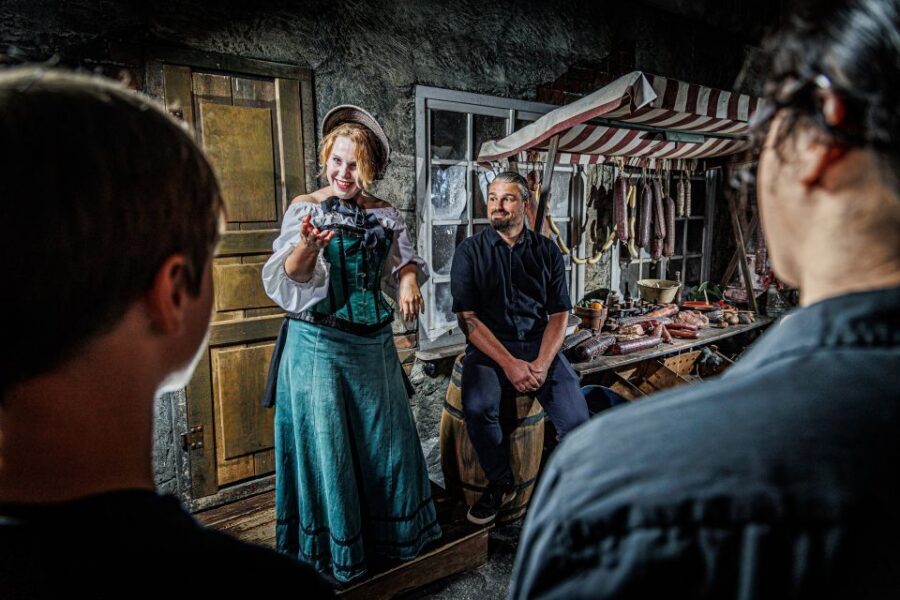
Berlin Dungeon is a strong choice for teens and adults who like theatrical history and don’t mind being startled. Many people also enjoy it as a group activity because the actors interact and the show is designed to get reactions.
Age-wise, the minimum age is 10. Children under 8 won’t be granted access, and children up to 14 are only admitted if accompanied by an adult. So if you’re bringing a family, you’ll want to match the child’s comfort with dark sets and surprise scares.
It also notes it’s not suitable for:
- epilepsy
- visually impaired people
- people with mobility impairments
There’s also a note that due to darkness, it might not be suitable for visitors with nervous conditions. That’s a big deal. You don’t want to spend your hour regretting your choice if low-light effects or jump moments spike anxiety.
Wheelchair accessibility is listed, but because the experience is flagged as not suitable for some mobility impairments, I’d treat that as a “check carefully” situation rather than a guaranteed fit. If mobility is a factor, it’s worth verifying how the specific route and effects align with your needs.
Practical do’s and don’ts: keep the show smooth
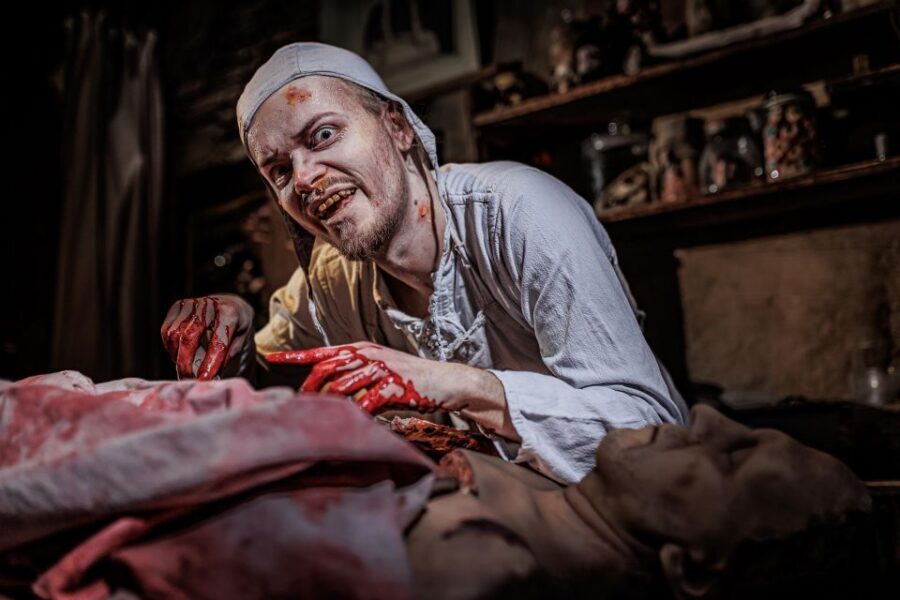
Berlin Dungeon has clear rules that affect how you plan. No cameras and no video recording are allowed, and that’s a real part of the experience—production teams want the stage moments to land without phones breaking the illusion.
You also can’t bring pets, and smoking isn’t allowed. The lack of cameras means you should decide up front whether you’re okay leaving the phone in your bag and trusting your memory for the photos you’ll wish you took later.
Dress-wise, you don’t need anything fancy. Just go for comfort, because you’ll be in dark spaces and moving through staged scenes. If you’re prone to motion sickness or get easily startled by sudden movement, Exitus is the moment to think about first.
Should you book Berlin Dungeon?
Book Berlin Dungeon if you want one hour of high-energy entertainment with a Berlin-specific story arc. It’s a great fit when you like actors, interactive pacing, and production effects that do the work for you instead of asking you to read and interpret.
Skip it if low-light environments, sudden scares, or theatrical violence effects are not your thing. It’s also not a match for epilepsy, visual impairment, or mobility impairments flagged by the attraction.
If you’re deciding between “serious history” and “scary-funny theater history,” this leans clearly into the theater side. I like that it gives you names and themes you can build on later—without turning your day into a classroom.
FAQ
How long is the Berlin Dungeon entrance ticket experience?
The experience is listed as 1 hour.
Where do I meet for Berlin Dungeon, and does it vary?
The meeting point may vary depending on the option booked.
How much does the Berlin Dungeon entrance ticket cost?
The price is listed as $28 per person.
Are there English shows, and what time do they run?
Yes. Shows in English are held daily at 11:40 AM, 1:40 PM, and 3:40 PM.
What is the minimum age to enter?
The recommended minimum age is 10 years. Children under 8 won’t be granted access.
Do children under 14 need an adult?
Yes. Children up to 14 years are admitted only if accompanied by an adult.
Is the attraction wheelchair accessible?
Wheelchair accessible is listed, but the activity also states it is not suitable for some mobility impairments, so it’s important to consider your specific needs.
Can I bring a camera or record video?
No. Cameras and video recording are not allowed.
What health and sensory situations make it unsuitable?
It’s listed as not suitable for people with epilepsy and visually impaired people. Due to darkness and lighting effects, it might also not be suitable for visitors with nervous conditions.