REVIEW · SCHNEIZLREUTH
Bavaria: Schneizlreuth Canyoning for Beginners
Book on GetYourGuide →Operated by Outdoor-Center-Baumgarten · Bookable on GetYourGuide
Schneizlreuth canyoning hits fast. This guided trip in Bavaria’s Schneizlreuth Gorge mixes beginner coaching with real mountain-stream action—slides, jumps, swimming, and optional abseils.
I really like how the experience is built around confidence: you get a full safety briefing, proper neoprene gear, and a guide who adjusts to your comfort level. In one group, a guide named Manni focused on individual needs and abilities, which made the technical parts feel manageable instead of scary.
One consideration: you’re dealing with cold, wet conditions and heights (jumps from 2 to 8 meters). If jumping isn’t your thing, you’ll have the option to abseil instead—but you still need to come prepared with swimwear and the right footwear.
In This Review
- Key things I’d plan for before Schneizlreuth canyoning
- Why Schneizlreuth Gorge canyoning feels beginner-friendly
- Price and what your $99 covers in real terms
- Meeting at Outdoor-Center Baumgarten and getting suited up
- What’s in your kit: helmet, harness, neoprene suit, socks
- The safety briefing and technique lesson that makes it feel doable
- Climbing rock formations, then dropping into natural basins
- Slides, swimming, and moving through steeper sections of the gorge
- Rappelling and abseiling up to 8 meters when jumping feels wrong
- Instructor languages and the feel of the group day
- Time on the clock: 5 hours that turns into focused canyon action
- What to bring (and what will slow you down)
- Who this Schneizlreuth beginner canyoning trip is best for
- Should you book Schneizlreuth Canyoning for Beginners?
- FAQ
- How long is the canyoning trip in Schneizlreuth?
- Where do I meet the guide?
- What equipment is included in the price?
- Are canyoning shoes included, or can I rent them?
- What should I bring for the trip?
- Is this activity suitable for kids or pregnant women?
- What languages do the instructors speak?
Key things I’d plan for before Schneizlreuth canyoning
- Beginner coaching with real technique: you’ll learn how canyoning works, not just watch and follow
- Gear included: helmet, harness, neoprene suit, and neoprene socks are part of the $99 price
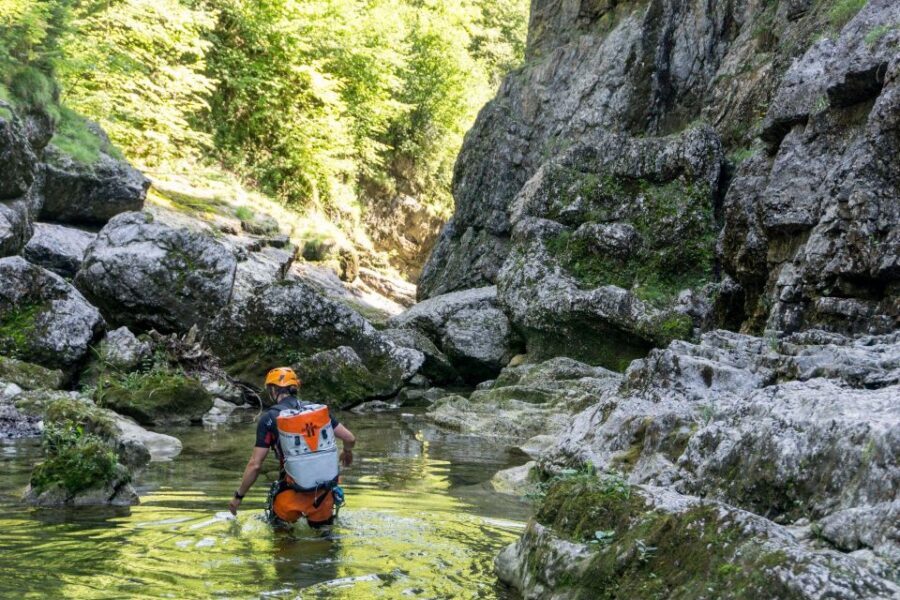
- Water moments across the gorge: climbing, jumps into natural basins, and slides through the canyon
- Optional abseils: if heights or jumping feel wrong, you can rappel/abseil with guide support
- Small-day structure: you have 5 hours total, with the action concentrated on the gorge sections
- Strong guide vibe: people consistently highlight clear explanations and friendly instruction
Why Schneizlreuth Gorge canyoning feels beginner-friendly
Canyoning in Schneizlreuth is one of those activities that can feel wildly physical while still being well guided. The key is that you’re not thrown into chaos. Instead, you learn how to move safely through changing sections of the gorge—rock, water, and the fun in-between.
The gorge setting matters too. Alpine streams mean you’ll hit waterfalls and natural stone slides as the gradient increases. That translates into a day where the scenery isn’t just pretty background—it actively shapes the route and the challenges you’ll face.
And because it’s designed for beginners, the guide’s job is to help you scale the experience to your comfort level. That’s why this works even if you’re new to rope work, jumping, or moving through wet stone.
Price and what your $99 covers in real terms
At $99 per person for a 5-hour outing, the value comes from what’s included—not just what’s promised. Your ticket covers the big-ticket safety and comfort pieces: helmet, canyoning harness, neoprene suit, and neoprene socks, plus a guide.
What’s not included is the stuff you may or may not already own. Canyoning shoes can be rented for €5, and you’ll need to sort out your own food and drinks. So if you’re traveling light, factor in shoe rental and bring a plan for hydration and snacks outside the activity window.
Also, don’t underestimate the benefit of having the right thermal gear provided. Neoprene is a huge part of staying comfortable when you’re moving through cold, water-bearing sections.
Meeting at Outdoor-Center Baumgarten and getting suited up
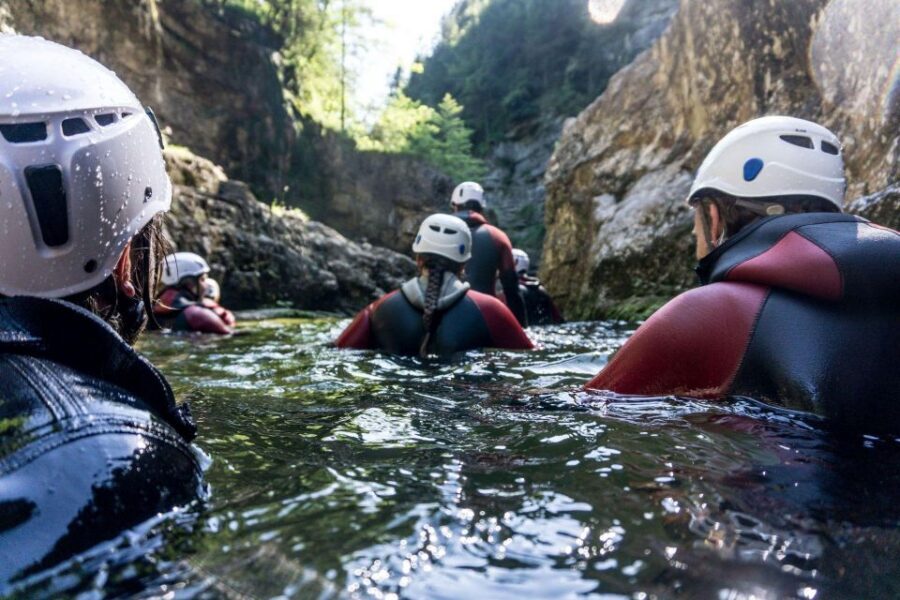
You meet your guide at Outdoor-Center Baumgarten. Parking is free in the large lot, which is a relief if you’re driving into the area. From the parking area, you’ll find the registration desk above the wooden stairs.
The first “real” part of the trip is collecting what you need for the day. You’ll get your helmet, harness, and neoprene setup so you can focus on learning instead of scrambling for equipment. Once you’re dressed, you’ll head toward the starting point with the rhythm of alpine mountain streams around you.
Even if you’re nervous, this early stage usually helps. You’re not immediately jumping into technical moves. You’re getting organized, fitted, and briefed—exactly what you want before you start climbing and negotiating water.
What’s in your kit: helmet, harness, neoprene suit, socks
Included gear does more than meet a checklist. It changes the whole experience.
- Helmet: protects during rock contact and overhead moments
- Harness: supports rappel/abseil when you go down steeper sections
- Neoprene suit and neoprene socks: help with temperature and comfort in wet environments
You’ll still bring swimwear and a towel. That sounds basic, but it matters. Neoprene fits better over swimwear, and a towel saves you from the unpleasant scramble afterward.
If you have decent hiking shoes already, bring them. They’ll help for the approach and any walking sections, as long as they fit your needs in wet terrain.
The safety briefing and technique lesson that makes it feel doable
This is not a “follow me and hope” kind of canyoning trip. After you collect gear and reach the starting point, your guide gives a full safety briefing, then you learn the sport’s techniques step by step.
For beginners, the most important part is learning what canyoning movements are trying to accomplish. You’ll practice how to handle rope-assisted parts, how to position yourself for jumps and slides, and what to do as the gorge gets steeper.
The guide’s role shows up here: you’ll feel supported on the exact moments that tend to scare people—jumping from height, stepping onto slick stone, or committing to a descent. A guide named Manni, for example, was noted for adjusting to individuals’ skills and needs, which is exactly what you want when you’re figuring out your limits.
Climbing rock formations, then dropping into natural basins
Once the day turns into action, you’ll be climbing through the canyon environment. Alpine rock formations are part of the fun, because they make the day feel like more than a series of stunts. You’re moving through the canyon as it changes from narrow and steep to wider water sections.
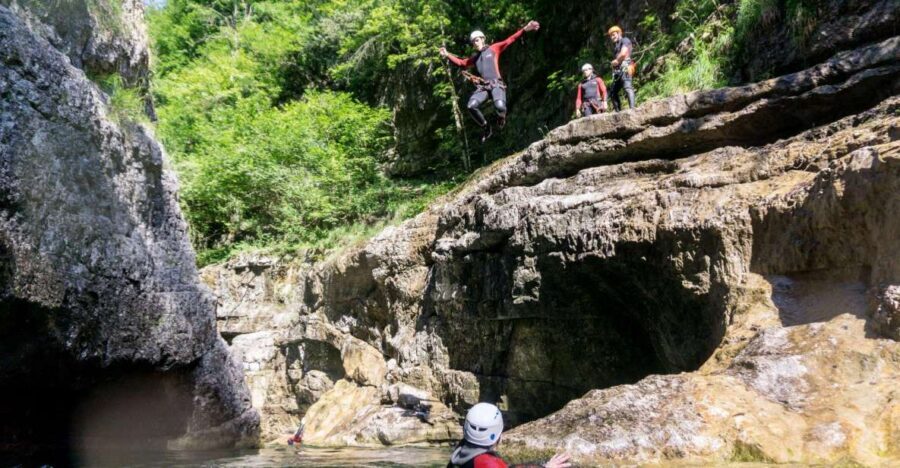
Then comes the big beginner test: jumps from about 2 to 8 meters into natural water basins. Heights always feel higher before you do them, so this is where your guide’s calm coaching matters.
If you’re worried about the jump part, remember there’s an alternative. You won’t be forced to take the same route as the fearless person next to you.
Slides, swimming, and moving through steeper sections of the gorge
Canyoning isn’t only about airtime. It’s also about flow—how you glide into natural pools and transition between water and rock.
As the stream gets steeper, you’ll run into more dramatic moments: waterfalls and natural stone slides. The steepness is basically the engine of the experience. It’s why steeper sections feel faster, louder, and more playful.
You’ll also do swimming and move through water-bearing gorges from top to bottom. Think of it as controlled fun with supervision. You’re not just wet for the sake of being wet—you’re following a route carved by the mountain stream.
And yes, there are adrenaline moments. The difference is that the day is paced so you’re not guessing what comes next.
Rappelling and abseiling up to 8 meters when jumping feels wrong
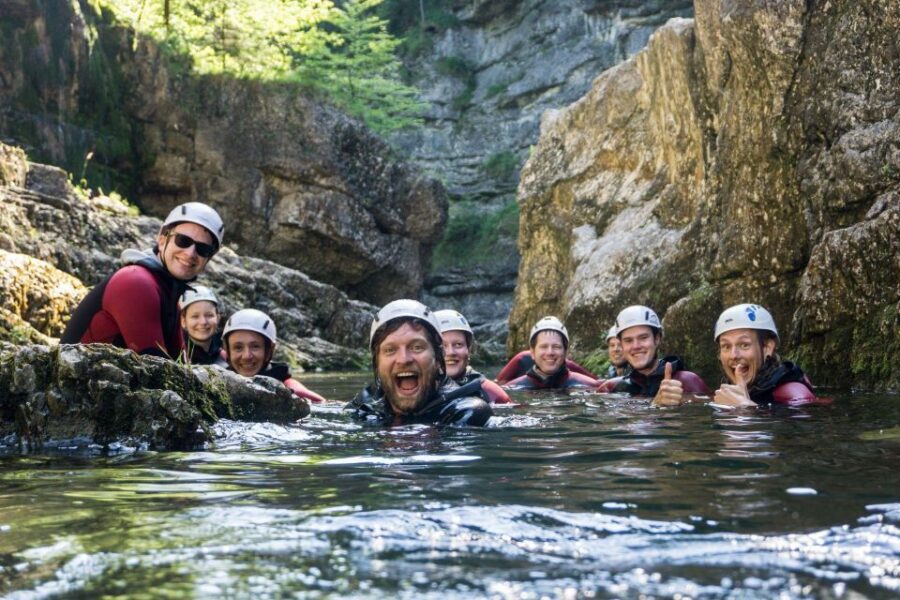
One of the best beginner details here is the option to avoid jumping. If you’d rather not jump, your guide will assist you with abseiling instead.
You’ll also rappel from up to 8 meters, depending on the section. That’s a big number, and it’s worth saying plainly: you’re going to feel the vertical reality at least a little.
But abseiling changes the emotional equation. Instead of launching yourself into a jump, you control the descent with rope support and guide assistance. For many first-timers, that turns “I’m not sure I can do this” into “okay, I can handle this with coaching.”
Instructor languages and the feel of the group day
Your instructor can speak Nepali, German, English, and Spanish, which makes it easier to ask questions if you’re not fully confident with technical terms. Clear communication is a big deal in a sport where small misunderstandings can turn into big anxiety.
The tone of the day seems to be friendly and organized. People highlight helpful explanations and guides who stay attentive to different comfort levels—meaning you’re less likely to feel lost if you’re slower or more cautious than the rest of the group.
Also, the experience provider is Outdoor-Center-Baumgarten, so you can expect a setup that’s ready for active days and wet gear.
Time on the clock: 5 hours that turns into focused canyon action
The outing is listed as 5 hours, but don’t assume every minute is nonstop climbing and splashing. A real-world canyon day usually includes setup time, safety instruction, gear checks, and breaks between sections.
One detail that helps you plan mentally: some participants describe the active part feeling closer to around 2 hours of doing things. That’s a good way to calibrate expectations. You’ll spend enough time to feel like you truly canyoned, without turning it into an all-day grind.
What to bring (and what will slow you down)
Bring the essentials and skip the guesswork:
- Swimwear
- Towel
- Hiking shoes
Plan to wear or bring clothing that dries quickly, because you will be wet. If you forget swimwear, you’ll lose valuable time figuring it out.
Canyoning shoes aren’t included, but you can rent them for €5. If you don’t already have proper water-friendly footwear, that rental is worth considering.
Not allowed: alcohol and drugs. This one is about safety and judgment, and it keeps the experience professional and predictable.
Who this Schneizlreuth beginner canyoning trip is best for
This experience fits best if you want real canyon action without needing previous rope experience. You’ll learn techniques, use the right gear, and have guide support for the tricky parts.
It’s also a great choice if you’re okay with getting wet and handling occasional heights. You’ll have jumps from 2 to 8 meters, plus rope-assisted descents up to 8 meters. If you’re nervous about the vertical parts, the abseil option helps.
It’s not suitable for children under 8 and pregnant women, based on the activity’s safety requirements.
Should you book Schneizlreuth Canyoning for Beginners?
Book it if you want a structured way to try canyoning in Bavaria, with included safety gear, clear coaching, and options for different comfort levels. The $99 value makes the sport feel reachable, especially because you don’t need to buy or assemble the kit.
Skip it if you’re not comfortable with cold wet conditions, slipping surfaces, or the emotional reality of height—even if you can abseil instead of jumping. Also, if the rules exclude you (under 8 or pregnant), it’s best to respect those limits and choose a different kind of outdoor day.
If you’re a beginner who wants authentic alpine adventure—rock, rope, water, and all—Schneizlreuth is a strong pick.
FAQ
How long is the canyoning trip in Schneizlreuth?
The duration is about 5 hours.
Where do I meet the guide?
Meet at Outdoor-Center Baumgarten. Parking is free in the large parking lot, and the registration desk is above the wooden stairs.
What equipment is included in the price?
Included: helmet, canyoning harness, neoprene suit, neoprene socks, and a guide.
Are canyoning shoes included, or can I rent them?
Canyoning shoes are not included, but you can rent them for €5.
What should I bring for the trip?
Bring swimwear, a towel, and hiking shoes.
Is this activity suitable for kids or pregnant women?
No. It’s not suitable for children under 8, and it’s not suitable for pregnant women.
What languages do the instructors speak?
The instructor can speak Nepali, German, English, and Spanish.