REVIEW · COLOGNE
Aachen – Old town Guided tour
Book on Viator →Operated by BlackBuck Travels · Bookable on Viator
Aachen hits different when someone shows you why the buildings matter. This private Old Town tour is a smart way to see the big sights fast, with clear stories you would miss walking on your own. I especially love the history that connects Charlemagne-era Aachen to what you’re looking at right now, and I like that the route covers major stops in just about 1 hour 30 minutes.
The main thing to consider is timing: it’s a short walk, so you won’t have hours to linger at every spot. Also, while several stops are marked admission-free on this route, entrance fees aren’t included overall, so check what applies at the City Hall.
In This Review
- Key highlights that make this tour worth it
- A private 90-minute walk that actually saves you time
- Aachen Cathedral: the Treasury focus and why Charlemagne keeps showing up
- Puppenbrunnen: the bronze marionettes and the city meanings in plain sight
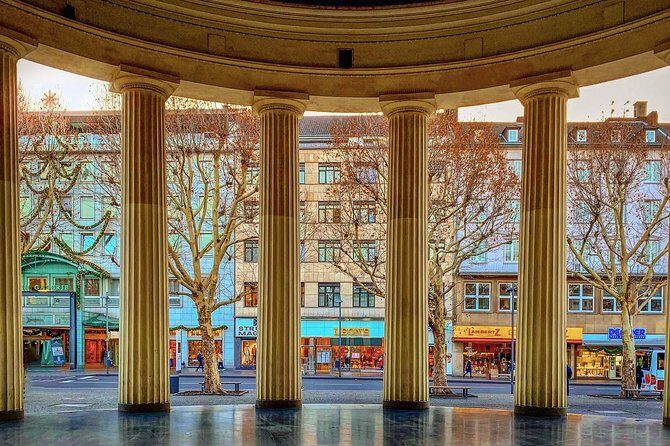
- Elisenbrunnen: quick, classic, and built around healing waters
- Grashaus and Haus Löwenstein: oldest-house energy with real mysteries
- City Hall Aachen and the Granus Tower: Gothic government machinery
- Ponttor: finishing with the city gates that still shape the walk
- Price and value: when private makes sense in Aachen
- Timing tips so you get the most from each stop
- Who should book this Aachen Old Town tour
- Should you book it?
- FAQ
- How long is the Aachen Old Town guided tour?
- Is this tour private?
- How many people can be in a group?
- Where does the tour start and end?
- Are entrance fees included?
- What are the main stops on the route?
- What if I need to cancel?
Key highlights that make this tour worth it
- A private guide so you can ask questions without crowd pressure
- Aachen Cathedral Treasury access with standout medieval artwork like the Cross of Lothair
- Puppenbrunnen with bronze moving marionettes and clues about Aachen’s past
- Elisenbrunnen with two drinking fountains of healing thermal water
- Grashaus and Haus Löwenstein for medieval layers you might otherwise skip
- Ponttor for a finishing look at the remaining city gates of Aachen’s wall
A private 90-minute walk that actually saves you time
If your Aachen schedule is tight, this style of tour is a practical win. Instead of spending your energy figuring out where to go, you get a smooth route that hits the Cathedral area, the fountains, key historic houses, the Town Hall zone, and the city gate end point. It feels efficient without being rushed-you’re still stopping long enough to get oriented and understand the story behind each place.
This is also a private group tour with up to 15 people. That matters because you can move as a unit, and your guide can adjust pacing to the group, rather than you being swept along by a big crowd.
You can also read our reviews of more guided tours in Cologne



Aachen Cathedral: the Treasury focus and why Charlemagne keeps showing up
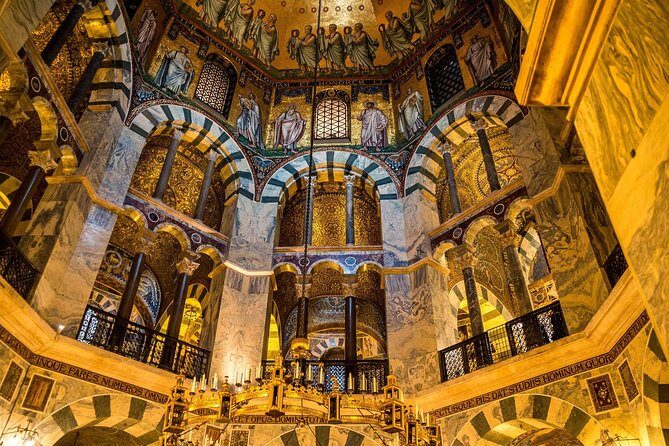
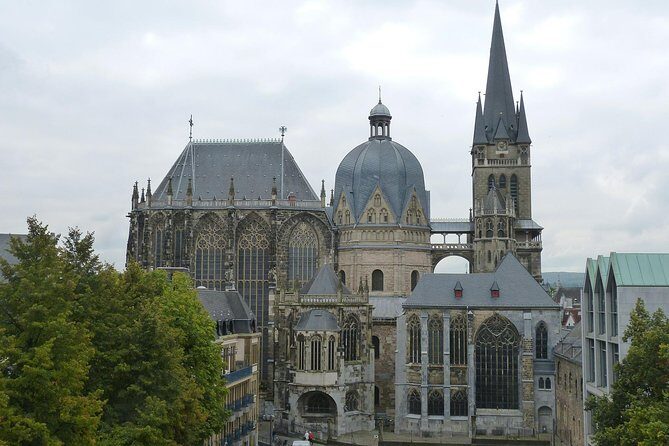
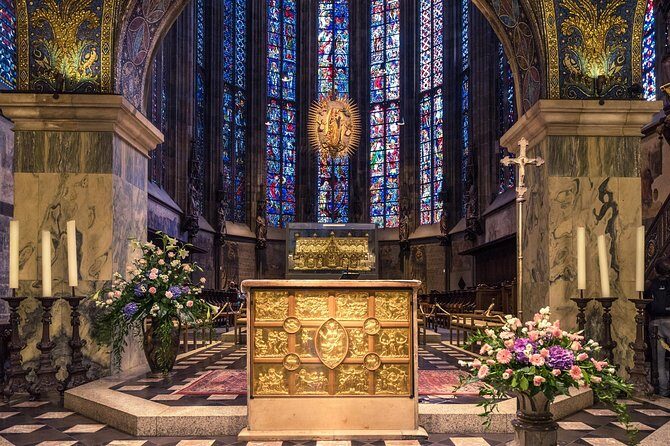
The tour begins at Aachen Cathedral, also known as the Cathedral of Aix-la-Chapelle. It’s one of the oldest cathedrals in Europe and the seat of the Roman Catholic Diocese of Aachen. You’ll also have a chance to visit the Treasury, which is where the wow factor really gets specific.
Inside the Treasury, you get to see major medieval church artworks, including the Cross of Lothair, the Persephone sarcophagus, and the Bust of Charlemagne. Even if you don’t know the names already, this is where the guide’s storytelling pays off. You’re not just looking at old religious objects; you’re learning how Aachen connected to power, belief, and rulers in medieval Europe.
One practical note: this stop is described as having free admission (including the Treasury visit in the schedule). Still, entrance fees are listed as not included overall, so it’s smart to confirm what’s covered for your exact booking.
Puppenbrunnen: the bronze marionettes and the city meanings in plain sight
Next you’ll reach the Puppenbrunnen, or Dolls fountain. It’s right in the flow after the cathedral, and it’s one of those Aachen stops that works for both adults and families. The fountain features bronze pairs like textile industry and the doll, horse and rider, bishop and church, and a trading market woman, plus other themed pairings.
What I like here is the way the fountain functions like a visual lesson. The meanings connect everyday life and professions to the city’s identity, and even the details have a historical clue: the clock on top signifies the French occupation.
The moving marionettes are a big part of the appeal, especially if you’re traveling with kids. But even without a family angle, it’s a memorable break from stone monuments, and your guide helps you read what you’re seeing instead of just snapping photos.
Elisenbrunnen: quick, classic, and built around healing waters
The tour moves to Elisenbrunnen, Aachen’s fountain known for healing thermal water. The schedule includes time at the fountains themselves, with two drinking fountains where the water is said to have high sulphur content and medicinal properties.
This stop is short, but it’s also the kind of place you can experience immediately. If you like sensory travel-your nose, your taste, your curiosity—this is one of the easiest ways to do it without planning a separate detour.
Do keep in mind that the attraction here is the water and the fountain setting, not a long indoor visit. If you’re hoping for a museum-like experience, this will feel more like a thoughtful pause than a deep stop.
Grashaus and Haus Löwenstein: oldest-house energy with real mysteries
From the Elisenbrunnen area, you’ll look at two historic houses that give Aachen its layered feel: the Grashaus and Haus Löwenstein.
First is the Grashaus, described as one of the oldest houses in Aachen and located at the fish market. It served as the first town hall, with construction completed in 1267, though it dates back to even older times. The story here doesn’t stay polite and pretty either: it was also tied to medieval village life and a prison existed there at one point.
Next you’ll walk across to Haus Löwenstein, built around 1344. This Gothic building is noted as one of the few that survived the great fire of 1656. What makes it especially interesting on this route is the unresolved question around it: it’s unknown why it was originally built, and that uncertainty is part of the attraction.
If you enjoy the slightly weird side of history, these two stops are a treat. They’re not as famous as the Cathedral, but they give you a more human medieval snapshot: administration, daily life, and the odd facts that don’t fit neatly into a single story.






City Hall Aachen and the Granus Tower: Gothic government machinery
After the historic houses, you’ll get to City Hall Aachen, with time to admire the gothic architecture. The building dates to the 14th century, built under Gerhard Chorus, and it was connected to the traditional coronation feast ceremony of the Holy Roman Empire. Construction was completed in 1349, after which it served as an administrative center.
This stop works best when you care about how cities run. It’s easy to treat town halls as just pretty facades, but your guide’s commentary frames the building as a place where authority was staged and managed.
You’ll also see the Granus Tower, about 20 meters high, which was used to store weapons. That detail is a reminder that civic spaces weren’t only about speeches and paperwork-they were tied to protection and power.
Entrance fees for this stop are noted as not included. The tour schedule says around 10 minutes here, so plan for exterior appreciation unless your specific ticket situation allows more.
Ponttor: finishing with the city gates that still shape the walk
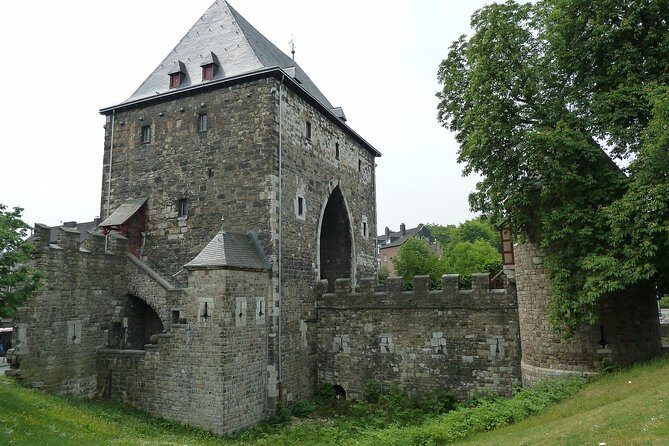
To close, you’ll finish at Ponttor, Aachen’s city gate known historically as Brückenpforte and Marschiertor. It’s one of the remaining gates of the 14th-century city wall.
What’s nice is that it’s not just a relic. The gate is currently used by the German Scout Club and the German Scout Association Saint George. That little present-day connection helps the wall feel less like a disconnected artifact and more like part of a living city.
This final stop is also a good mental reset. After all the cathedral and medieval-house details, the gate gives you a clearer sense of how Aachen defended, controlled movement, and shaped streets through physical boundaries.
Price and value: when private makes sense in Aachen
The price is $406.51 per group, up to 15 people, for about 1 hour 30 minutes. On paper, it can look like a splurge if you’re solo. But the value math improves fast when you’re traveling with a small group, because you’re not paying per person for the guide’s time.
For solo travelers, I see this as a “buy convenience + buy context” option. You’re paying for a guide to do the connecting work across multiple sites in a short time span. That’s exactly where the reviews’ strongest theme fits: the experience is praised for putting history into context, especially around Charlemagne.
Also, the tour is booked about 39 days in advance on average, so it’s smart to reserve early if your dates are fixed. Aachen isn’t huge, but guided slots do get taken.
Timing tips so you get the most from each stop
Because this tour is designed to cover multiple highlights in a short walk, you’ll benefit from a simple strategy: arrive a bit early and keep your questions ready. Your guide can cover a lot in 90 minutes, but you’ll get more out of it if you’re mentally present instead of checking your phone for directions every few minutes.
Wear comfortable shoes. The route is a walking tour, and even short stops add up when you’re moving from cathedral area to fountains to historic houses and onward to the city gate.
If you’re the type who likes details, you’ll enjoy pausing when the guide points out specific items like the Treasury pieces or the symbolism in the Puppenbrunnen pairs. Those are the moments that make a guided stop feel different from a quick self-guided photo break.
Who should book this Aachen Old Town tour
This is a good fit if you:
- have limited time in Aachen and want a clear highlights route
- enjoy history explanations tied to real places, not just names on a plaque
- prefer a private experience where you can ask questions
- want a mix of major landmarks (Cathedral, Town Hall) and smaller, more story-driven stops (Grashaus, Haus Löwenstein, Puppenbrunnen)
If you’re the kind of traveler who wants to linger for an hour at the Cathedral or spend a long time inside buildings, this may feel short. But for a first visit, it’s a strong orientation tool.
Should you book it?
I’d book this if you want context fast. The route makes sense, the stops are varied, and the guide’s commentary seems built for people who want to understand why Aachen mattered, not just what it looks like.
Skip it if you’re chasing slow, deep exploration or you only care about one major site. This tour is about touching several highlights and leaving with a clearer story of the city’s past—especially the Charlemagne-era thread running through the highlights you see.
FAQ
How long is the Aachen Old Town guided tour?
It runs for about 1 hour 30 minutes.
Is this tour private?
Yes. It’s a private tour/activity, and only your group participates.
How many people can be in a group?
The price is per group up to 15 people.
Where does the tour start and end?
It starts at Dominformation, Johannes-Paul-II.-Straße 1, 52062 Aachen, Germany and ends back at the meeting point.
Are entrance fees included?
Entrance fees are not included. In the schedule, some stops are marked free, but City Hall Aachen is listed with admission not included.
What are the main stops on the route?
You’ll visit Aachen Cathedral (including the Treasury), Puppenbrunnen, Elisenbrunnen, the Grashaus, Haus Löwenstein, City Hall Aachen, and Ponttor.
What if I need to cancel?
This experience is non-refundable and cannot be changed for any reason. If you cancel or ask for an amendment, the amount you paid is not refunded.